Atchison riverfront pavilion marks Lewis and Clark campsite
Atchison’s riverfront pavilion turns a July 4, 1804 campsite into a walkable history stop, linking the Missouri River, the Kanza story and downtown pride.
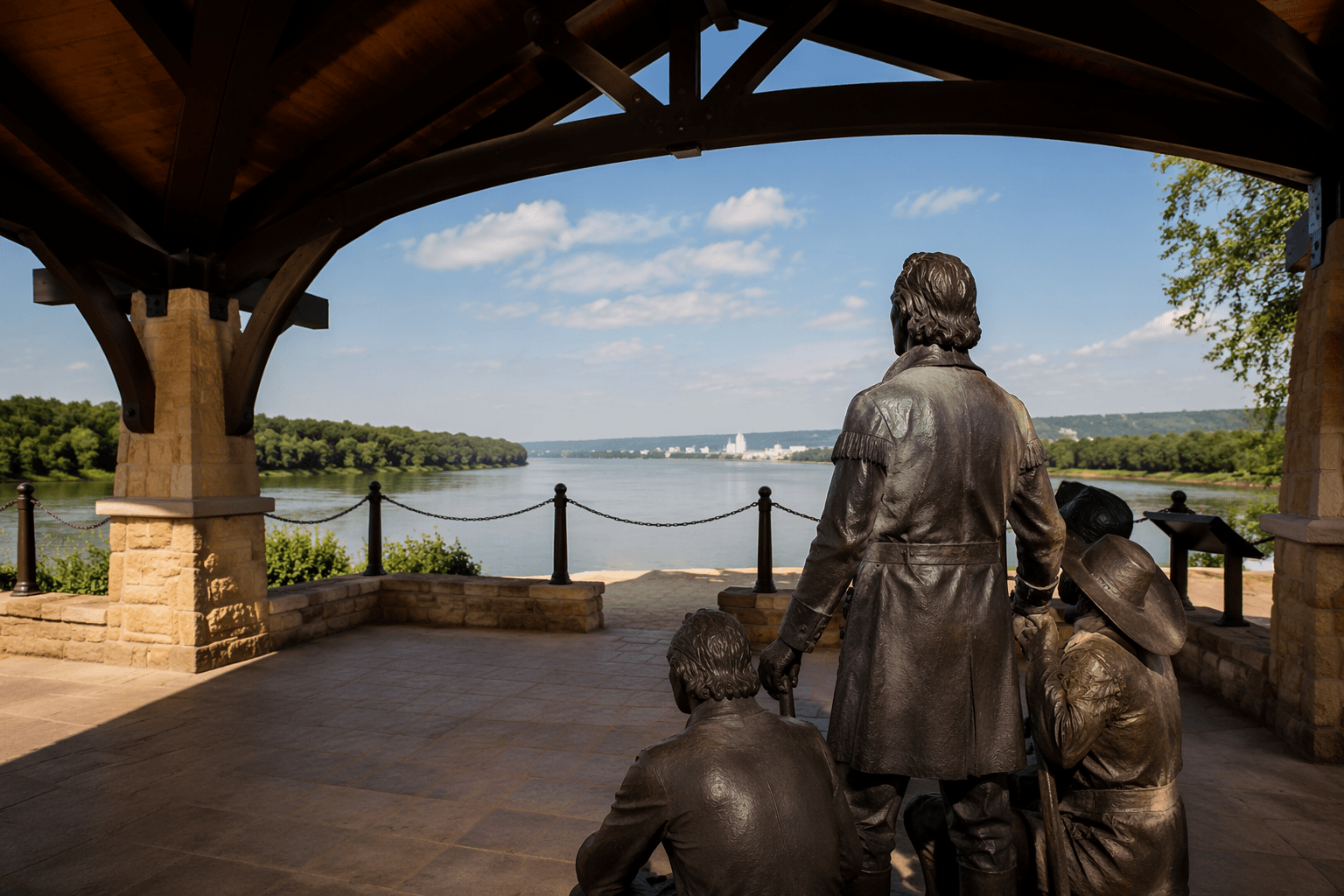
The Lewis and Clark Riverfront Pavilion gives Atchison something rare: a place where a national story still feels close enough to touch. The stop ties the city’s present-day riverfront to the night Meriwether Lewis and William Clark camped near the area on July 4, 1804, and it does so in a setting that still draws walkers, bikers, families and weekend visitors to the Missouri River.
A riverfront landmark with a national backstory
The pavilion sits in Riverfront Park, where the landscape itself does part of the storytelling. TravelKS places Lewis and Clark’s campsite near this spot during their exploration of the Louisiana Purchase, and the National Park Service identifies the Independence Creek area as the campsite where the expedition spent the night on July 4, 1804. That makes the pavilion more than a scenic overlook. It is a marker for one of the most recognizable names in American exploration, anchored to a place that still looks and functions like a public gathering ground.
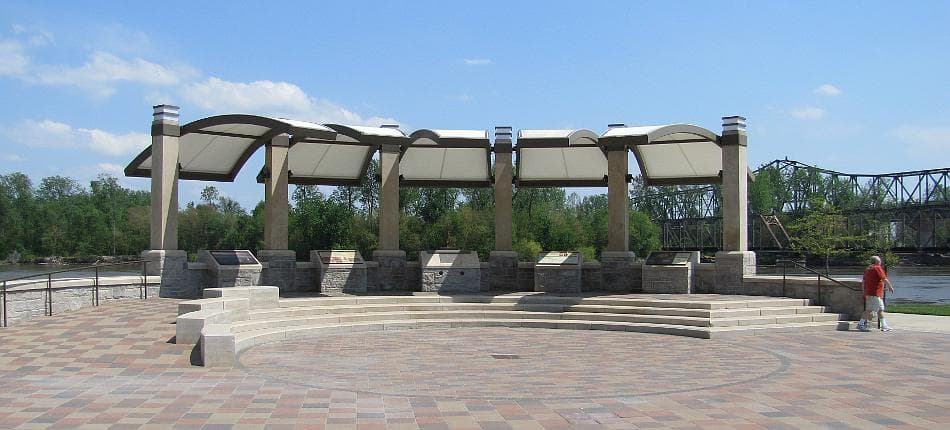
The setting matters because the riverfront is not frozen in time. It connects visually to the Missouri River and stands near the Amelia Earhart Memorial Bridge and the Atchison Railroad Bridge, placing the pavilion in the middle of one of the city’s most visible corridors. For Atchison, that means the stop works as both a history lesson and a civic landmark, folded into the everyday landscape of the riverfront rather than separated from it.
How the site became a destination
The pavilion itself was built by the Kansas Lewis & Clark Bicentennial Commission for the Lewis and Clark bicentennial commemoration on July 3-4, 2004. Riverfront Park had already been dedicated on June 19, 2004, after years of planning, so the pavilion was added to an area that was being shaped deliberately as a public destination. The result was a site designed to do more than commemorate. It was built to interpret, gather and connect.
Interpretive material at the pavilion focuses on the expedition, the Missouri River and the Kanza Nation. That gives the stop a broader frame than a simple Lewis and Clark monument. It places the expedition within the river’s geography and acknowledges the Indigenous presence that long predated the Corps of Discovery, which is essential to understanding what the site means today.
What visitors find on the ground
The riverfront setting is built for lingering, not just passing by. Riverfront Park includes a Veterans’ Memorial Plaza, fishing access, picnic areas, playgrounds, restrooms and boat access, along with the hiking and biking path that ties the pavilion to the rest of the river corridor. That mix makes the area useful to residents in a practical way: it is a place for exercise, family outings, school trips and casual tourism without a gate fee or special admission.
The trail connection is one of the pavilion’s strongest features. A pedestrian bridge over Independence Creek links the 5-mile hiking and biking trail from the Atchison Riverfront to the historic site, turning a point on a map into a walkable route. That trail corridor helps visitors understand the relationship between the pavilion, the creek and the broader historic landscape. Instead of encountering a lonely plaque, they move through a public space that still has room for recreation and reflection at the same time.
Independence Creek gives the story its setting
About five miles north of Atchison, the Independence Creek historic site adds another layer to the experience. The site covers 13.5 acres of native grasses and wildflowers and includes a replica Kanza Indian Earthlodge, an interpretive sign and a geodetic marker. The National Park Service says the area reestablishes the prairie as it would have appeared to the Corps of Discovery, and it includes a stretch of Independence Creek that Captain William Clark referenced in his July 4, 1804 journal entry.
That landscape matters because it complicates the familiar pioneer story. Lewis and Clark’s campsite is part of the narrative, but so is the Kanza presence that the expedition encountered. The replica earthlodge and the interpretive work at Independence Creek help correct a version of frontier history that can too easily flatten Indigenous life into the background. Here, the land itself does the teaching: prairie grasses, the creek corridor and the earthlodge together make the site feel grounded rather than abstract.
The Independence Creek site was described as one of 12 certified Lewis and Clark campsites marked during the 2004-2006 bicentennial, which helps explain why the Atchison connection carries weight beyond local pride. It is part of a broader network of commemorative places, but it remains distinctive because the trail and pavilion keep it tied to an active community space rather than an isolated roadside stop.
Why Atchison embraces the stop
For Atchison, the pavilion fits the city’s wider identity as a place that markets history, river access and outdoor recreation together. Visitors who come for Amelia Earhart history, haunted architecture or downtown walking tours can also add a riverfront stop that shows another side of the city’s story. The value is both cultural and practical: a public riverfront creates a place where residents and visitors can spend time, while also supporting tourism in a way that feels integrated into daily life.
That broader appeal helped the Lewis and Clark attractions along the riverfront earn a place among the 8 Wonders of Kansas History in 2010, a recognition that placed the site in a statewide heritage conversation. The honor reflects more than a scenic trail or a commemorative pavilion. It recognizes a full riverfront district where history, landscape and public use reinforce one another.
A place shaped by memory, and by the city’s past
The story here is not limited to exploration. TravelKS notes that fifty years after the 1804 camp, the town of Atchison was founded by proslavery men and named for Sen. D. R. Atchison. It also notes that The Squatter Sovereign, the town’s first newspaper, was an early advocate of violence against abolition. That background gives the riverfront a harder edge and reminds visitors that the city’s public memory includes more than one chapter.
Seen that way, the Lewis and Clark Riverfront Pavilion does more than point backward. It helps Atchison hold together several truths at once: a nationally significant campsite, an Indigenous presence that deserves equal attention, a riverfront shaped for public use, and a city whose history includes both pride and conflict. That is what makes the stop worth revisiting now.
This article was produced by Prism’s automated news system from verified source data, official records, and press releases, then run through automated quality and moderation checks before publishing. The system is built and supervised by the people who set the standards it runs under. Read our full AI policy.
Know something we missed? Have a correction or additional information?
Submit a Tip