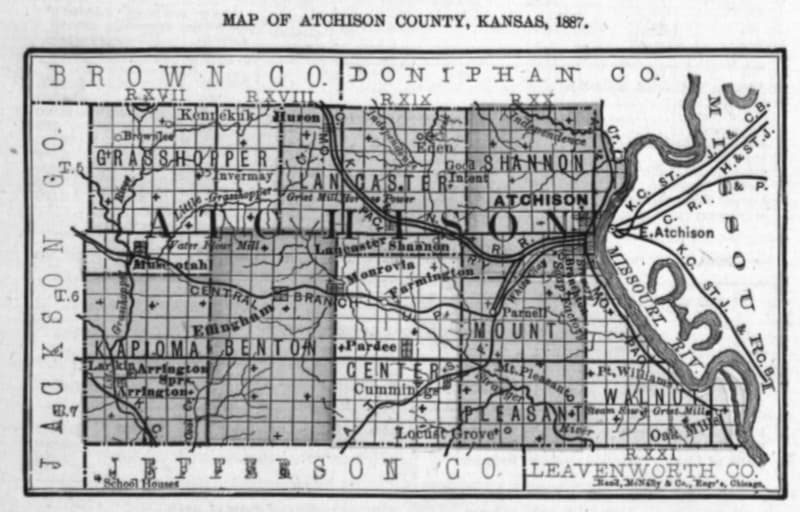
Atchison school reveals history of segregation and public education
Martin School shows how Atchison once divided children by race and later brought them together in one elementary building. Its survival keeps that history visible on Division Street.
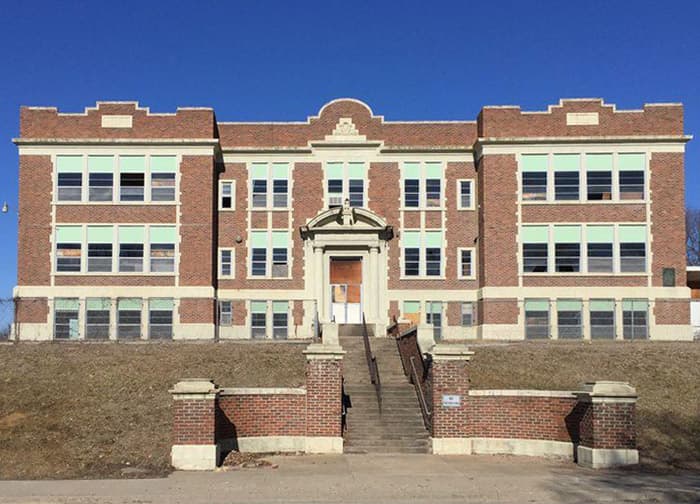
John A. Martin Grade School still stands at 507 Division Street as more than an old classroom building. The three-story Classical Revival masonry school, listed in the National Register of Historic Places on June 23, 2016, captures how Atchison built public schools to serve neighborhood life, vocational training, and civic gathering as well as daily lessons.
A school built for more than reading and arithmetic
Designed by W. H. Saylor and Herbert R. Seddon of Saylor & Seddon, the original building reflects a period when school architecture carried public ambition. Its plan included classrooms, manual-training rooms, and an assembly room, showing that Atchison expected the building to teach practical skills and bring students together in shared space. The Kansas Historical Society places the property in the Historic Public Schools of Kansas thematic nomination and identifies it as locally significant for education and architecture under Criteria A and C.
That combination matters because the school is not just preserved for its facade. It survives as a record of how early 20th-century public education was organized in Atchison County, when a schoolhouse could function as a neighborhood anchor and a symbol of civic investment at the same time. The building retains a high degree of architectural integrity from its period of significance, which runs from 1915 to 1966.
Two schools, two student populations
The most revealing part of the Martin School story is what it says about segregation in Atchison. From 1915 to 1955, Martin School served white students, while Lincoln School, two blocks west, served African-American children. Taken together, the two buildings show how public education in Atchison was shaped by race, with children assigned to separate schools as part of the city’s everyday landscape.
Lincoln School gives that history a sharper edge. Built in 1921 for African-American students, it is described by the Kansas Historical Society as the last extant public building in Atchison that was built for and served African Americans. That makes the Martin and Lincoln campuses part of one connected educational geography, not isolated landmarks. For longtime residents, the distance between the two schools helps explain how segregation was built into neighborhood life, not just into policy documents.
Integration changed the building, but not its place in the community
Atchison schools were integrated in 1955, and a historical marker account says Atchison and Lincoln School became the first community in Kansas to comply with Brown v. Board of Education when classes started in September 1955. After that shift, Martin School served all students from kindergarten through third grade, reflecting a district that had moved from separation to a fully integrated elementary structure.
The building also changed physically. In 1952, before integration, a one-story brick gymnasium designed by Joseph W. Radotinsky was added to the property. That addition extended the school’s usefulness and marked another phase in the district’s investment in the campus, one that came during a period when public schools across Kansas were adapting to larger enrollments and broader community expectations.
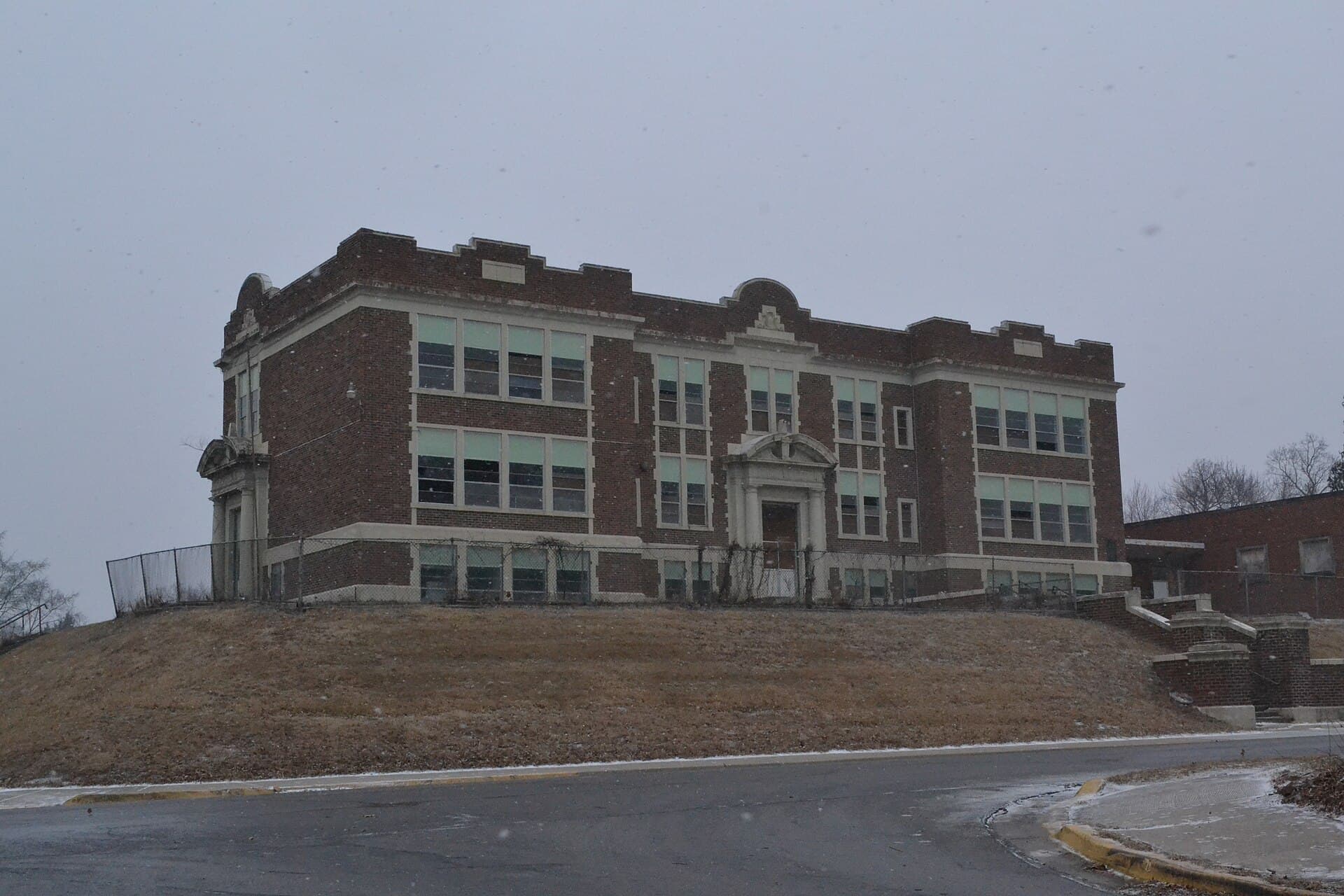
Martin School remained an elementary campus through May 1997. That long run matters because it links the building to several generations of Atchison families, from the segregated era to post-Brown schooling and then into the late 20th century. The school’s last chapter is part of its meaning: it was not simply preserved after use ended, but remained active long enough to carry the memory of changing classrooms, changing enrollment patterns, and changing public priorities.
What the building says about Atchison now
For Atchison County, John A. Martin Grade School offers a rare way to see how public education and neighborhood identity evolved together. Its architecture reflects a time when school buildings were meant to project permanence, order, and usefulness. Its history of separate student populations shows how racial policy shaped where children went each morning and how families experienced the city.
The survival of both Martin School and nearby Lincoln School gives Atchison something many communities do not have: two physical markers of a segregated public system that later gave way to integration. Martin’s continued presence on Division Street makes the past visible in a way that archives alone cannot. It stands as a reminder that the history of Atchison schools is written not only in dates and policies, but in the buildings that still shape what residents can see, remember, and recognize today.
This article was produced by Prism’s automated news system from verified source data, official records, and press releases, then run through automated quality and moderation checks before publishing. The system is built and supervised by the people who set the standards it runs under. Read our full AI policy.
Did this article answer your question?