Atchison’s Historic Sites Showcase Victorian Architecture, Growing Preservation Efforts
Atchison’s historic landmarks are an economic engine, drawing visitors downtown, supporting museums and shops, and making preservation a countywide priority.
Why Atchison’s historic core matters
Atchison’s Victorian streetscape is more than scenery. With more than 47 buildings on the National Register of Historic Places, the city gives visitors a dense, walkable cluster of landmarks that can keep them in town longer and spending money downtown instead of making a quick stop and leaving.
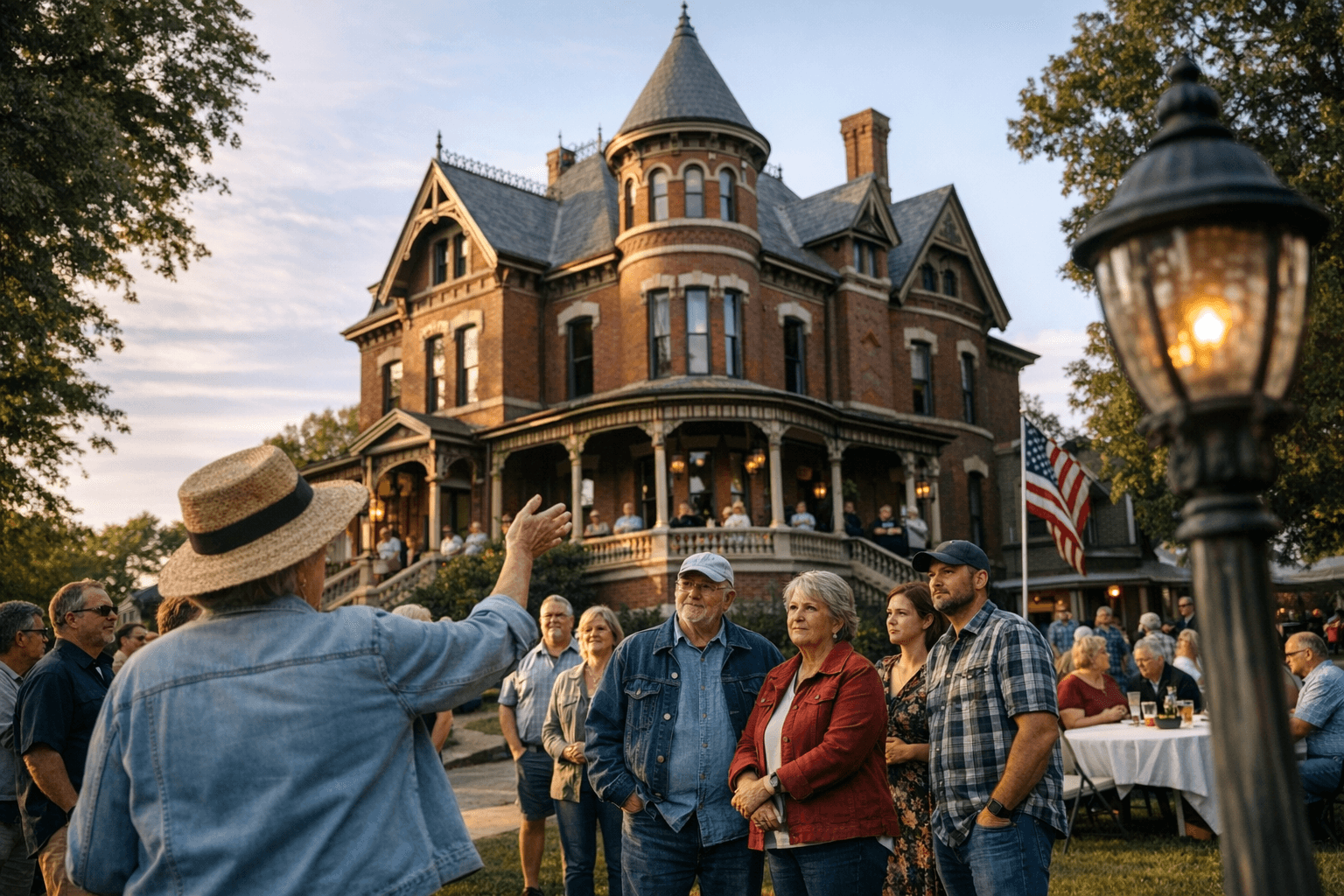
That concentration is part of what makes Atchison stand out. Founded in 1854 and shaped by its river-town past, the city is still defined by historic homes, churches, civic buildings, and museum sites that preserve a 19th-century look and feel. The preservation story is not frozen in the past, either: new listings such as the Howe, Edgar W., House in 2021 and the Mount Vernon Cemetery historic district in 2024 show that the county’s historic inventory is still growing.
The Victorian houses that anchor the tourism draw
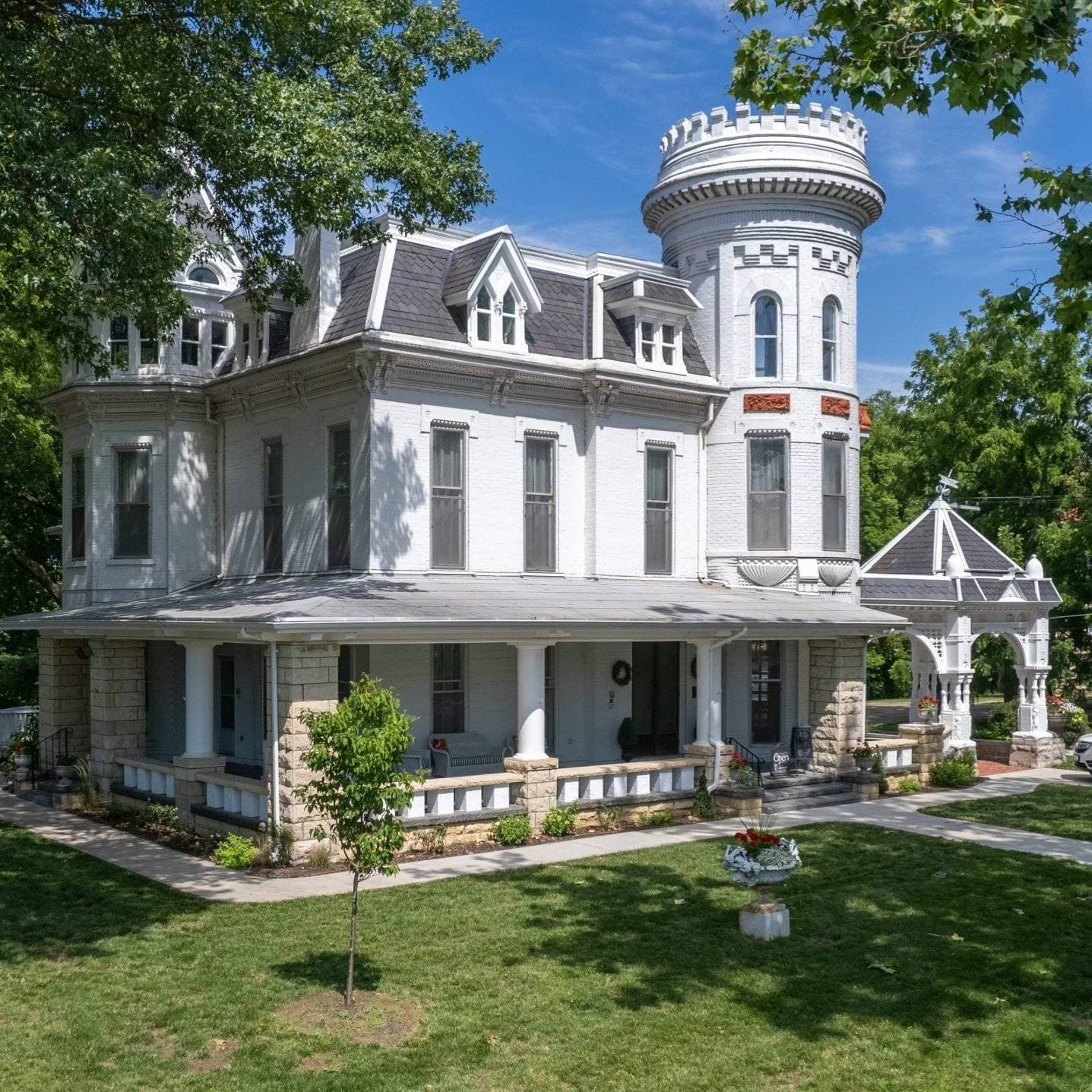
Two of the best-known landmarks show how architecture becomes an asset, not just a memory. The Evah C. Cray Historical Home Museum and carriage house were built in 1882 for W.W. Hetherington, the son of the founder of Exchange National Bank of Atchison. The house is a 25-room mansion with two three-story towers, and its recently renovated interiors feature original chandeliers, carved woodwork, ornate fireplaces, and a carriage-house theater that adds another reason for visitors to linger.
That kind of restoration matters because it turns a house tour into a full visitor experience. The museum’s details, from the towers to the gift store and small theater, help connect heritage to practical spending, which is why preserved homes can support more than just nostalgia. Every additional hour a traveler spends exploring a site like Evah C. Cray increases the chances of a meal downtown, a stop at another museum, or a purchase from a local business nearby.
A second landmark with year-round value
The Muchnic Art Gallery tells a similar story in a different way. Housed in a Queen Anne style home built in 1885, the gallery occupies a mansion that was originally built for lumber merchant George Howell before the Muchnic family bought it in 1922. Today, the Atchison Art Association uses the space as an active art venue, hosting six shows a year from March through December.
That schedule is important because it spreads visitation beyond a single seasonal event. Instead of serving as a static house museum, Muchnic keeps people returning for rotating exhibits, which creates more consistent foot traffic for the surrounding area. In a downtown and riverfront town like Atchison, that steady flow is the difference between a heritage site that sits apart and one that helps sustain the broader local economy.
From Amelia Earhart’s birthplace to the airport hangar
Atchison’s aviation history adds another layer to the city’s appeal, and it is a major part of how the community markets itself. The Amelia Earhart Birthplace Museum sits at 223 N. Terrace Street in a Gothic Revival house where Earhart was born and spent much of her childhood. The museum, operated in partnership with The Ninety-Nines, welcomes the public Tuesday through Saturday from 10 a.m. to 4 p.m., with last tickets sold at 3:30 p.m.
That site now works alongside the Amelia Earhart Hangar Museum at Amelia Earhart Memorial Airport, also known as K59, to broaden the city’s aviation story beyond a single house. Together, the two sites create a stronger interpretive draw, giving visitors reasons to move between neighborhoods and extend their stay. For a county that wants tourism to translate into real economic benefit, that matters: a birthplace museum and a hangar museum together can fill a day, not just a morning.
The courthouse, the district, and the institutions that hold it together
Atchison’s preservation landscape also includes civic and institutional landmarks that give the city its backbone. The Atchison County Courthouse, built in 1896 and designed by George P. Washburn, was listed on the National Register in 1975. The Downtown Historic District adds another layer, with commercial buildings that reflect Richardsonian Romanesque, Italianate, and Second Empire styles, reinforcing the idea that history in Atchison is not confined to a few isolated houses.
The support system around those buildings is just as important as the buildings themselves. The Atchison County Historical Society preserves archives and exhibits, while the Santa Fe Depot Museum interprets the railroad history that helped shape the city’s growth. Preservation here depends on multiple hands, from public institutions to private and nonprofit stewards, including the Kansas Historical Society register program and local organizations that keep restoring, interpreting, and maintaining the sites that make Atchison recognizable.
What preservation means for the county’s bottom line
For Atchison County, the value of these sites is not only cultural. Historic preservation carries maintenance and renovation demands, from keeping Victorian woodwork intact to caring for museum buildings, cemetery landscapes, and a courthouse that still stands as a civic symbol. Those costs are part of the same equation as the visitor spending the sites can generate, which is why the county’s preservation efforts are best understood as an investment in identity and economic resilience.
The practical takeaway is simple: Atchison’s historic core works because it is not one attraction. It is a network of homes, museums, a courthouse, a cemetery district, and downtown blocks that together create a reason to stay, explore, and spend. In a county where history is still visible on the street, preservation is not just about saving old buildings. It is about keeping the local economy tied to the place that made Atchison distinctive in the first place.
This article was produced by Prism’s automated news system from verified source data, official records, and press releases, then run through automated quality and moderation checks before publishing. The system is built and supervised by the people who set the standards it runs under. Read our full AI policy.
Did this article answer your question?