Benedictine College donor William H. Dunn Sr. dies at 102
William H. Dunn Sr.'s gifts helped shape Benedictine College’s Mary’s Grotto and several campus buildings, leaving Atchison with a visible legacy after his death at 102.
William H. Dunn Sr. left Atchison with a campus footprint that students and visitors can still see in stone, brick and prayer. His gifts helped shape Mary’s Grotto at Benedictine College, and his company built several of the school’s best-known buildings, making his death at 102 a loss felt well beyond Kansas City business circles.
Benedictine College said Dunn died June 1. JE Dunn Construction Company said he died May 31, at age 102. In both accounts, Dunn’s 73-year career at the company stands out as one of the longest-running legacies in the firm’s history. He joined JE Dunn in 1946, became chairman in 1974 and later chairman emeritus in 2000. The company itself was founded in Kansas City, Missouri, in 1924 by John Ernest Dunn, known as Ernie.
For Benedictine, Dunn’s name is tied to some of the most visible parts of campus. JE Dunn constructed the St. John Paul II Student Center, Ferrell Academic Center and St. Scholastica Hall, and it also handled the renovation that turned the original 1893 Benedictine Abbey into Elizabeth Hall. Those projects helped shape the college’s physical growth in Atchison and gave the campus the kind of permanent landmarks that define daily life for students, faculty and alumni.
His and Jean Dunn’s most enduring gift on campus is Mary’s Grotto. Benedictine built the grotto in 2008 to mark the 150th anniversary of both the college’s founding and the 1858 apparition at Lourdes. Archbishop Joseph F. Naumann dedicated it on Sept. 8, 2009. Benedictine has said two stones from the original Lourdes grotto were incorporated into the Atchison site, linking the campus directly to the French shrine that inspired it. The college also notes that a daily Rosary is prayed there at 5:10 p.m.
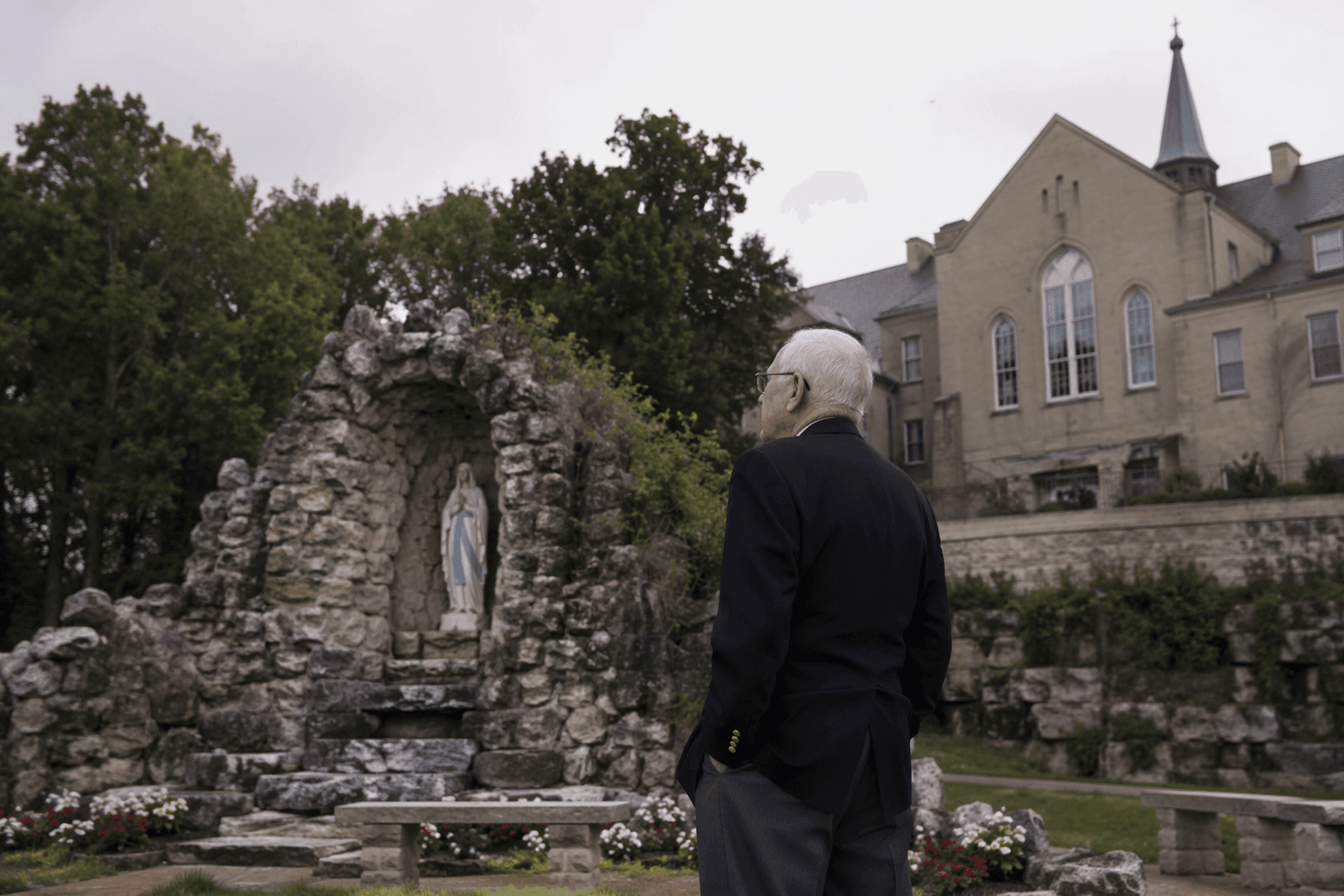
Dunn and his wife were honored with Benedictine’s Cross of the Order of St. Benedict in 2011, a recognition the school established in 1969. Their support helped complete a spiritual landmark that has become part of the college’s identity and a regular gathering place on campus.
Dunn’s reach extended far beyond Atchison. JE Dunn linked his leadership to projects such as the Kauffman Center, the Nelson-Atkins Museum of Art, the National WWI Museum and Memorial and CPKC Stadium, which opened in March 2024 as the world’s first stadium purpose-built for a women’s professional sports team. The Greater Kansas City Chamber of Commerce called him a legendary business leader and civic champion, while BNIM described him as kind, confident and generous, with a lasting mark on Kansas City philanthropy. For Benedictine and Atchison, his death closes a chapter in a relationship that helped shape both the skyline and the spirit of campus.
This article was produced by Prism’s automated news system from verified source data, official records, and press releases, then run through automated quality and moderation checks before publishing. The system is built and supervised by the people who set the standards it runs under. Read our full AI policy.
Know something we missed? Have a correction or additional information?
Submit a Tip