Benedictine College highlights Little Sister Candice’s vocation story
Little Sister Candice’s vocation story shows how Benedictine’s campus faith spills into Atchison life through prayer, hospitality and daily encounters with the Lamb community.
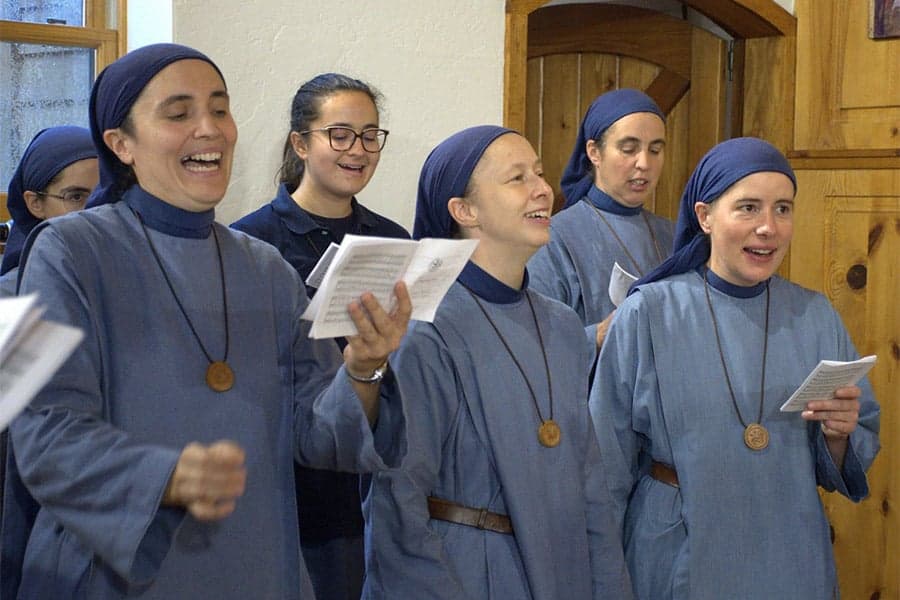
Little Sister Candice’s path to religious life is more than a personal vocation story at Benedictine College. Around Atchison, it reads like a portrait of the Catholic culture that still shapes the city, where sky-blue habits, prayerful greetings and ordinary acts of hospitality keep appearing in the same public spaces students, parents and neighbors share.
A familiar presence on campus
Students at Benedictine College in Atchison, Kansas, recognize Little Sister Candice quickly because she and other members of the Little Sisters of the Lamb have often visited campus and taken part in college life. That visibility matters. The sisters are not distant figures in a chapel-only world; they move through the college’s everyday rhythm, crossing paths with students, chatting in the open and sometimes even singing a blessing as they go.
Benedictine has described the Little Brothers and Little Sisters of the Lamb as distinctive figures on campus in their sky-blue habits, a detail that has become part of the college’s own visual language. Their presence gives Benedictine students a live example of Catholic witness that is public, cheerful and unembarrassed, one that is hard to miss in a small city where the college and town continually overlap.
How Sister Candice found her vocation
The feature centers on the road that led Sister Candice into religious life. She says she was drawn toward that path after Eucharistic adoration in high school, then found direction after speaking with a sister who helped point her toward the Little Sisters of the Lamb community. The story is simple on the surface, but it carries the steady logic of Catholic formation: prayer first, then discernment, then a community that gives shape to a calling.
That sequence helps explain why her story resonates in Atchison. This is not just about one woman entering religious life. It is about how a vocation becomes visible to a campus community that values prayer, service and liturgy as lived habits rather than abstract ideals.
What the Lamb community represents here
Benedictine’s coverage presents the Little Sisters and Little Brothers of the Lamb as a community marked by monastic life, joy, prayer and closeness to the poor. A 2024 Benedictine College feature adds that the community was founded in southern France and is shaped by both Dominican and Franciscan spirituality. That blend of contemplation and service helps explain why the sisters and brothers fit so naturally into a college town where faith is not confined to theory.
The appeal, as Benedictine’s own writers have suggested, is not novelty for its own sake. It is the sense that the community embodies a coherent Catholic life that students can see, hear and meet face to face. In a place like Atchison, that daily exposure shapes the religious imagination of the whole town.
Why Atchison is the right setting for this story
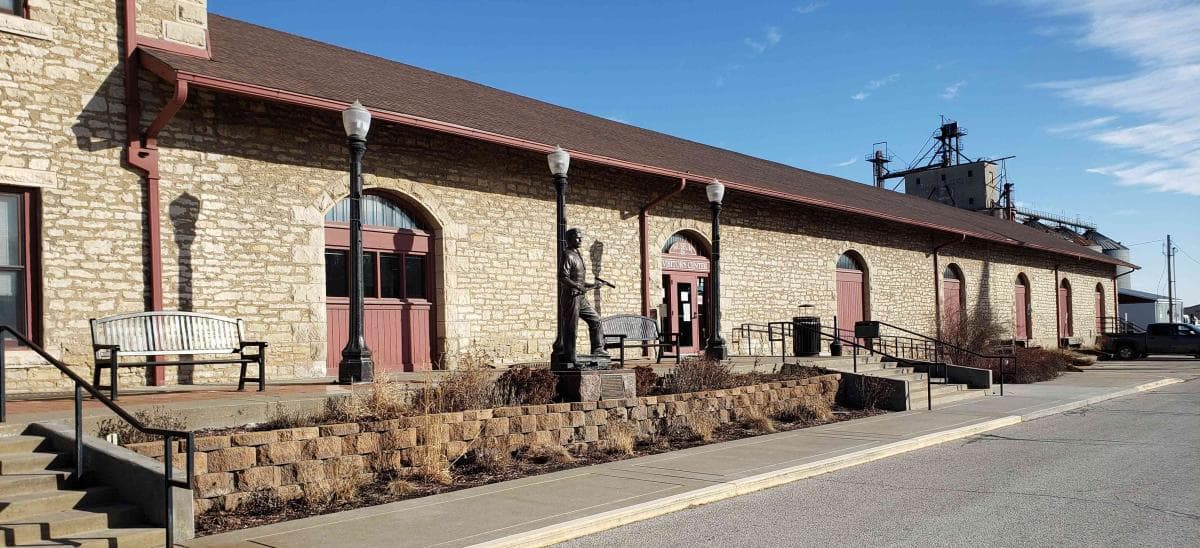
Benedictine College sits in historic Atchison on the west bank of the Missouri River, about 45 miles north of Kansas City. The city’s scale makes these encounters feel personal. Atchison had 10,885 residents in the 2020 census and was estimated at 10,813 in July 2024, while Atchison County’s population estimate for July 1, 2025 was 16,038.
The local numbers matter because this is also a city where need is real. Atchison’s poverty rate was 15.8% in 2024, which gives added weight to ministries rooted in hospitality, food and companionship. In a community this size, religious presence is not decorative. It can mean a meal shared, a conversation had or a vulnerable neighbor treated as part of the circle instead of pushed outside it.
Cana House and Catholic hospitality in practice
That local reality comes into sharper focus at the Cana House of Hospitality in Atchison. Benedictine describes Cana House as a Catholic apostolate serving people in need of a home, company or food. It is also the place where Cathe Sienkiewicz, a Raven parent, helps lead service to neighbors in need, connecting family life, campus life and the town’s social needs in one daily rhythm.
Jeremy Sienkiewicz, the founder and board president, has said the goal is to give the poor “a place to eat, meet and be engaged in the community in authentic human ways while helping one out of poverty.” That line captures why the sisters’ witness and the house’s mission feel so intertwined. The emphasis is not only on emergency relief, but on dignity, encounter and inclusion.
Jeremy Sienkiewicz’s own standing at Benedictine underscores that connection. He was named the college’s 2025 Distinguished Educator of the Year, a reminder that the people shaping this Catholic culture are not only clergy and religious. They are also professors, parents and lay leaders whose work keeps the institution tied to the town around it.
A network of faith that keeps returning
Benedictine’s earlier coverage shows that the Little Sisters of the Lamb community has long been part of the college’s wider Catholic life. In 2022, the Kansas City, Kansas, community helped bring Cardinal Philippe Barbarin to campus and later helped arrange a visit to prisoners. That kind of outreach shows a pattern that goes beyond campus appearances. The community’s life reaches into public witness, pastoral care and service to people often left at the margins.
Aaron Riches added another layer to that picture when he reflected on a mission experience with the little brothers, describing an overnight with the poor in a homeless shelter that left him and his son deeply moved by the welcome they received. That detail matters because it shows the Lamb community working in both directions at once, receiving hospitality from the poor even as it seeks to serve them.
Taken together, Sister Candice’s vocation story, the visibility of the Lamb community on campus, and the work of Cana House point to the same conclusion: Benedictine College’s Catholic identity is not confined to classrooms or ceremonial moments. In Atchison, faith lives in movement, in welcome and in ordinary encounters that keep turning the college outward toward the city it inhabits.
This article was produced by Prism’s automated news system from verified source data, official records, and press releases, then run through automated quality and moderation checks before publishing. The system is built and supervised by the people who set the standards it runs under. Read our full AI policy.
Know something we missed? Have a correction or additional information?
Submit a Tip