Cana House builds community and belonging in Atchison
Cana House turns shared meals into steady belonging, linking Benedictine students and Atchison residents through coffee, dinner and hospitality rooted in real need.
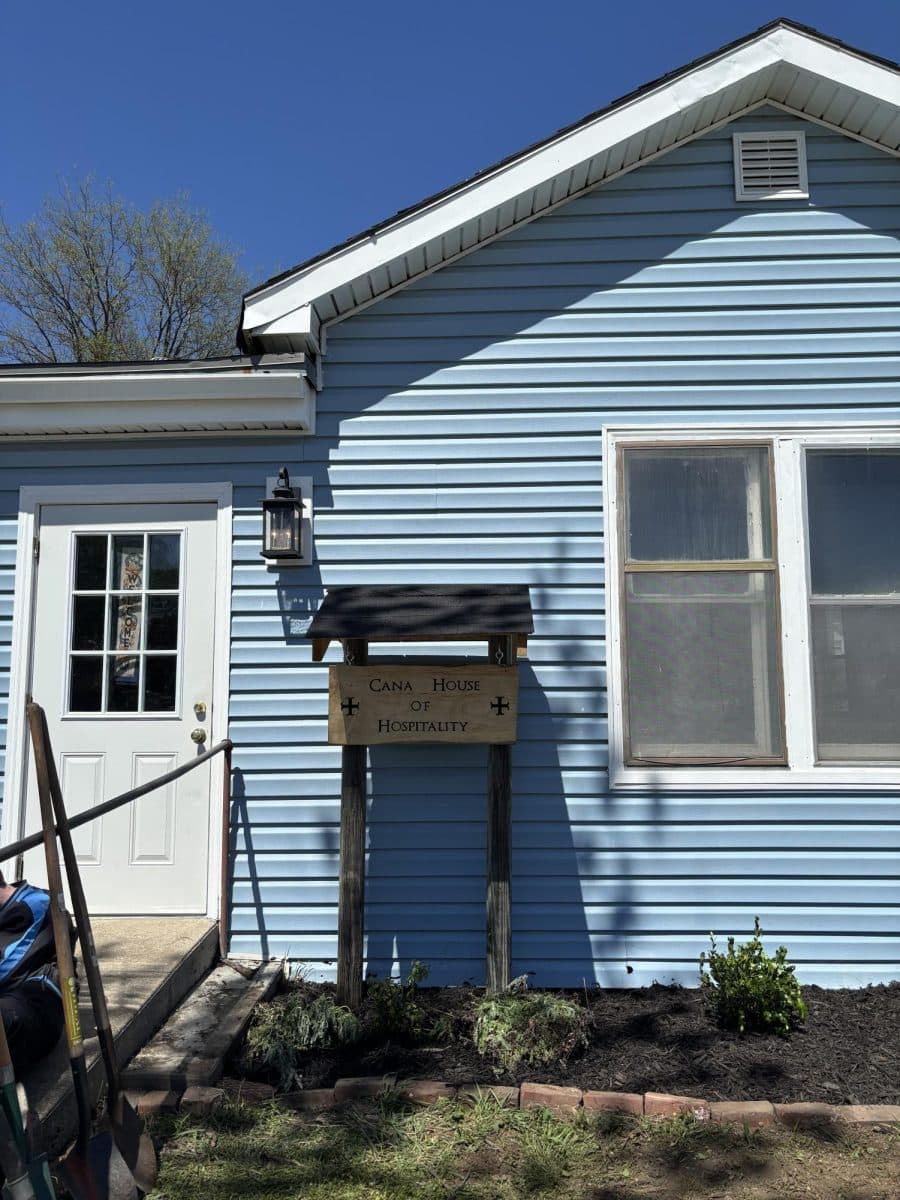
The Cana House of Hospitality makes its case in ordinary routines: coffee on Tuesday mornings, food on Tuesday evenings, and a dinner table that keeps drawing Benedictine College students and Atchison residents into the same room. What began with a Christmas Day 2022 dinner at St. Joseph’s Church has grown into a permanent house on the city’s side of campus-town life, where the work is less about events than about presence.
A house built around repeated contact
Cana House is described by Benedictine College as a Catholic apostolate serving people who need a home, company or food. Founder and board president Jeremy Sienkiewicz puts the mission in direct terms: it is meant to give the poor a place to eat, meet and be engaged in the community in authentic human ways, while also opening paths out of poverty. The model is deliberate. Cana House takes its shape from Dorothy Day’s Houses of Hospitality, where the point is not a one-time service gesture but a durable place where people can return.
That rhythm matters in Atchison because belonging is often built through repetition rather than ceremony. The house started with one Christmas meal in 2022, then added dinners on the third Sunday of each month, which turned hospitality into a recurring habit. Later, after Benedictine College professors and students spent work weekends renovating a house, the permanent location opened on Oct. 19, giving the effort a fixed address and a more reliable footing in the city.
What the weekly schedule looks like
The most visible part of Cana House is not a program brochure but a calendar of small, steady gatherings. Tuesday mornings bring coffee, Tuesday evenings bring food, and the third Sunday dinner keeps the original meal tradition alive. Those touchpoints create multiple ways for people to walk in, whether they come from the college, from downtown Atchison or from a household that simply needs a meal and conversation.
That structure also lowers the barrier to entry. A person does not have to sign up for a formal service project or arrive with any institutional affiliation to sit down at the table. The house’s value comes from the fact that it is open enough to meet different kinds of need on different days, from companionship to a meal to a place where someone can see familiar faces again.
Why it matters beyond the campus
Cana House sits inside a small city where social distance between students and longtime residents can be easy to maintain and hard to repair. By putting Benedictine students in direct contact with Atchison neighbors, the house creates a place where the college’s presence in town becomes personal rather than abstract. Junior Wiley Willmann called it “really special” to form relationships with people in Atchison and branch out, while junior Lizzie Hogan said the relationships had become more like family and that she learned to receive from the community in ways she did not expect.
Those comments reflect something larger than a student volunteer experience. In a town like Atchison, where one institution can shape much of daily life, shared meals become a practical form of civic glue. The house is not just serving the college community or a separate charitable group. It is building a setting where campus and town can meet as neighbors, not as categories.
Meeting real needs in Atchison County
The need is not theoretical. Catholic Charities of Northeast Kansas says more than 12 percent, or 1,960 people, living in Atchison County are food insecure. Its Atchison Family Support Center at 502 Kansas Ave. serves low-income individuals and families with food pantry help, housing assistance, utility support, clothing and case management, showing how tightly food insecurity and broader instability are tied together in the county.
That context gives Cana House a wider public health and social equity role. A meal site does not replace a pantry or a housing office, but it can reduce isolation, give people a regular place to go and connect them with a broader support network. During two winter cold snaps, Project Concern said the house would open to anyone needing a place to get warm, which shows how quickly a hospitality space can become part of local safety planning when temperatures drop and people need immediate relief.
A small county where stability is visible
Atchison County’s scale helps explain why this kind of house can matter so much. The U.S. Census Bureau’s QuickFacts page lists an estimated county population of 16,249 in 2024 and 16,172 in 2025. It also lists a 2024 median gross rent of $765, a 2024 median owner-occupied home value of $145,700, 6,837 housing units in the 2025 estimate and 5,735 households in the 2020 to 2024 period.
Those numbers point to a place where housing pressure, affordability and neighbor-to-neighbor support are not distant policy issues. In a county that small, a single house offering regular food, coffee and conversation can become part of the informal infrastructure that helps people stay connected to one another.
A nonprofit with local roots and a formal structure
Cana House is not just a loose volunteer effort. The Cana House of Hospitality Foundation received IRS tax-exempt status in October 2024, giving the work a formal nonprofit structure. The project is led by board members Jeremy and Cathe Sienkiewicz, Dr. James Young, Meggan Young, Ryan Pigg, Cecilia Pigg and Brother Angelus, with Willmann and Hogan serving as student leaders who help connect Benedictine students with the broader community.
That governance matters because it shows the house is designed to last. It has leadership, a legal structure and a recurring rhythm of meals and visits, all of which make it more durable than a one-off outreach event. For Atchison, that means the project can keep serving people through ordinary weeks, cold snaps and whatever other needs show up at the door.
Part of a longer Catholic presence in Atchison
The house also sits inside a deeper local tradition. Benedictine College was formed in 1971 through the merger of St. Benedict’s College, founded in 1858, and Mount St. Scholastica College, founded in 1923. That history places Cana House within a long Catholic educational and service presence in Atchison, where institutions have repeatedly linked learning, worship and care for neighbors.
Seen that way, Cana House is not an isolated experiment attached to the college. It is a practical expression of a much older local pattern, one in which hospitality is treated as a public good. In Atchison, that has meant a table that keeps getting set, a house that keeps opening and a community that keeps finding its way back to one another.
This article was produced by Prism’s automated news system from verified source data, official records, and press releases, then run through automated quality and moderation checks before publishing. The system is built and supervised by the people who set the standards it runs under. Read our full AI policy.
Did this article answer your question?