Mount St. Scholastica remains a living monastery in Atchison County
Mount St. Scholastica is still open to the public through tours, archives, and ministries, making it a working monastery as much as a landmark. Its history runs from 1863 classrooms to Benedictine College and a living archive.
Mount St. Scholastica is still part monastery, part archive, and part front porch for Atchison County. Visitors do not just come to look at a historic building; they can still step into a community of Benedictine Sisters, see the grounds, and trace how one Atchison institution shaped education, worship, and service across northeast Kansas.
What the Mount is today
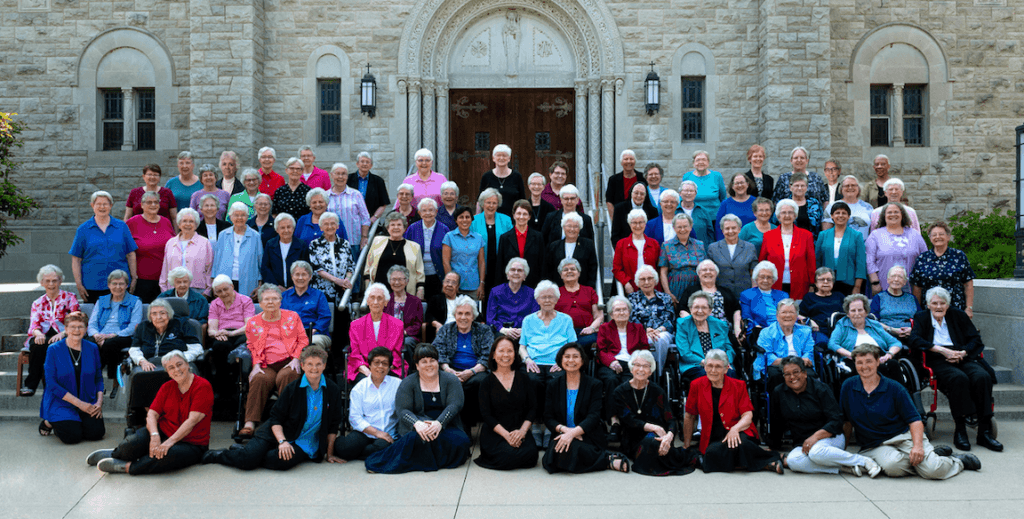
The Benedictine Sisters of Mount St. Scholastica describe their community as more than 80 women devoted to prayer, work, and hospitality under the Rule of St. Benedict. That living identity matters because the site is not frozen as a museum piece. It continues to operate through ministries such as Sophia Spirituality Center and Keeler Women’s Center, linking the monastery to spiritual formation, education, and service in the present tense.
Public access is built into that mission. Monastery tours are offered Monday through Saturday by appointment only, and the route takes visitors through the main halls and three chapels. The walk also extends outdoors, where the campus includes an expansive garden, solar panels, the cemetery, multiple flower gardens, Marian statuaries, and an exterior view of the hermitage. For anyone wanting to understand the Mount as a place rather than just a name, that mix of sacred space, landscape, and daily use is the clearest entry point.
How a frontier school became a county landmark
The Mount’s story begins in Atchison in 1863, when seven Benedictine Sisters arrived on November 11 with a plan to open a school for girls despite threats from anti-Catholic elements in the frontier town. That first school opened on December 1, 1863, and began with 44 students. The dates matter because they show how quickly the community moved from arrival to institution, and how closely the Mount’s growth was tied to the settlement of Atchison County itself.
The academy expanded quickly enough to keep reshaping its home. In 1877, the sisters bought Price Villa and moved the academy there, while also establishing their first mission outside Atchison in Seneca, Kansas. From there, their teaching work spread into Missouri, Iowa, Nebraska, and Colorado. The Mount’s history is therefore not only local pride; it is a map of how a small religious community extended its influence across the Midwest through education.
That educational legacy continued into the 20th century. Mount St. Scholastica College opened in 1923, and in 1971 it merged with St. Benedict’s College to form Benedictine College. Today, Benedictine College still recognizes the Mount as one of its sponsoring communities, which helps explain why the monastery remains so closely tied to the county’s academic identity.
The buildings tell their own story
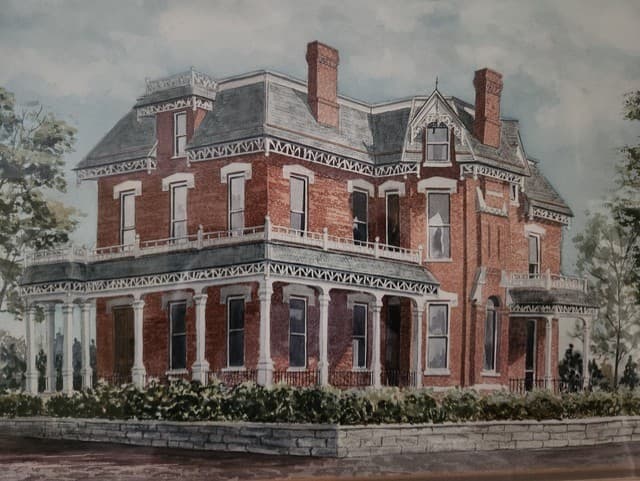
Architecture on the hill carries the history in plain sight. The Mount says the monastery and choir chapel were built in 1900, and the community received eight Benedictine sisters from France in 1904. A National Register nomination describes the Mount Saint Scholastica Convent as a four-story U-shaped building, with the chapel in the north wing and native limestone trim set against the red brick exterior. Those details give the site its distinct profile and help visitors read the campus as a layered, working complex rather than a single preserved monument.
That built environment matters because it connects the public-facing tour to the monastery’s daily rhythm. The chapel spaces, garden, cemetery, and hermitage view are not decorative extras. They are part of how the community presents itself, and they give residents a way to experience a place that has been continuously active since the Civil War era.
Why the archive is one of Atchison County’s most useful resources
The archive makes Mount St. Scholastica more than a destination for tours. The sisters maintain collections that include photographs, ministry records, school-related records, and materials created by individual sisters. They also allow research by advance request, which makes the archive useful for family history, school history, and local heritage work.
In 2026, the Mount said the archive needed expansion because the community had a 163-year history and the records were, in the Mount’s own description, “bursting at the seams.” The same account said the monastery had 76 living sisters and 674 deceased sisters, and that the archive also houses materials for seven other Benedictine monasteries, plus records for the Monastic Congregation of St. Scholastica, the Conference of American Benedictine Prioresses, and the American Benedictine Formation Conference. For Atchison County, that means the Mount functions as a memory-keeper for a much wider Benedictine network, not just for its own household.
The archive’s value is practical as well as historical. Because it includes school records and lists of sisters who taught there, it can help reconstruct the history of local classrooms, religious vocations, and women’s education in Kansas. For researchers, descendants, and anyone working on community history, the Mount is one of the few places where those threads remain physically organized and accessible.
A service tradition that reaches beyond the hill
The Mount’s public role also shows up in the sisters’ ministries. Sophia Spirituality Center and Keeler Women’s Center extend the monastery’s work beyond its walls, keeping faith formation and social support connected to the present. That is part of why Mount St. Scholastica still matters in daily civic and cultural life: it is not only remembered, it is still active.
The sisters’ archive also points to service beyond the classroom. Benedictine archives describe prison and jail ministries beginning in 1968, showing that the community’s outreach had long since moved beyond education alone. Taken together with the academy, the college, the tours, and the archive, that record explains why the Mount remains one of Atchison County’s most recognizable living landmarks.
For residents and visitors, the practical takeaway is straightforward: the Mount can be experienced now, not just admired from a distance. A weekday appointment can lead to the chapels, the gardens, the cemetery, and the stories behind them, while the archive and ministry centers show how the monastery continues to serve Atchison County as a place of worship, learning, and institutional memory.
This article was produced by Prism’s automated news system from verified source data, official records, and press releases, then run through automated quality and moderation checks before publishing. The system is built and supervised by the people who set the standards it runs under. Read our full AI policy.
Did this article answer your question?