Autauga, Elmore bluebird trail tracks nesting birds along Highway 14
Along Highway 14, volunteers track bluebird nests in a corridor that logged 104 boxes and 430 fledglings, turning a roadside project into citizen science.
The bluebird trail along Highway 14 is not just a pleasant stretch of roadside habitat. It is a working conservation line that connects Autauga and Elmore counties, with volunteers building nest boxes, checking them through the breeding season, and sending the counts into Cornell University’s bird records. Since it began in 2019, the Autauga and Elmore Bluebird Trail has become a measurable public asset, one that produced 104 monitored nesting boxes and 430 fledged birds in 2022 alone.
How the trail runs through Autauga and Elmore counties
The trail follows Highway 14 through both counties, giving the project a clear physical footprint that local drivers can actually recognize. It is organized through the Autauga County Master Gardeners, a research-based Extension volunteer team that says its mission is to improve lives through horticulture education and environmental stewardship. Their office is at the Autauga County Extension System, 2226 Highway 14 West, Suite E, in Autaugaville.
That local base matters because the trail is not a one-off habitat display. It is maintained by people who live here, work here, and return to the same boxes each year to see what nested, hatched, and fledged. The trail’s value comes from that repeatable route and the data it produces.
What volunteers actually do
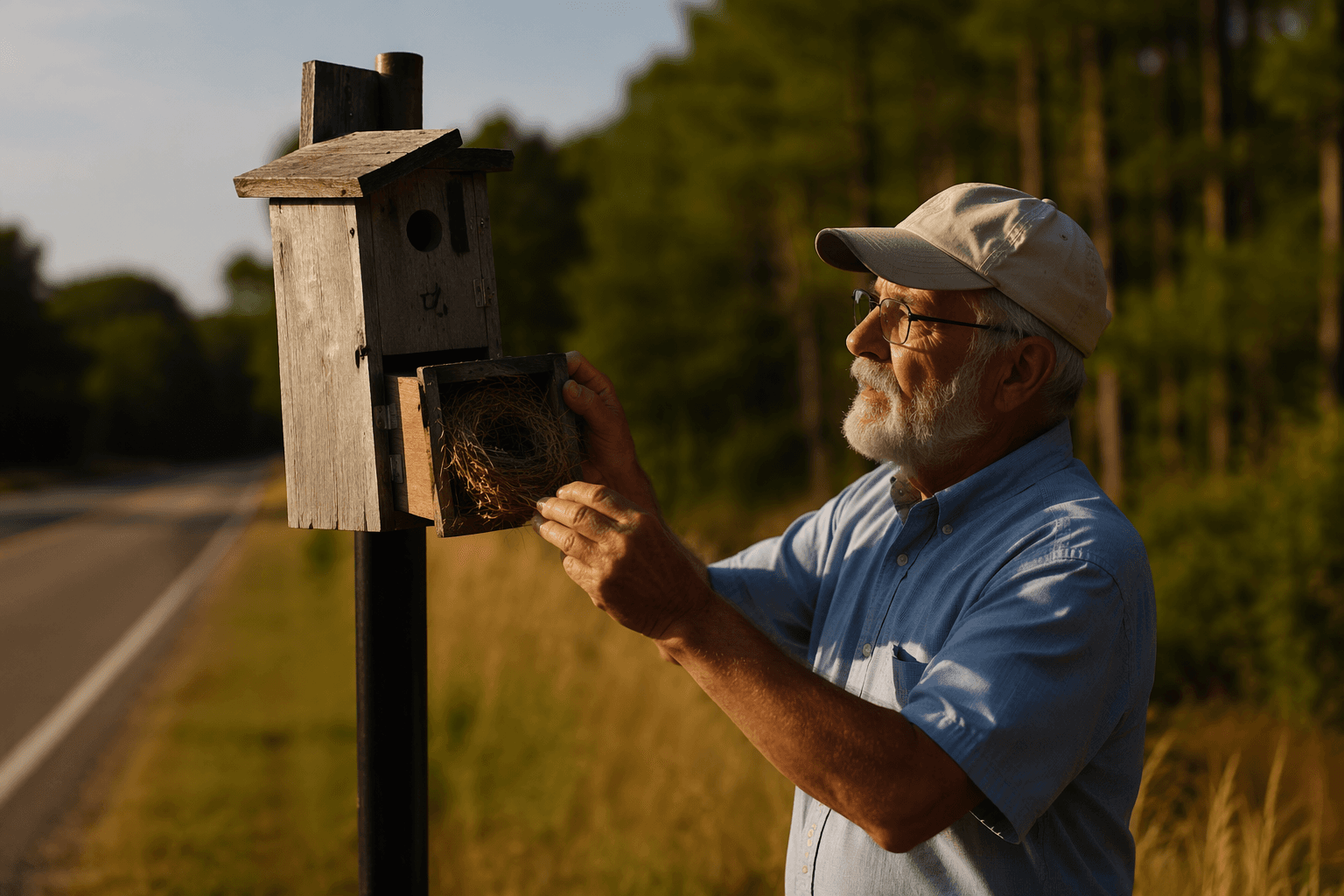
The work starts with the boxes themselves. Volunteers build and maintain nesting boxes for Eastern Bluebirds and other cavity-nesting birds, then monitor those boxes from early March through July, the core nesting window in this area. During that stretch, the trail operates like a field survey rather than a decorative project: boxes are checked, nest activity is recorded, and the results are tallied season by season.
Those tallies are sent to Cornell University’s ornithology program, which turns local observations into citizen science. That makes the trail part of a broader research network instead of an isolated county project. The boxes along Highway 14 are helping document how birds use open landscapes in Autauga and Elmore counties, one nest at a time.
Why bluebirds still need help
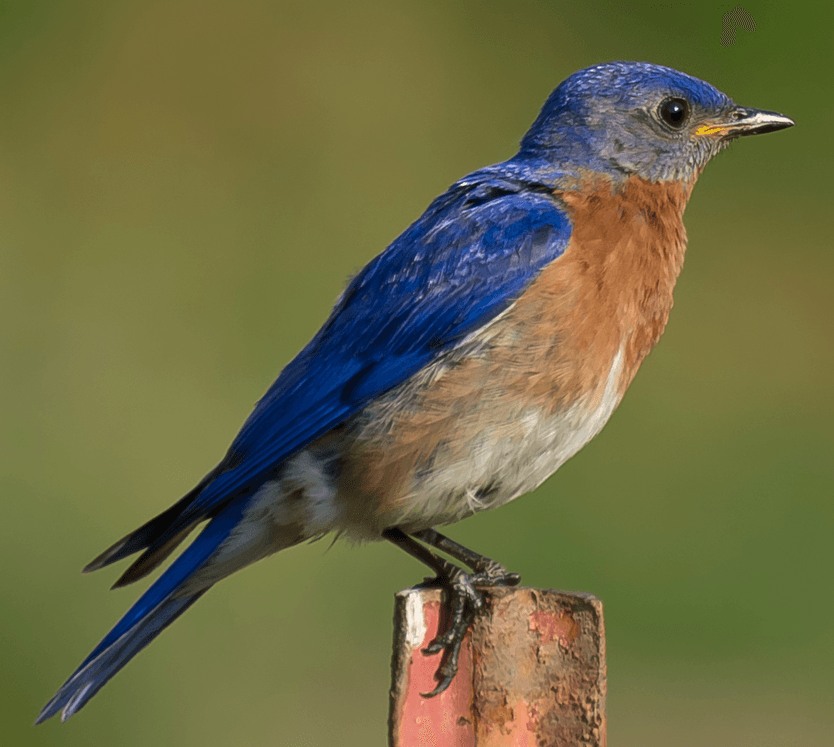
Eastern Bluebirds once declined sharply in the early twentieth century when introduced species such as European Starlings and House Sparrows competed for nest holes. Cornell’s species materials note that bluebirds favor open habitat and readily use cavities, including nest boxes, when those sites are available. That is the key reason a road corridor like Highway 14 can support them well: the habitat is open, and the boxes replace nesting sites that can be scarce.
Cornell’s broader bird-conservation work gives the local trail a larger context. Its 2019 analysis found that North America has lost 2.9 billion breeding birds since 1970, equal to 29 percent of 1970 abundance. Cornell’s 2025 State of the Birds coverage says about a third of American birds, or 229 species, are of high or moderate concern because of low populations, declining trends, or other threats. Against that backdrop, a small route of nest boxes in two Alabama counties becomes more than a roadside project. It is part of the response.
What the 2022 numbers show
The 2022 trail count gives the clearest measure of what this model can do. With 104 nesting boxes under observation, the project documented 430 birds fledging from eggs that hatched. That is the kind of result that separates an attractive volunteer effort from a functioning monitoring program.
For local readers, those numbers matter because they show the trail is producing habitat and outcomes at the same time. The boxes are not symbolic. They are used, checked, and counted, and the results are entered into a larger scientific record. That combination of hands-on stewardship and documented success is what has kept the trail relevant since 2019.
What can be observed through the season
The trail rewards attention across the spring and summer, especially during the monitoring window from early March through July. Early in the season, the boxes can show signs of nest-building and pair activity. As the months move on, the focus shifts to hatching, feeding, and fledging, the point when young birds leave the nest.
Open landscapes are where bluebirds are most at home, so Highway 14 gives them the kind of setting Cornell describes in its life-history materials. Roadside fields, fence lines, and other open stretches are the places where the trail makes the most sense. That is also why the project is easy to follow from the road: the habitat is visible, the boxes are fixed in place, and the season has a clear rhythm.
A local program that has become part of county life
The trail has also become an established educational effort. The Autauga County Master Gardeners publicly referenced it in a 2023 newsletter and program that featured Betty Hall discussing the trail’s history and status. That kind of repeated public mention matters because it shows the project has moved beyond a single launch and into routine county outreach.
It also fits the broader way Autauga County residents use outdoor spaces for learning and recreation. This trail does not ask anyone to imagine conservation in the abstract. It puts bird habitat along a familiar highway, ties it to a local Extension office, and gives volunteers a clear seasonal job. The result is a corridor where residents can see stewardship at work and where bird counts become part of the county’s public record.
The trail succeeds here because it is practical, local, and repeatable. It has a defined route, a defined season, a defined data stream, and a volunteer base that keeps the boxes in use year after year.
This article was produced by Prism’s automated news system from verified source data, official records, and press releases, then run through automated quality and moderation checks before publishing. The system is built and supervised by the people who set the standards it runs under. Read our full AI policy.
Did this article answer your question?