Autaugaville's Historic Mills Inform Local Economy and Schools
Autaugaville traces its roots to mills on Swift Creek beginning about 1820 and retains a small, tight-knit population of roughly 795 residents as of the 2020 census. That history shapes present-day economic and policy questions for residents, from preservation of sites like the Lassiter House to the role of Autaugaville School as one of Autauga County’s few K-12 service communities.
Autaugaville sits along Alabama State Route 14, about 14 miles west of Prattville, and remains a small rural town within the Montgomery metropolitan area. Its documented history stretches back to the antebellum era, when a gristmill, sawmill and a cotton mill established in 1849 made the settlement an early local manufacturing center. Industry around Swift Creek continued through the 19th and into the 20th century, shaping local land use and community identity.
Today the town’s population, recorded at about 795 in the 2020 census, underscores the economic scale residents and local officials manage. Autaugaville School serves preschool through 12th grade and is part of Autauga County Schools, making the facility a focal point for families and local employment. Historically, operations and any proposals that affect the school - closures or consolidation proposals - have drawn attention at the county level because changes would reverberate through local household budgets, commuting patterns and property values.

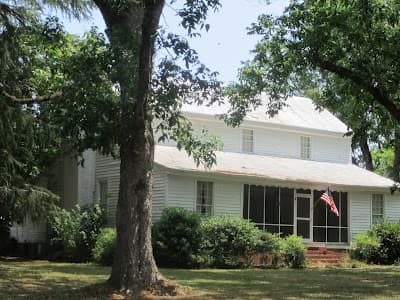
Historic preservation is another economic and civic consideration. The Lassiter House, listed on the National Register of Historic Places, and other locally significant properties reflect both a cultural asset and potential leverage for heritage tourism or preservation grants. Preserving such sites requires coordination between town leaders, county officials and state programs, and could provide modest economic development options compatible with the town’s size.
Autaugaville’s position on a state route and within the broader Montgomery metropolitan area means many residents likely access jobs, services and markets beyond the town limits. That commuting link can sustain household incomes without expanding local commercial infrastructure, but it also limits local tax-base growth. For a town with small inland water features tied to Swift Creek and a largely rural footprint, growth pressures are moderate; policy choices on zoning, school operations and historic preservation will shape whether the town stabilizes, shrinks, or modestly grows in coming decades.
For residents seeking local information, the town maintains an official website at autaugavilleal.com. Additional historical context is available through state and online reference entries that document Autaugaville’s antebellum origins, post-Civil War decline and later railroad connections. As county leaders weigh school and service decisions, those choices will continue to determine how this 19th-century mill town adapts economically and socially in the 21st century.
This article was produced by Prism’s automated news system from verified source data, official records, and press releases, then run through automated quality and moderation checks before publishing. The system is built and supervised by the people who set the standards it runs under. Read our full AI policy.
Did this article answer your question?