Jones Farm keeps Autauga County’s multigenerational farming tradition alive
Jones Farm shows how Autauga County farmland survives: three generations, direct beef and pork sales, and a business model built on trust.
A family farm built to last
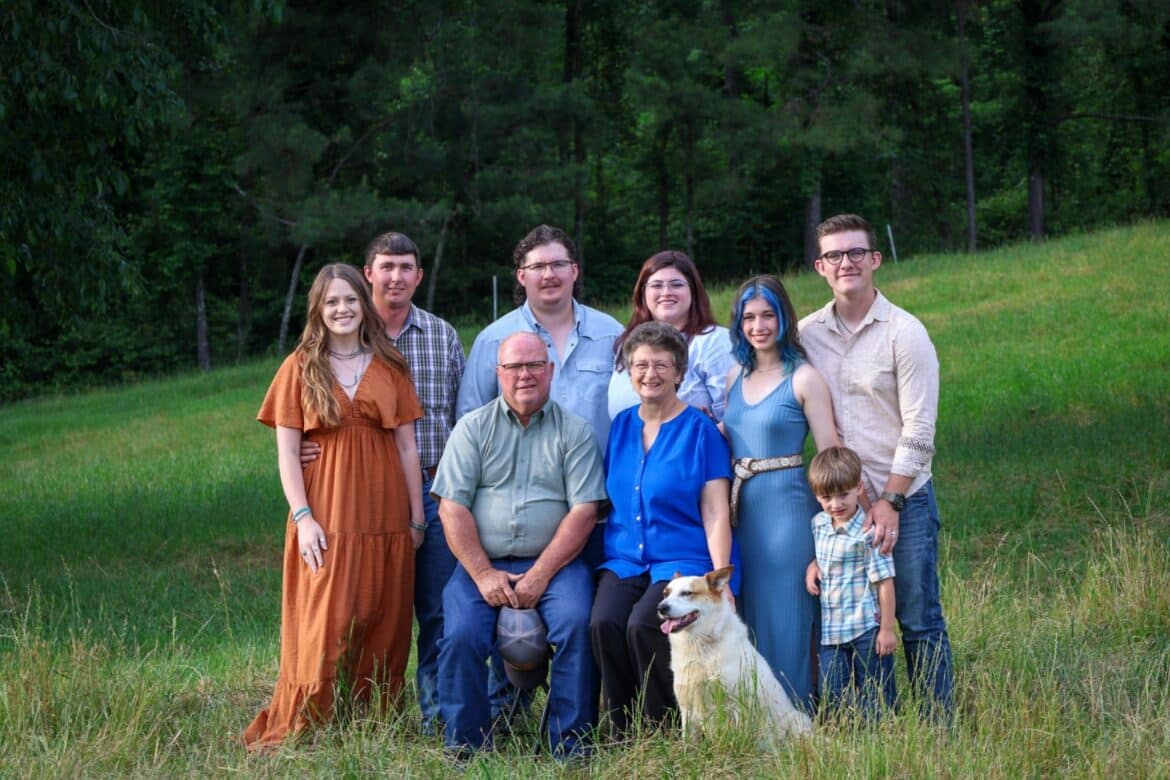
Jones Farm has stayed in Autauga County long enough to become part of the county’s agricultural memory. What began with grandparents raising crops and livestock to feed their own families has grown into a third-generation operation, one that still depends on family labor and family stewardship rather than outside ownership or a detached corporate structure.
That matters in a county as physically large as Autauga County, which covers 594.5 square miles of land, and in a place like Prattville, where development pressure, commuter growth, and regional business activity continue to shape the landscape. In that setting, keeping a farm intact is not just about producing food. It is about holding onto land, identity, and a way of life that has managed to survive while the rest of the county changes around it.
How Jones Farm works today
Donnie Jones and Sharon Jones run the farm today with their children’s families: Daniel and Josie Jones, Austin and Mary Grace Jones, and Rebecca, Micah and Obadiah Levi. Sweet Grown Alabama describes the operation as a third-generation cattle, hay and produce farm that has been located in Autauga County for more than 100 years, and Jones Farm says it provides locally grown beef and pork to surrounding areas.
That mix of livestock, hay and produce points to a farm that has not narrowed itself into a single commodity. It is still diversified enough to weather changing markets, but focused enough to build a recognizable local brand. In practical terms, that means the family is not only raising animals and crops. It is also managing customer relationships, deliveries, quality control and the day-to-day work that comes with direct sales.
Jones Farm says its goal is to reconnect consumers with local producers through Sweet Grown Alabama food, and that outreach is important because direct-to-consumer agriculture depends on trust. Customers are not buying from an anonymous system. They are buying from a named family whose reputation rests on consistency, visibility and the promise that the product was raised nearby.
Why direct-to-consumer sales matter now
The Jones Farm model fits a larger shift in American agriculture. Auburn University Alabama Cooperative Extension System has pointed to the 2022 Census of Agriculture, which showed $17.5 billion in farm products sold directly from farms to consumers nationwide, a 25% increase from 2017. That is a meaningful change, and it shows that more producers are treating direct marketing not as a side project but as a serious revenue strategy.
For farms like Jones Farm, the appeal is clear. Direct sales can keep more value closer to the farm, reduce dependence on middlemen and create stronger ties to the people buying the food. But the model also adds pressure. It requires more time, more outreach and more labor than simply loading product onto a larger distribution chain and stepping back.
The result is a business that is more visible and more exposed. When a family farm sells beef and pork directly to surrounding communities, every transaction carries the weight of the farm’s name. That is both an advantage and a responsibility, especially when the operation is trying to preserve land across generations.
What the farm says about land pressure in Autauga County
Jones Farm is more than a family story. It is a local case study in how farmland survives inside a county that is growing and becoming more connected to the broader River Region economy. Prattville and Autauga County economic development materials emphasize transportation access and business development, which are the kinds of advantages that attract new residents, new businesses and new land use demands.
That growth creates a familiar tension for rural families. Land that has supported cattle, hay and produce for generations can become more valuable as development pressure rises. At the same time, the cost of staying in agriculture keeps climbing. Feed, equipment, fuel, labor and maintenance all demand constant attention, and small family farms rarely have the cushion that larger agribusinesses enjoy.
In that environment, multigenerational ownership becomes an economic strategy as much as a sentimental one. A farm passed from grandparents to children to grandchildren can retain land that might otherwise be divided or sold. But succession only works if the next generation is willing to carry both the financial risk and the physical work. Jones Farm’s structure suggests exactly that kind of commitment.
The labor behind the legacy
The family’s materials make clear that this is still hands-on farming. That detail matters because modern farming narratives can sometimes blur the difference between ownership and labor. At Jones Farm, the people whose names are attached to the business are also the people doing the work, which helps explain how the operation has remained rooted in place for so long.
Farming as a family obligation also changes the way decisions are made. A short-term profit choice can have long-term consequences if it affects land quality, herd health or the family’s ability to pass the farm on intact. That makes continuity part of the business model. The farm is not simply trying to maximize this season’s numbers. It is trying to preserve the conditions that let the next generation keep going.
That is why the story resonates beyond the fence line. In Autauga County, a farm like this helps define what local agriculture still looks like: a mix of food production, family labor, customer trust and land stewardship. It also shows that farming’s future may depend less on scale alone than on adaptability, direct relationships and the ability to turn local identity into economic resilience.
A local farm with countywide meaning
Sweet Grown Alabama plays a useful role in that equation. As a nonprofit that enhances marketing opportunities for farmers by connecting consumers and retailers to Alabama-grown foods and agricultural products, it gives farms like Jones Farm a platform that fits the direct-sales economy. For families working to reach nearby customers, that kind of framework can help translate local reputation into steady demand.
Jones Farm’s longevity makes it especially significant in Autauga County because it links old agricultural habits to a modern market. The farm’s story reaches back to the days when families grew what they needed to eat, yet it also reflects today’s consumer interest in knowing where food comes from. Those two realities meet in one place on land that has stayed in the Jones family for more than a century.
As Autauga County keeps growing around Prattville and deeper into the River Region, farms like this will face the same questions over and over: who will work the land, who will buy the product, and who will keep the property intact when the pressure to sell gets stronger. Jones Farm’s answer is already visible in the fields, the barns and the family names attached to the operation. Its future, like its past, is being built one generation at a time.
This article was produced by Prism’s automated news system from verified source data, official records, and press releases, then run through automated quality and moderation checks before publishing. The system is built and supervised by the people who set the standards it runs under. Read our full AI policy.
Know something we missed? Have a correction or additional information?
Submit a Tip