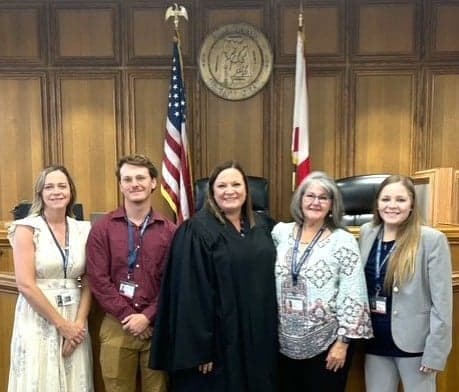
Millbrook-area leader links faith, partnerships to fight hunger across Alabama
Jamie Brown’s partnership work keeps food moving to hungry families in central Alabama, including Elmore County, where 12,980 people need help.
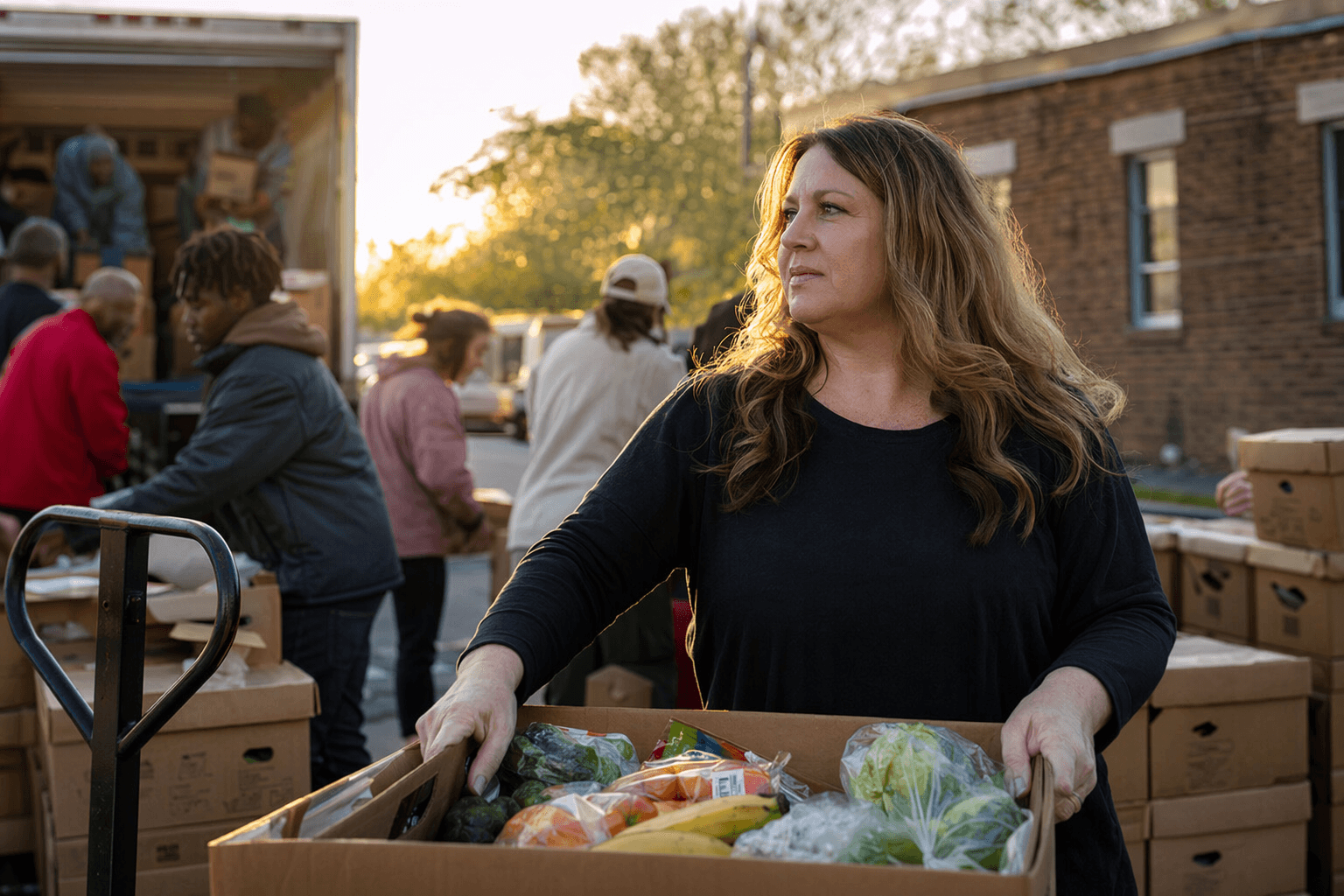
The hidden infrastructure behind hunger relief
Jamie Brown’s work matters because it keeps food moving. At the Heart of Alabama Food Bank, her corporate and community partnership role helps connect businesses, churches, nonprofits and other organizations to a network that reaches more than 200 partner agencies across 12 central Alabama counties, including the communities around Millbrook, Autauga County and Elmore County.
That network is not abstract. The food bank says it serves 12 counties directly and reaches 35 Alabama counties overall through four affiliated food banks. In a region where one in six children in Autauga and Elmore counties struggle with hunger, that kind of coordination can determine whether a pantry shelf is stocked, whether a senior has enough to eat, and whether a family can stretch groceries another week.
Why Brown’s role is local, even when the footprint is regional
Brown serves as Director of Corporate and Community Partnerships for the Heart of Alabama Food Bank, a job built around relationships that translate into meals. A speaker bio for Brown says she forms business and organizational partnerships to boost hunger relief in 12 central Alabama counties, which means her work is part outreach, part problem-solving and part logistics.
The scale of the need helps explain why the role matters in Autauga County and nearby communities. The Alabama Department of Public Health says Alabama is the fifth poorest state in the nation, with 17% of adults and 23% of children facing food insecurity. Feeding America’s Map the Meal Gap estimates the state’s food insecurity rate at 17.5% in 2023, with 896,510 people affected. Those numbers are the backdrop for Brown’s day-to-day work, where each new partnership can turn into more boxes, more produce and more stable access to nutritious food.
A faith-driven view of service
Brown’s approach is rooted in faith, and she traces that foundation to a grandmother who left a lasting mark on her life. That personal history helps explain why her work is described as steady and intentional rather than flashy. She is the kind of leader who measures success in continuity, not headlines.
Her childhood also shaped that outlook. She remembers growing up in a neighborhood where days were spent outdoors playing softball, swimming, catching crawdads and building forts. Those memories are more than nostalgia in her story; they reflect an early understanding of what it means to belong to a community and to look out for the people in it.
That perspective matters in hunger relief because the work is deeply relational. Food banks do not just move inventory. They depend on trust, local knowledge and long-term partnerships, especially in places where families may be one emergency away from needing help.
A career that prepared her for this moment
Before joining the food bank, Brown spent more than 35 years in financial services. That background gave her experience with leadership, communication and the kind of relationship-building that now fuels her role in nonprofit partnerships. It also suggests why she can navigate both boardrooms and community conversations with ease.
Brown also brings formal training to the job. She earned a master’s degree in human resource management from Troy University and maintains Senior Professional in Human Resources certification. That combination of business experience and people-centered training fits a role that requires both strategy and empathy, especially when the goal is to turn private-sector support into public good.
What the Heart of Alabama Food Bank says it can do
The Heart of Alabama Food Bank says it works with more than 200 food pantries, shelters, feeding programs and nonprofits across its 12-county direct-service region. That agency network is the backbone of hunger relief in central Alabama because it pushes food into neighborhoods where people already live, work and worship.
The food bank also says its broader system reaches 35 Alabama counties through affiliated food banks. That wider reach matters for communities like Millbrook, where residents may depend on a patchwork of local organizations that need consistent supply lines. Brown’s job sits at the point where those supply lines are strengthened or weakened.
For local leaders, the practical question is simple: if Brown’s relationship work disappeared, fewer businesses would be connected to hunger relief, fewer organizations would know how to plug into the system and fewer communities would have a reliable path to help. In a county where the need is already visible, that gap would show up quickly.
Why the numbers hit close to home
Elmore County’s need is not small. Millbrook Area Chamber of Commerce Hope in Motion Tour materials say the Heart of Alabama Food Bank serves 12,980 food-insecure children, adults and seniors in Elmore County. That figure puts a human scale on the problem: it is not a distant statewide statistic but a local count of people whose meals depend on an organized response.
A March 2025 Heart of Alabama Food Bank-related article said one in six children in Autauga and Elmore counties struggle with hunger. That means the issue is not limited to emergencies or isolated cases. It is a steady pressure on households across the region, including working families, older residents on fixed incomes and children who need dependable nutrition to learn and grow.
The local impact also reaches beyond any single pantry. When businesses, civic groups and service organizations align with the food bank, they create a stronger safety net for the whole area. That is what Brown’s partnership work is designed to do: make sure hunger relief does not depend on luck, but on a system that keeps showing up.
A quiet kind of leadership that residents feel
Brown fits the profile of a leader whose influence is felt before it is noticed. Her faith, her family history, her long career in financial services and her professional training all feed into a job that depends on consistency and trust. In central Alabama, those traits matter because hunger is not solved by slogans. It is addressed by warehouse loads, agency relationships and the daily work of making sure food gets where it is needed.
For Autauga and Elmore counties, that means Brown’s leadership is not ceremonial. It is part of the local infrastructure that helps children, seniors and families stay fed when budgets tighten and grocery bills climb. In a region already carrying a heavy hunger burden, that steady network is exactly what residents would miss most if it were not there.
This article was produced by Prism’s automated news system from verified source data, official records, and press releases, then run through automated quality and moderation checks before publishing. The system is built and supervised by the people who set the standards it runs under. Read our full AI policy.
Did this article answer your question?