Mount Sinai School preserves Autauga County's last standing Rosenwald school
Autauga County’s last standing Rosenwald school still anchors Mount Sinai’s Black education story, and the community center that owns it keeps the proof in place.
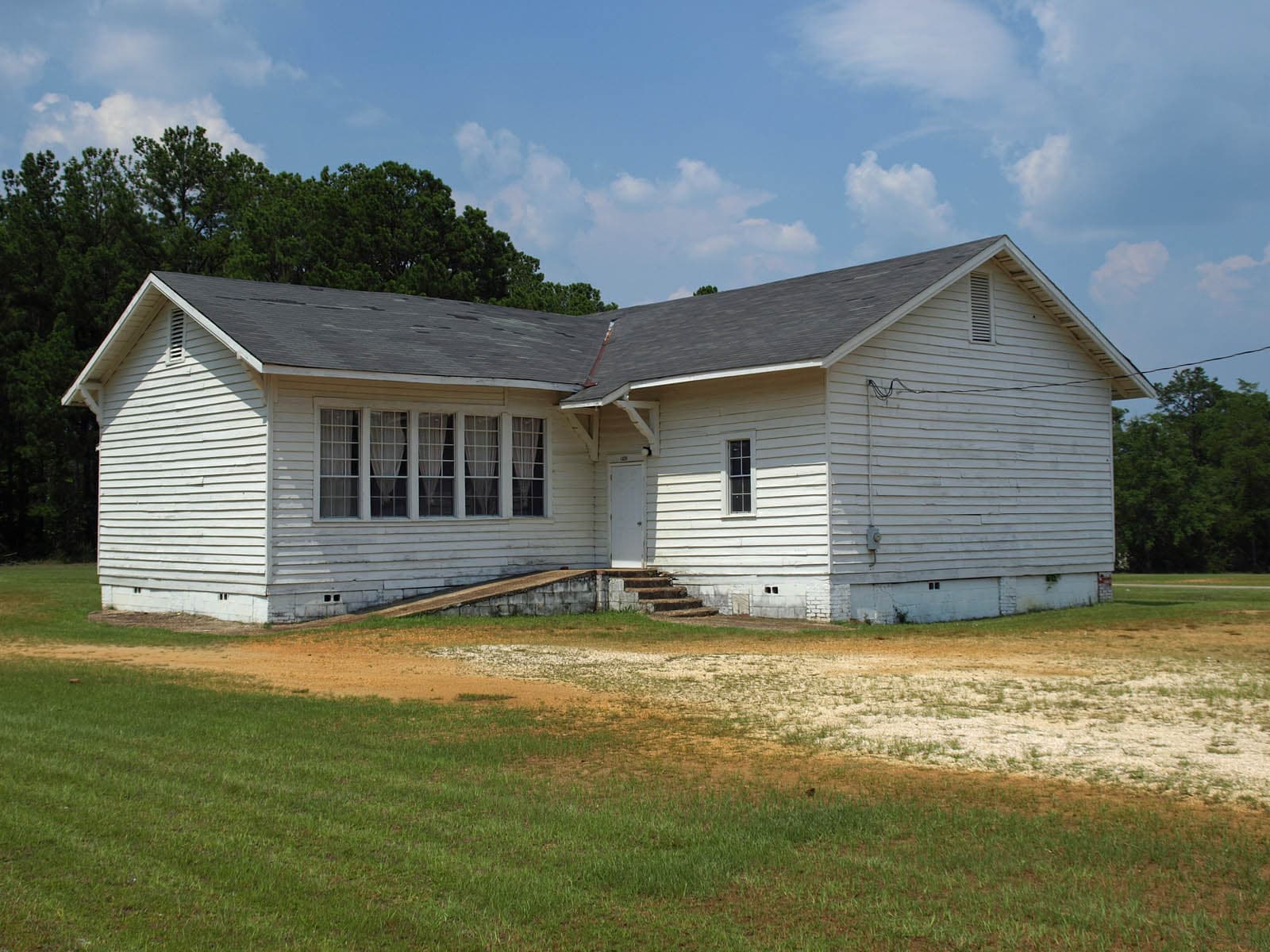
Mount Sinai School still stands at 1820 County Road 57 in the Mount Sinai Community near Prattville, and that alone makes it one of Autauga County’s most important preservation sites. Listed in the National Register of Historic Places on November 29, 2001, it is identified as the county’s last known standing Rosenwald school, a rare physical record of Black education built and sustained by local effort.
From church classroom to Rosenwald school
The school’s origin reaches back to a church classroom at Mount Sinai Baptist Church, where one teacher taught about 100 students before the class moved through temporary sites and was rebuilt at its present location. The Alabama Historical Commission file says the school was financed by families, moved from the church to a one-room frame building, then rebuilt after that structure was blown down. By 1919, the site had become a Rosenwald school, dedicated in October of that year, and the National Register nomination identifies it as a one-story, two-teacher building based on W.A. Hazel’s Tuskegee Institute Floorplan No. 20. A Fisk University Rosenwald Fund card for Mt. Sinai School adds a small but telling detail: it was marked “Built under Tuskegee.”
Anthony Townsend’s 1919 donation of five acres, noted on the historical marker, helps explain why the school could take root where it did. The building was not an imported monument dropped into the countryside by distant authorities. It grew from land, labor, and planning tied directly to the Mount Sinai Community, and the Rosenwald design gave that local investment a standardized schoolhouse that could serve rural Black children under segregation.
The money came from everywhere but mostly from home
The cost breakdown says the same thing in numbers. Mount Sinai School cost $1,325 to build, with $500 from the Rosenwald Fund, $300 from the state, and $525 raised by Black community members. That community share was not symbolic. It was the largest single local obligation in the project and shows how much of the school’s existence depended on Black families deciding that education was worth paying for, even when public systems did not provide enough on their own.
When the school opened in 1919, it had three teachers. By 1949, a fourth teacher was added, but the school still had only three rooms, so that teacher taught in the nearby church until more space could be built. In 1950, the Parent Teachers Association raised $500, and county funds matched it to add another room. That detail matters because it shows the school was not frozen in one era. It changed as enrollment and need changed, with families and county government both contributing to keep the building usable.
The building itself still carries the mark of that long use. The Alabama Historical Commission description calls it a one-story white wood-frame school with 22 windows and three entrance doors, and it notes that the original walls remain part of the structure. For readers looking for a surviving artifact rather than a plaque or a name on a list, those surviving materials are the proof: this is still a real building with its early fabric intact, not just a memory of one.
What changed after consolidation
Mount Sinai School closed in 1967 after school consolidation, and students were transferred to the Autauga County Training School at Autaugaville. The Mount Sinai Community Association bought the building that same year for $800, then incorporated in 1973 as the Mount Sinai Community Center, which continues to maintain ownership of the site. That chain of ownership is the key to understanding preservation here: the building survived because the community did not let it leave local hands. Zenobia Marshall, speaking as president of the Mount Sinai Community Center in a 2021 interview, described the school as an active community memory site rather than a dead relic, and the 2019 historical marker was erected by the center itself.
Why the survival matters now
Mount Sinai School sits inside a much larger Southern story. The Rosenwald program, created through Julius Rosenwald and Booker T. Washington’s partnership, built 389 schools in Alabama and assisted 5,358 educational buildings across 15 Southern states between 1913 and 1937. A 2021 discussion cited the National Trust’s estimate that only about 10 percent of roughly 5,000 Rosenwald school buildings survive today, which puts Mount Sinai in a shrinking category of places that can still be walked, measured, and seen.
For Autauga County, the stakes are local and immediate. If Mount Sinai School fades from use or memory, the county loses one of its clearest physical records of how Black families built schooling under segregation, paid for a classroom of their own, and kept expanding it when the county would not do the full job alone. Preserving it means more than maintaining a wooden structure from 1919. It means protecting a site that still tells the county where the education effort began, who funded it, and how much community will it took to keep it standing.
This article was produced by Prism’s automated news system from verified source data, official records, and press releases, then run through automated quality and moderation checks before publishing. The system is built and supervised by the people who set the standards it runs under. Read our full AI policy.
Know something we missed? Have a correction or additional information?
Submit a Tip