Prattville’s artesian wells shaped its growth and Fountain City identity
Prattville’s wells are still flowing at Doster Road, Heritage Park, and downtown stops. They explain how water built Fountain City and still shapes its public spaces.
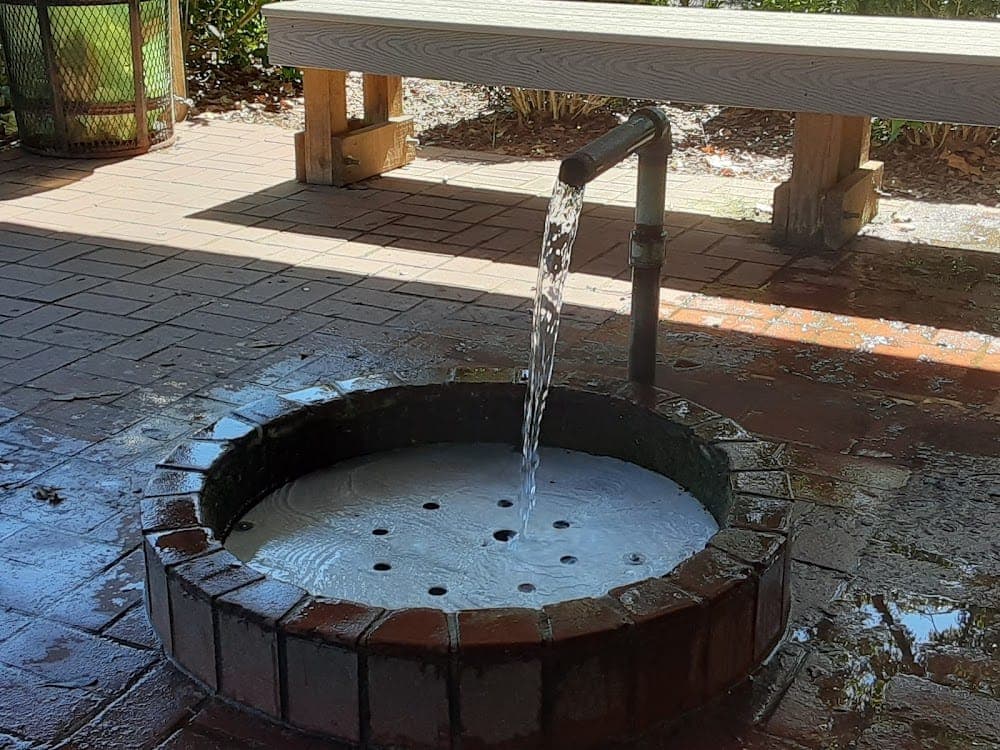
Prattville’s artesian wells are still working landmarks, not relics. At Doster Road, visitors can stop at 608 Doster Rd. for clear, free-flowing water under a tin-roofed well house, then continue to other city wells at Pratt Park, behind the Prattaugan Museum, and in Heritage Park. These stops show why Prattville still lives up to its Fountain City nickname and why water remains one of the city’s most visible public assets.
Where the wells still flow
The most direct place to understand Prattville’s well culture is the Doster Road Artesian Well, where a well house stands over a source that still draws people who want to drink from it. The site is practical as well as symbolic: the well house was erected in 2001 through a partnership between the Historic Prattville Redevelopment Authority and the City of Prattville, which ties the attraction to a specific public investment rather than a loose heritage claim.
A short self-guided circuit can start there and continue through the rest of downtown Prattville. The city’s other verified well stops give the route real utility:
- Doster Road Artesian Well, 608 Doster Rd.: a covered well stop known for clear, sweet artesian water.
- Pratt Park: another place where the city’s well tradition remains visible.
- Prattaugan Museum and Heritage Center: the grounds include one of Prattville’s artesian wells.
- Heritage Park: the drinking fountain there is fed by an artesian well.
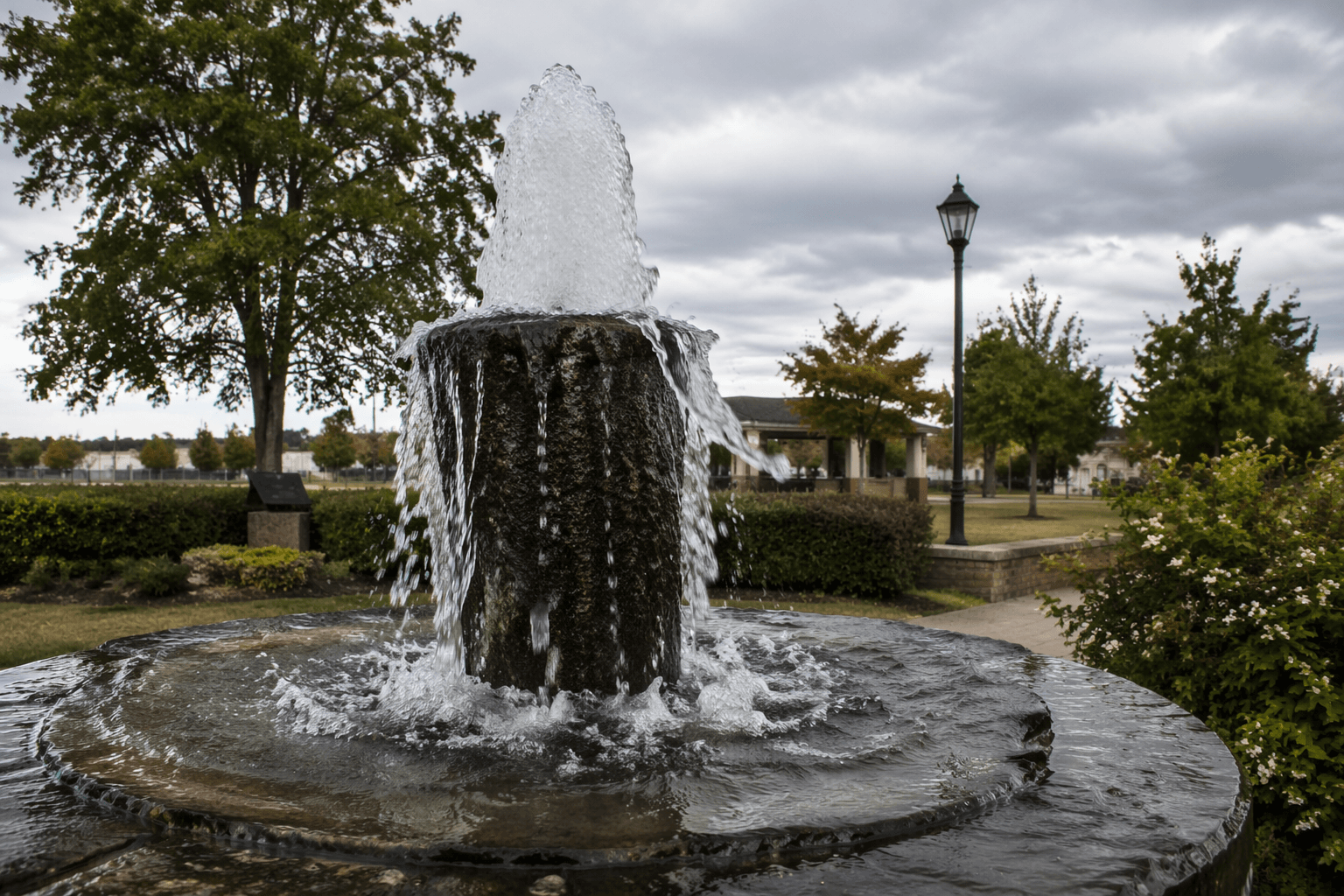
Those sites matter because they are still part of the everyday landscape. Heritage Park’s fountain is not a decorative imitation of the old water culture. It is fed by an artesian well, which makes the park a practical example of how Prattville’s water still reaches public spaces in active form.
How water built the city
Prattville’s relationship with water begins with Daniel Pratt, Alabama’s first major industrialist. He located his Daniel Pratt Gin Company on Autauga Creek in 1833 to provide water power for his factory, then founded Prattville in 1838. Early histories described the area as swampy, which makes the city’s later reputation as Fountain City even more striking: the same water that made the ground difficult also made industry possible.
The city’s artesian wells became part of that identity on a remarkable scale. A 1933 edition of the Prattville Progress said there were more than 400 artesian wells in Prattville and its immediate vicinity, and some of those wells supplied the town’s water system. That detail matters because it shows the wells were not just scenic features or curiosities for visitors; they were part of municipal life and, for a time, part of the city’s infrastructure.
That history still shapes how Prattville presents itself. The city is often referred to as Fountain City because of its numerous free-flowing artesian wells, many of which continue to supply decorative fountains and drinking fountains. The nickname is not ornamental branding layered onto the city later. It comes directly from the way Prattville was built, watered, and experienced from the beginning.
The landmarks around the wells
The wells are best understood alongside the other downtown places that grew in their shadow. Explore Prattville points visitors to the Historic County Courthouse, completed in 1870 and known as an Italianate example of Civil War-era architecture, and to the Daniel Pratt Cotton Gin Factory, an industrial complex dating to the 1860s. Those sites help show how Prattville’s built environment followed the same water-powered logic that started on Autauga Creek.
The Prattaugan Museum and Heritage Center adds another layer to that story. Its grounds include one of Prattville’s artesian wells and grapevines propagated from the Pratt vineyard, while its archive room holds local and family histories, genealogies, old newspapers, and other records. The museum’s setting makes the connection plain: the wells are part of a broader historical network that includes industry, agriculture, and the paper trail of local life.
That museum setting also helps explain why the wells continue to resonate. They sit near artifacts and records that document the city’s growth, so the water story is not isolated from the rest of Prattville’s history. It is threaded through the same places where the city remembers its founding families, its work culture, and its early development.
How the city preserves and promotes the wells
Prattville’s current preservation framework gives the wells a formal place in city planning. The Prattville Historic District was established by Ordinance 2008-002 in January 2008, and the Prattville Historic Preservation Commission is a volunteer board created to preserve and protect historic buildings, sites, structures, areas, and districts in the city. That kind of structure matters because it gives preservation a municipal home rather than leaving it to private memory alone.
The city also uses public programming to keep the history visible. Historic walking tours run each Saturday in June, including a Prattvillage Creekwalk route, along with residential and commercial district tours. That schedule turns the city’s historic core into something residents and visitors can actually walk, not just read about, and it places the wells within a larger system of interpretable landmarks.
Taken together, the Doster Road well house, Heritage Park fountain, Prattaugan Museum grounds, and downtown historic district show that Prattville’s artesian wells are still doing civic work. They mark the city’s identity, support public spaces, and keep Fountain City grounded in a physical resource that has shaped Prattville since Daniel Pratt built his factory town beside Autauga Creek.
This article was produced by Prism’s automated news system from verified source data, official records, and press releases, then run through automated quality and moderation checks before publishing. The system is built and supervised by the people who set the standards it runs under. Read our full AI policy.
Did this article answer your question?