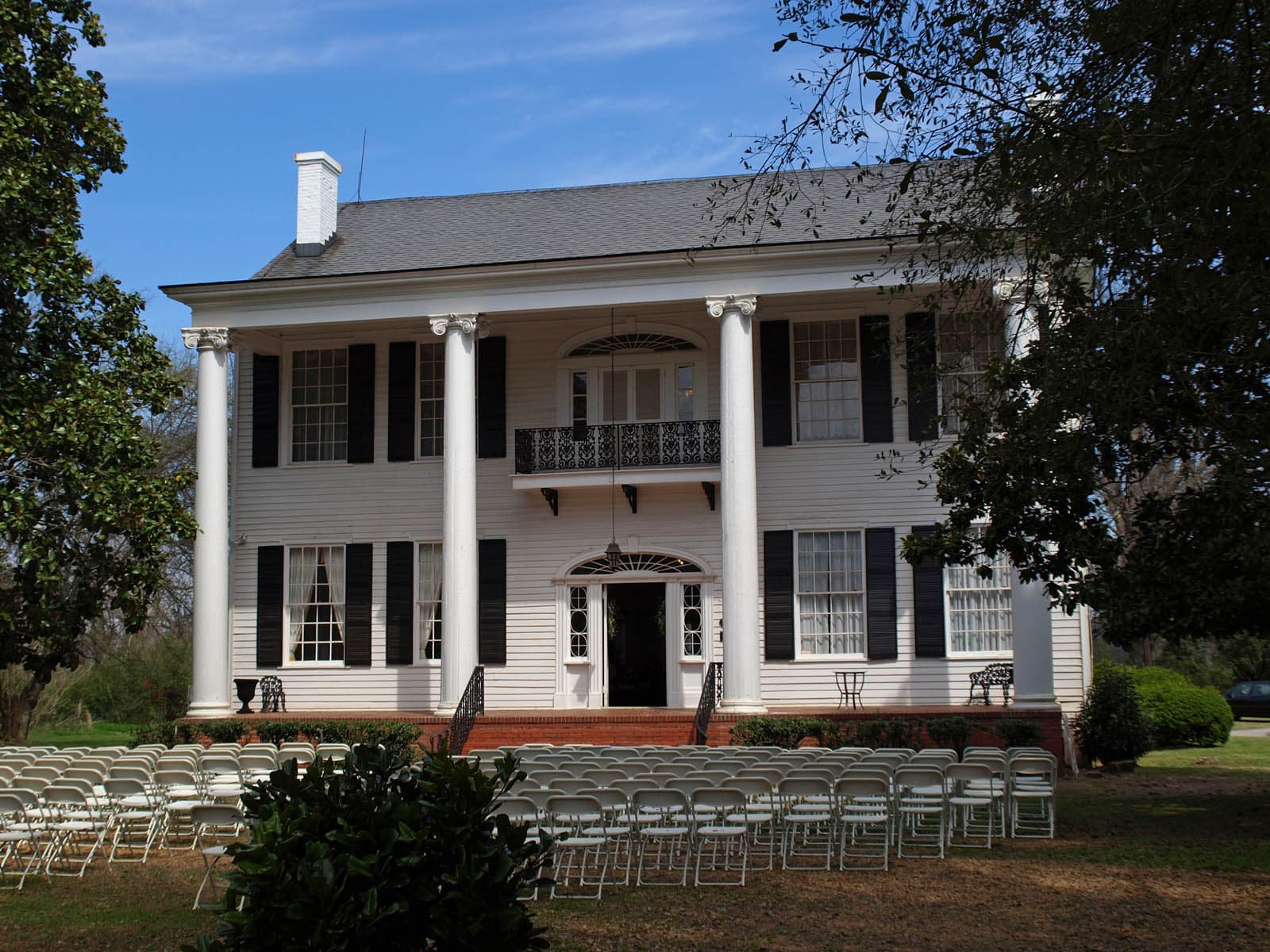
Prattville’s Daniel Pratt Historic District blends history with active downtown life
Prattville’s Daniel Pratt Historic District is an easy downtown walk, with creek views, active shops and a June tour route that ties old buildings to daily use.
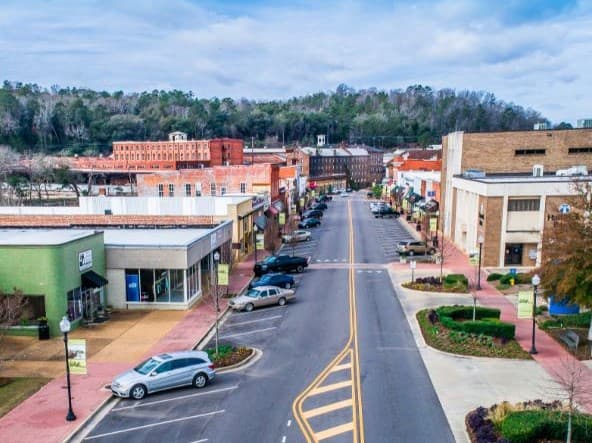
The Daniel Pratt Historic District works best as a walk, not a drive-by. Start at Autauga Creek, follow the public paths past the Art Garden and the Prattville Creative Arts Center and Gallery, then keep going into the blocks where shops, restaurants, the former Continental Gin Factory and restored civic spaces still anchor downtown Prattville.
Start at the creek and work inward
The district sits in downtown Prattville between Maple and 4th Streets and Washington and South Court Streets, which makes it easy to cover on foot without turning the visit into a project. The Alabama tourism guide describes it as a place to browse shops and restaurants while taking in the former Continental Gin Factory and Autauga Creek, and that is the right way to approach it: as an active part of the city, not a preserved block set aside behind velvet ropes.
A practical first stop is the Autauga Creek Walk. The walk follows the banks of the creek beside historic downtown shops and restaurants, and it includes the Art Garden next to the Prattville Creative Arts Center and Gallery. From there, the rest of the district unfolds in layers, with residential streets, commercial blocks and older industrial sites all within the same walkable footprint.
What the district is made of
The National Park Service says the Daniel Pratt Historic District contains more than 200 properties and stretches across roughly fifteen city blocks from Autauga Creek. Most of the buildings date from 1840 to 1930, with the heaviest concentration from 1880 to 1920, so the streetscape shows several rounds of growth rather than one frozen moment in time.
That range matters when you are walking it. One block can still feel tied to Prattville’s early industrial beginnings, while the next shows the city’s later commercial and residential growth. The district’s listing in the National Register of Historic Places in 1984 adds another layer of protection, but the more useful fact for a visitor is that the area still functions as downtown, with people moving through it for errands, lunch, tours and events.
Why preservation here still looks active
The Historic Prattville Redevelopment Authority was created in 1988 by an act of the Alabama State Legislature to revitalize the district, and its work helps explain why the area does not feel static. The authority says its projects have included Heritage Park, downtown planters and historical markers, all of which are the kind of small, visible interventions that make a historic district easier to use day to day.
The authority also says it purchased the Daniel Pratt Cotton Gin Factory and is pursuing adaptive reuse. Built in 1848, the factory originally housed cotton-gin manufacturing, spinning cotton, sash and door production and metal casting. That makes the building one of the clearest physical links between Prattville’s industrial origins and the downtown visitors see now.
The city’s Historic Preservation Commission adds another layer of oversight. It is a volunteer board appointed to preserve and protect historic buildings, sites, structures, areas and districts in Prattville, which is a practical reason the district remains managed as a living place rather than treated as a relic.
How to experience it in one afternoon
If you want the simplest version of the visit, begin on the creek side and move toward the commercial core. That sequence lets you see the public landscape first, then the storefronts, then the older building stock that gives the district its shape. Give yourself enough time to pause at Heritage Park, browse the shops and restaurants, and cut through the streets where the district’s residential and commercial histories overlap.
The city’s historic walking tours add a more structured option. The Autauga County Heritage Association leads tours each Saturday in June, and the city says the route system includes three choices: the Prattvillage Creekwalk, a residential district tour and a commercial district tour. That setup makes it easy to match the walk to your interest, whether you want water, houses or storefronts first.
- Start at the Autauga Creek Walk and the Art Garden
- Move toward the former Continental Gin Factory area
- Continue into the commercial district for lunch or shopping
- Circle into the residential blocks to see the older houses and street patterns
- End near the museum and heritage center for the county context
For a self-guided route, a useful sequence is:
The people and institutions behind the place
Prattville’s roots go back to 1839, when Daniel Pratt founded the town, and the city was incorporated by the Alabama legislature on February 19, 1872. Autauga County itself was founded in 1818, which places the district inside a much longer county story that predates Prattville’s industrial development.
Daniel Pratt was Alabama’s first major industrialist, and his cotton-gin enterprise later became the world’s largest cotton gin manufacturer. The company’s reach extended beyond Alabama and included international sales, even to Russia. That industrial scale is one reason the district still carries weight far beyond a simple collection of old buildings.
The Autauga County Heritage Association grew out of loss as much as pride. It was established in 1974 by the Prattville Study Club after Daniel Pratt’s mansion was torn down in 1961, a reminder that the district’s current preservation framework came from a recognition that once a landmark is gone, it cannot be recreated. The association’s headquarters at the Prattaugan Museum and Heritage Center keeps that county story visible, with Daniel Pratt memorabilia, family history, a Civil War room, county artifacts and genealogy resources.
That preservation impulse still shows up in new downtown moves. In 2025, the city tied heritage and present-day use together again with naming that honored Esther Ticknor Pratt and the historic Lyric Theatre legacy, a sign that downtown Prattville continues to treat its past as part of how the center city is used now.
The district’s real value is not that it has been sealed off from modern life. It is that the same streets that hold the old factory, the museum, the walking routes and the historic houses also hold businesses, public spaces and a downtown pattern residents still use.
This article was produced by Prism’s automated news system from verified source data, official records, and press releases, then run through automated quality and moderation checks before publishing. The system is built and supervised by the people who set the standards it runs under. Read our full AI policy.
Know something we missed? Have a correction or additional information?
Submit a Tip