Baker City Advances Development Code Reforms To Increase Housing
The Baker City Planning Commission held a public hearing on December 17 to consider broad revisions to the Baker City Development Code intended to increase housing supply and remove barriers across residential zones. The actions set in motion a formal recommendation to the City Council and a path toward final adoption early 2026, a process that will shape neighborhood density, housing types, and affordability in the county.
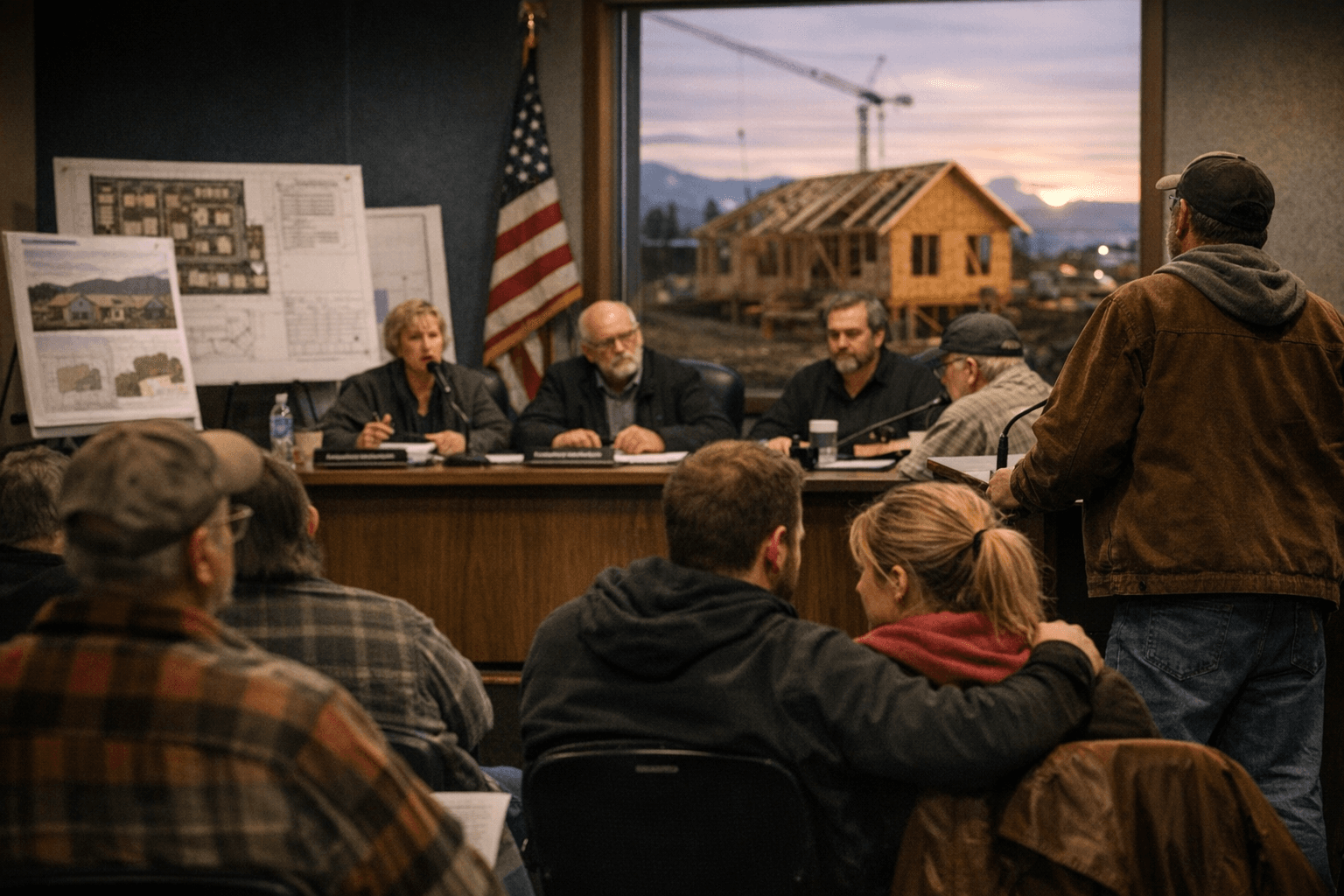
On December 17 the Baker City Planning Commission convened at 6:00 p.m. in City Council Chambers at 1655 1st Street to review proposed amendments to the Baker City Development Code. The hearing was part of the city effort to implement the 2023 Housing Production Strategy and to comply with state mandates for middle housing. The commission heard testimony and will forward a recommendation to the City Council, which will make the final decision on the code changes.
The proposed updates target a range of regulatory barriers to new housing. Specific changes under consideration include allowing cottage cluster housing in low density zones, increasing maximum accessory dwelling unit sizes up to 1,000 square feet and 25 ft tall, raising allowable densities and building heights to support small apartment buildings in higher density zones, and reducing minimum lot sizes for middle housing. Staff materials for the review are filed under staff report ZT 25 127 and the review is guided by BCDC Section 4.7.200 along with the Comprehensive Plan and Statewide Planning Goals.
Public materials including draft BCDC articles, the staff report, meeting materials and webcasts were made available through the city project page and the Planning Department provided contact information for questions. For the December 17 hearing testimony and evidence were required to be based on the applicable review criteria and submitted to the Planning Department by 4:00 p.m. on the hearing date or presented in person during the hearing. The project timeline anticipates council hearings and final code adoption early in 2026.
For Baker County residents the revisions could expand housing choices including smaller single family alternatives, additional backyard units and compact apartments that aim to improve affordability and the quality of new development. Those changes also carry implications for neighborhood character, infrastructure demand and parking. The regulatory adjustments reflect a statewide shift toward enabling diverse housing types, while leaving local officials with the task of balancing growth, design standards and community priorities as the Council considers the Planning Commission recommendation.
This article was produced by Prism’s automated news system from verified source data, official records, and press releases, then run through automated quality and moderation checks before publishing. The system is built and supervised by the people who set the standards it runs under. Read our full AI policy.
Did this article answer your question?