Baker City Galleries Host New Exhibits During First Friday
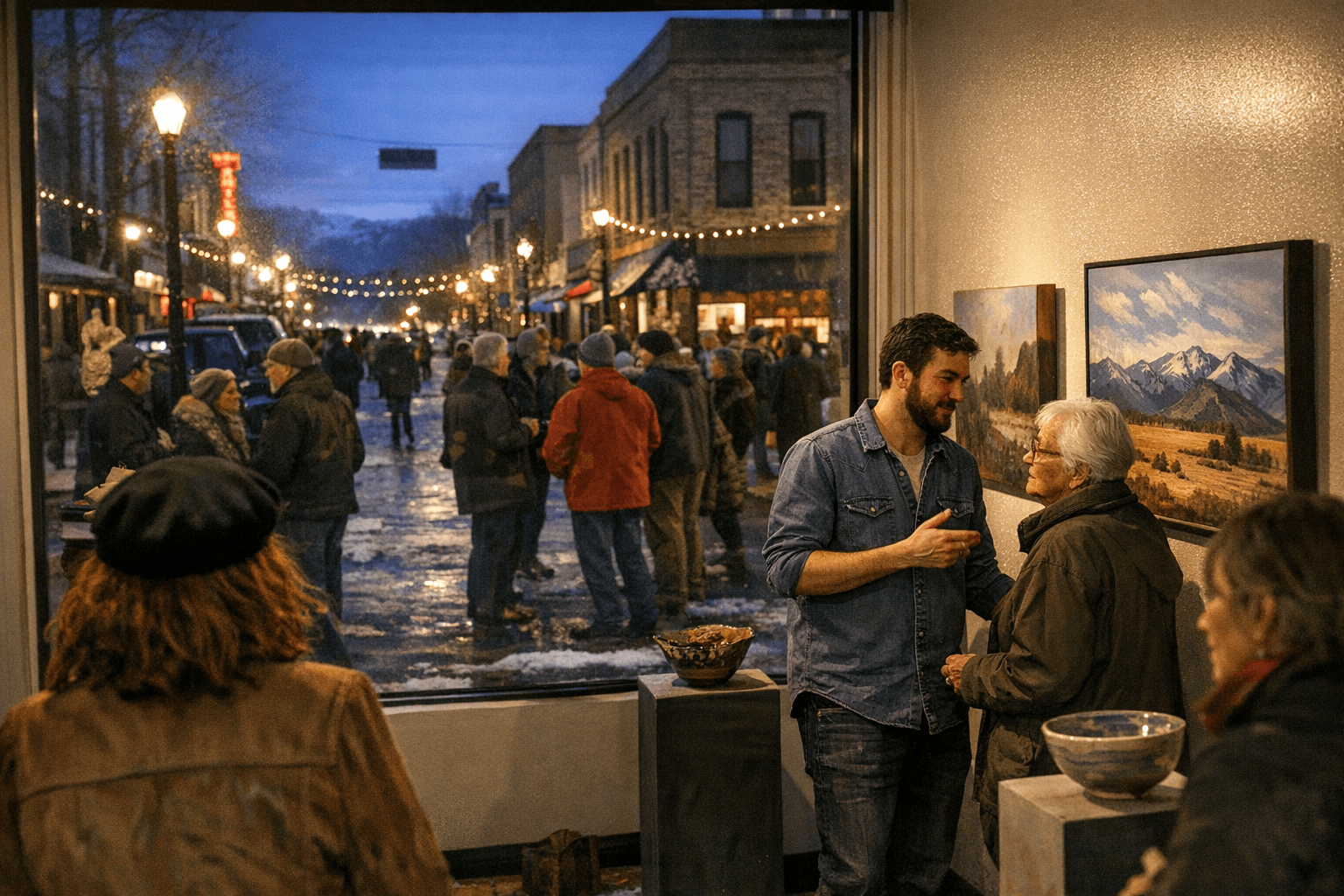
Downtown Baker City galleries and shops hosted new exhibitions and First Friday opening receptions on Jan. 2, 2026, inviting residents to ring in the new year with extended evening hours and fresh local art. The openings boosted downtown foot traffic and offered community connection, while raising questions about equitable access and the role of arts in local public health and economic recovery.

On Jan. 2, 2026, several downtown Baker City galleries and shops opened new exhibitions and held First Friday receptions, offering extended hours for visitors to meet artists and view new work. The evening showcased a range of exhibition themes and featured artists from the region, drawing residents into downtown storefronts and cultural spaces to begin the year with community-focused events.
The openings provided more than visual culture. For many residents, arts events offer low-cost opportunities for social connection and mental health support at a time when community cohesion is a public health priority. Local businesses on Main Street reported increased foot traffic, and organizers emphasized the importance of public support for artists and small cultural venues that contribute to downtown vitality.
While the immediate benefits were visible in attendance and neighborhood activity, the events also highlight broader issues of access and equity. Rural and small-town arts ecosystems often struggle with limited public funding, thin margins for artists, and uneven accessibility for residents with mobility or transportation barriers. Ensuring that the benefits of cultural programming reach older adults, people with disabilities, and lower-income households requires intentional planning by galleries and city leaders.
From a public health perspective, arts programming intersects with social determinants of health. Participation in community arts can reduce social isolation and improve mental well-being, particularly in areas with few other gathering spaces. At the same time, equitable health outcomes depend on that participation being accessible and safe. Event organizers and municipal officials have opportunities to align arts programming with health and safety guidance, universal design practices, and outreach to underserved neighborhoods.
Policy choices at the local level can strengthen these connections. Sustained support for public arts funding, dedicated spaces for community programming, and partnerships between cultural organizations and health providers can amplify the health and economic returns of events like First Friday. Investment in accessible transportation and affordable studio space would help ensure artists and audiences from across Baker County can benefit.
For residents who were unable to attend Jan. 2 openings, downtown galleries continue to play a role in community life throughout the year. Supporting local artists and cultural spaces remains a practical way to bolster downtown economic activity and collective wellbeing. Local leaders and residents alike may find lasting value in treating arts support as part of broader strategies for public health and equitable community development.
This article was produced by Prism’s automated news system from verified source data, official records, and press releases, then run through automated quality and moderation checks before publishing. The system is built and supervised by the people who set the standards it runs under. Read our full AI policy.
Did this article answer your question?