Baker City Plans Switch From Chlorine Gas to On-Site Liquid Generation
Baker City plans to ditch toxic chlorine gas cylinders and generate its own liquid disinfectant on-site, with construction costs projected at roughly $1 million.
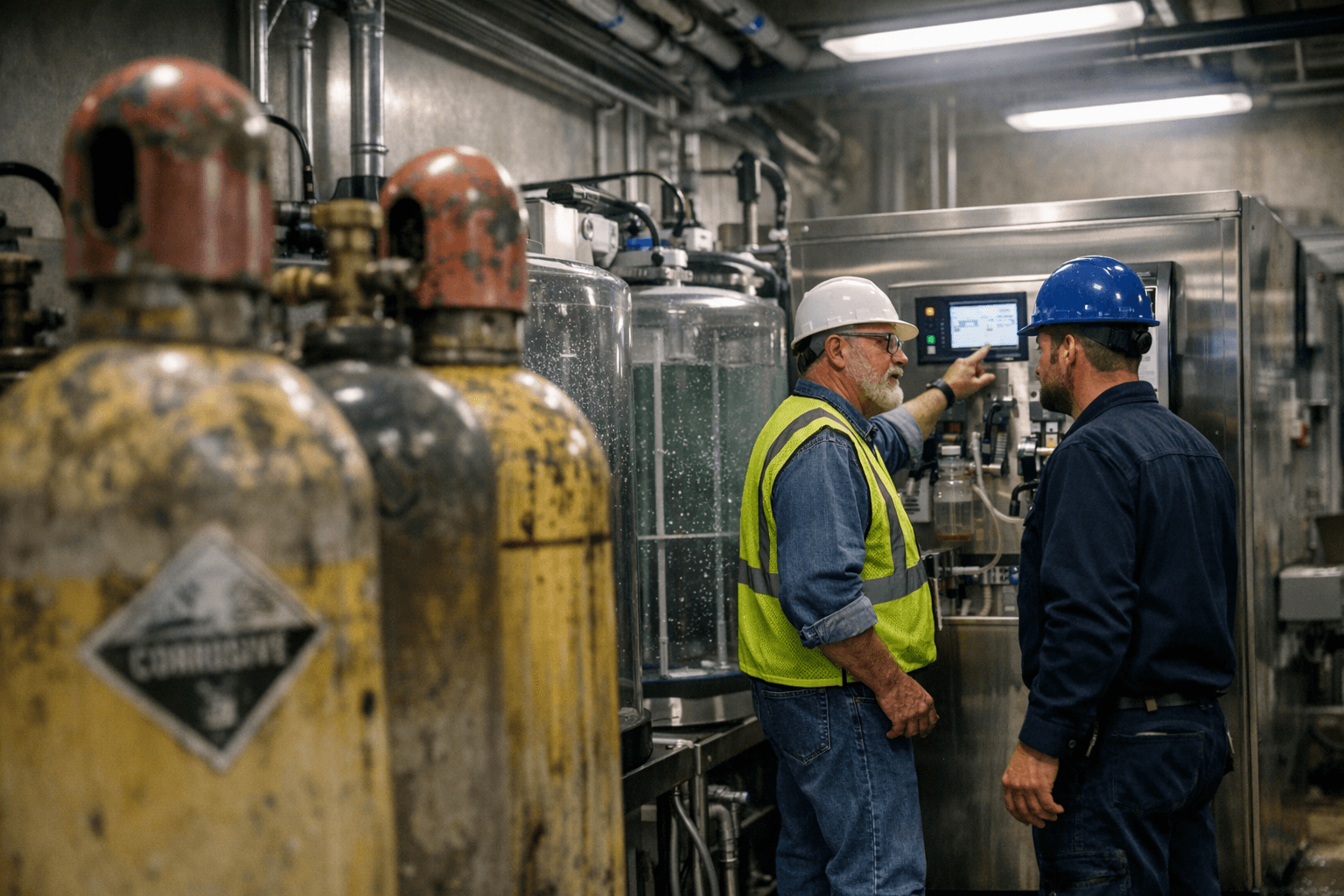
Baker City's drinking water will soon be disinfected with a bleach-like liquid produced on-site rather than toxic chlorine gas delivered in heavy metal cylinders, after city engineer Brandon Mahon presented the conversion plan to the Baker City Council on March 10.
Mahon, an engineer with Anderson Perry and Associates in La Grande, told councilors the new system generates sodium hypochlorite by passing electricity through a brine of salt water. The resulting solution, at about 0.8% concentration, is not rated as a hazardous material and "protects the water equally but is much safer for the city workers who handle the chlorine cylinders now," Mahon said. The electrolysis process also produces small amounts of hydrogen gas as a byproduct.
Once equipment is installed, the city would purchase salt to create the brine feedstock and stop buying chlorine gas altogether for potable water treatment. The shift would also reduce the city's exposure to supply disruptions; Mahon cited interruptions in regional chlorine production that followed the COVID pandemic as evidence that dependence on off-site cylinder deliveries carries real risk.
The financial picture is still taking shape. A 2019 technical memo pegged capital costs at roughly $830,000 in 2019 dollars. Current planning projects construction costs of approximately $1,000,000, spread across two construction seasons, with design work slated for the current fiscal year. Mahon emphasized that final scope and pricing will depend on preliminary design and equipment selection.
Councilor Helen Loennig had signaled support for the direction as far back as the council's Oct. 28 meeting, when she said she would prefer the city stop using chlorine gas given its potential dangers, but that she wants any alternative "to be financially beneficial to the city." The 2019 memo projected a multi-year payback under its assumptions, though no detailed annual savings figures have been made public.
The conversion would apply only to Baker City's potable water treatment plant. The wastewater treatment plant, located about a mile north of town, will continue using chlorine gas. At that facility, workers add chlorine to disinfect wastewater before the city treats it with sulfur dioxide, which neutralizes the chlorine prior to discharge into the Powder River.
This article was produced by Prism’s automated news system from verified source data, official records, and press releases, then run through automated quality and moderation checks before publishing. The system is built and supervised by the people who set the standards it runs under. Read our full AI policy.
Did this article answer your question?