Baker City's Historic Downtown Offers Self-Guided Tour of Restored Century-Old Buildings
Downtown Baker City holds one of the Pacific Northwest's largest intact turn-of-the-century commercial districts, and you can explore it all on foot.

Few places in the Pacific Northwest preserve the architectural ambition of the early 1900s as completely as downtown Baker City. Block after block of restored brick and stone commercial buildings line the streets, many of them standing essentially as they were built when gold and cattle money flooded eastern Oregon. The district is widely recognized as one of the largest and most intact turn-of-the-20th-century commercial corridors in the entire region, a distinction that makes it genuinely rare rather than merely locally significant.
The good news for anyone who wants to experience it: no bus ticket, no guided tour reservation, and no admission fee required. The downtown core is built for walking, and the concentration of restored buildings means that nearly every block delivers something worth stopping to examine.
Why the district survived so intact
Many western boomtowns lost their historic fabric to urban renewal programs, highway construction, or simple economic collapse. Baker City escaped much of that pressure. The mining and ranching economy that built the downtown receded before mid-century redevelopment money arrived in force, which paradoxically protected the buildings. When preservation-minded investment eventually returned, there was still something substantial to save. The result is a streetscape where the bones of a prosperous Gilded Age commercial center remain visible beneath the signage of galleries, restaurants, shops, and cultural institutions that now occupy the ground floors.
Restored does not mean frozen in amber here. The buildings have been adapted for active, contemporary use, which is precisely why they have survived. A restored facade that houses a working restaurant or a functioning gallery is far more durable than a museum piece maintained purely for appearances.
Planning your walk
Downtown Baker City is compact enough to cover the essential stops in a half-day, though anyone with a serious interest in architecture or local history will want to allow a full day. The commercial district centers on Main Street and the blocks immediately surrounding it, so you will rarely need to navigate more than a few blocks in any direction from that spine.
A few practical notes before you set out:
- Wear comfortable shoes. The sidewalks are historic too, and some sections are uneven.
- Morning light on the east-facing facades is particularly striking for photography; late afternoon illuminates the west side of the street.
- Most galleries and shops observe standard business hours, generally opening around 10 a.m. Most are closed Sundays or operate on reduced hours, so a weekday or Saturday visit gives you the fullest access.
- The district is small enough that parking is rarely a problem. A single central spot near Main Street puts you within walking distance of virtually every stop.
What to look for in the buildings themselves
The architectural character of downtown Baker City reflects the prosperity and ambitions of a community that expected to keep growing at the turn of the 20th century. The prevailing style across the district is Italianate and Renaissance Revival commercial, which in practical terms means elaborately corniced rooflines, large display windows at street level, decorative brick detailing, and facades designed to project permanence and prosperity.
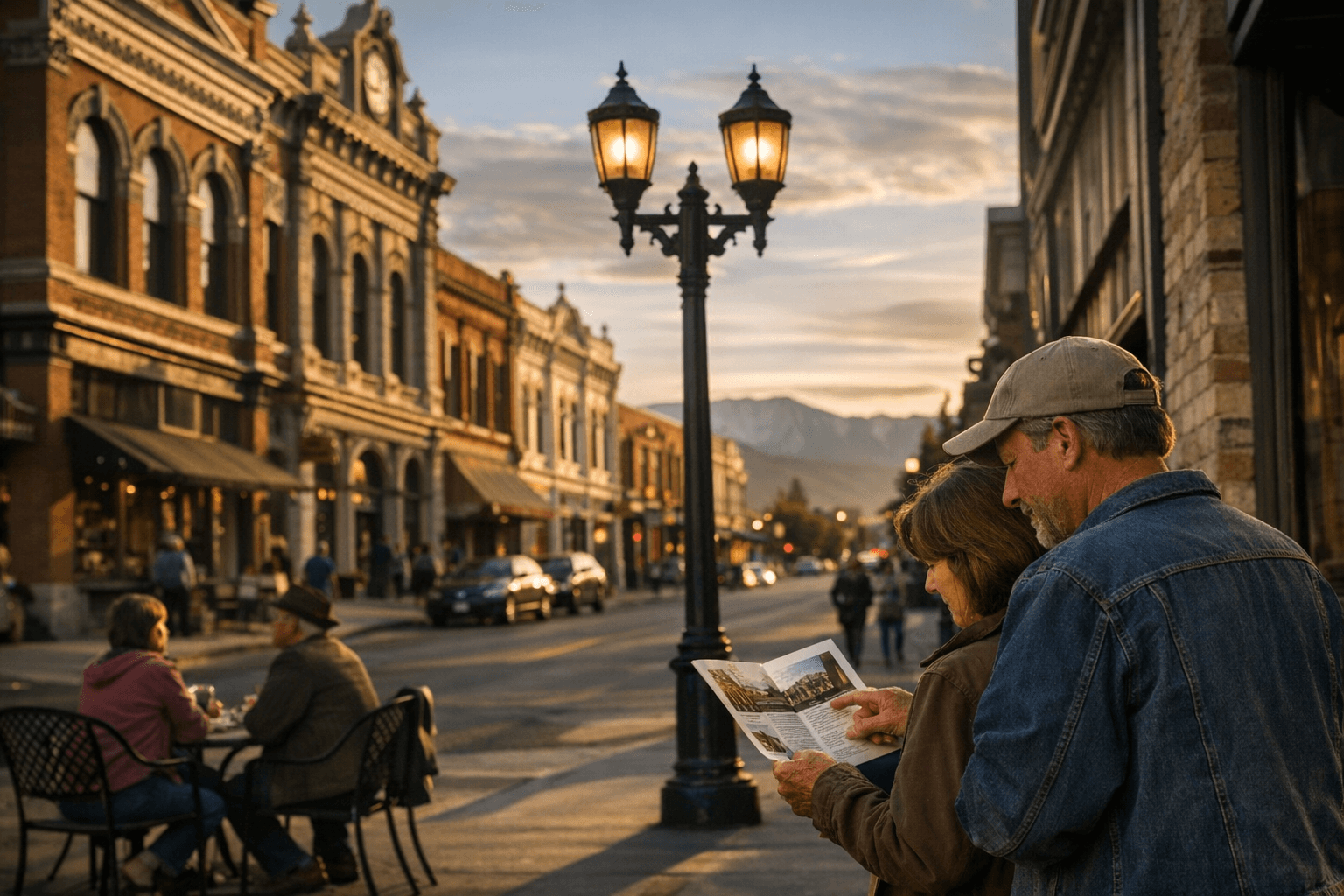
Pay attention to the upper floors, which tend to preserve the most original detail. Street-level storefronts were frequently modernized in the mid-20th century, but the second and third stories on many downtown Baker City buildings retain their original window surrounds, brick corbeling, and cast-iron or pressed-metal decorative elements. Looking up is consistently rewarded.
The scale of individual buildings is also worth noting. These were not modest frontier structures; they were built to the dimensions of established commercial cities, reflecting the genuine wealth that eastern Oregon's mining economy generated at its peak.
Galleries, shops, and cultural stops
The restored buildings along the downtown core house a mix of uses that makes the self-guided tour genuinely varied. Galleries displaying regional art occupy several storefronts, giving the walk an aesthetic dimension beyond pure architectural appreciation. Restaurants and cafes operating out of century-old commercial spaces offer a practical reason to slow down and spend time inside buildings you might otherwise only view from the sidewalk.
Cultural institutions anchored in the downtown add depth to what might otherwise be a purely visual experience. These organizations maintain programming and interpretive materials that connect the physical fabric of the buildings to the human history of Baker City and the surrounding region.
Making the most of the tour
The self-guided format rewards curiosity. There is no prescribed pace and no checklist to complete. Moving slowly through the district, pausing to read building dates on cornices, ducking into a gallery, or sitting at a restaurant table inside a space that has been in continuous commercial use for over a century, produces a different kind of encounter with local history than a conventional museum visit.
Baker City's downtown is also genuinely photogenic in a way that rewards returning at different times of day or in different seasons. The scale of the street, the quality of the surviving architectural detail, and the active use of the buildings create a streetscape that changes character meaningfully between a summer morning and a winter afternoon.
For anyone arriving in Baker City from Interstate 84, the downtown core is only a short drive from the exit, making it an accessible stop even for travelers passing through. Those who live in Baker County and have not walked the district deliberately, building by building, will likely find familiar streets yielding details they have never noticed before. That is the particular value of a slow, intentional walking tour through a place you thought you already knew.
This article was produced by Prism’s automated news system from verified source data, official records, and press releases, then run through automated quality and moderation checks before publishing. The system is built and supervised by the people who set the standards it runs under. Read our full AI policy.
Did this article answer your question?