Bend Nonprofit Rescues, Rehabilitates Two Bobcat Kittens, Releases Them Near Dayville
Two bobcat siblings, each under a pound when orphaned on a Gilliam County highway, were released back into the wild near Dayville by Think Wild after 10 months of care.

Two bobcat kittens found alone and barely alive on the shoulder of Highway 19 near Condon last May completed a 10-month journey back to the wild on March 20, when Think Wild staff and volunteers released the siblings into remote Grant County terrain near Dayville.
The pair, one male and one female, were discovered May 19, 2025, at the Dyer State Wayside in Gilliam County at roughly four weeks old, each weighing less than a pound. Their mother was presumed killed by a vehicle. Oregon Department of Fish and Wildlife transported the kittens to Think Wild's Wildlife Hospital in Bend, where they arrived dehydrated and suffering from diarrhea.
Over the following 10 months, Think Wild staff, interns and volunteers moved the siblings through a full rehabilitation protocol: medical stabilization, an enclosure designed to replicate natural habitat with native vegetation and terrain for climbing, hiding and digging, and live prey testing to confirm the cats could hunt before reintroduction.
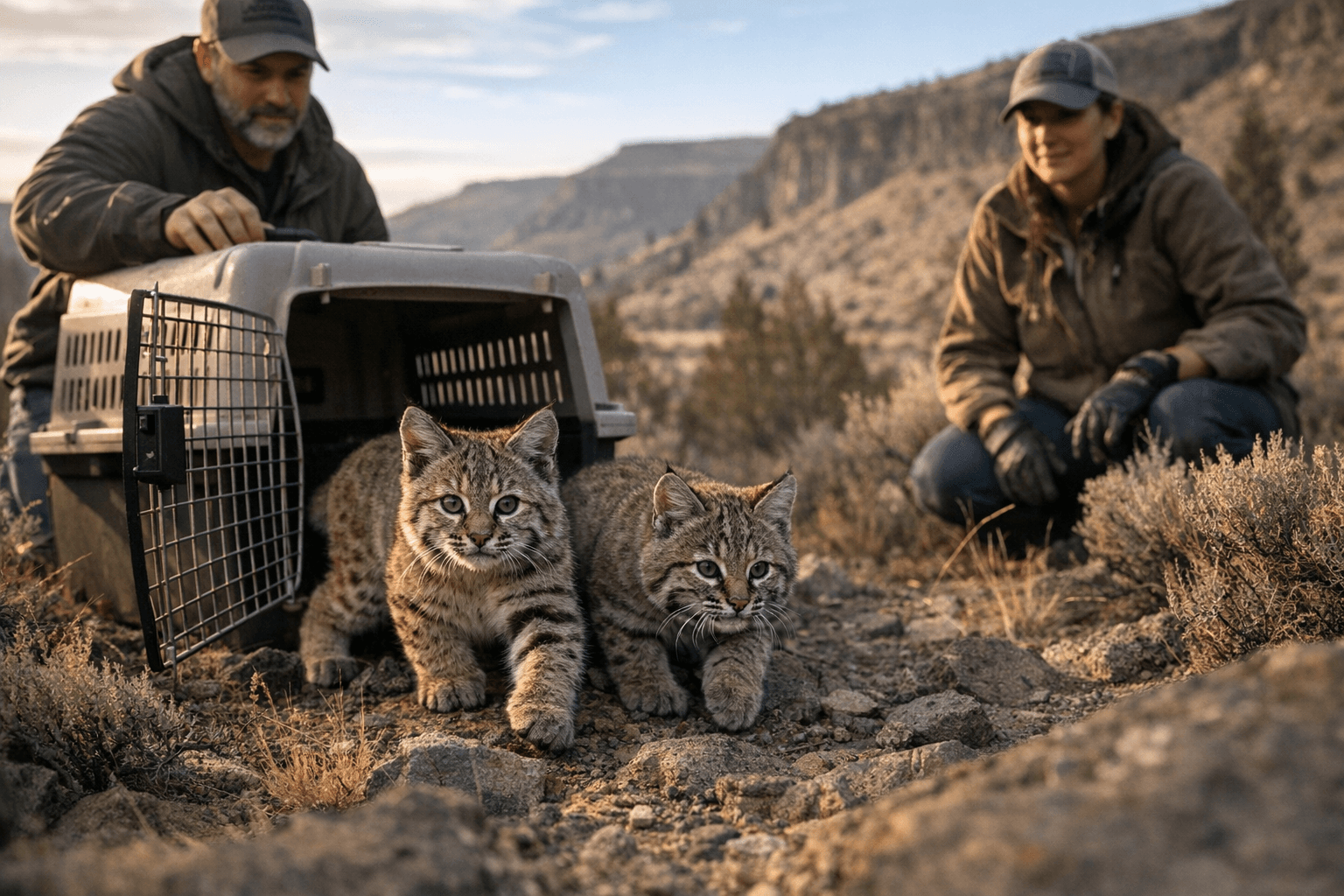
The release site near Dayville was selected in coordination with ODFW for its habitat suitability. Think Wild workers drove the cats to a large outdoor enclosure in the remote area and provided food and water on the first day. On the second day, staff opened the enclosure door and let the animals leave at their own pace, with supplemental food still available inside.
They didn't linger. Dr. Sue Dougherty, Think Wild's board director, was on hand to photograph the moment. "As they trotted up the hillside, I stood watching through my camera lens," Dougherty said. "The air was cool and breezy and felt free. I can only imagine how exhilarating it must be for two young bobcats to have their first leap into their natural world."
Sally Compton, Think Wild's executive director, placed the release in broader ecological terms. "Predators like bobcats are essential to healthy ecosystems," Compton said. "Returning these animals to the landscape where they belong supports natural balance, and it's especially meaningful when the reason for their rescue was due to human conflict in the first place."
Bobcats are native across Oregon but rarely seen, their elusive habits keeping them hidden even where populations are healthy. Vehicle strikes and rodenticide exposure remain among the most common human-caused threats to the species. Think Wild's soft release approach, which prioritized the animals' autonomy while minimizing human contact through the final stage, was designed to preserve the wild instincts the siblings would need most.
The two cats exited the enclosure cautiously, then moved confidently into the surrounding habitat and out of view.
This article was produced by Prism’s automated news system from verified source data, official records, and press releases, then run through automated quality and moderation checks before publishing. The system is built and supervised by the people who set the standards it runs under. Read our full AI policy.
Did this article answer your question?