Elk numbers about half of usual at Baker and Union feeding sites
Elk counts at Elkhorn Wildlife Area feeding sites fell to roughly half their usual levels this winter, driven by a mild season; this changes viewing opportunities and hay-use risk for local ranchers.
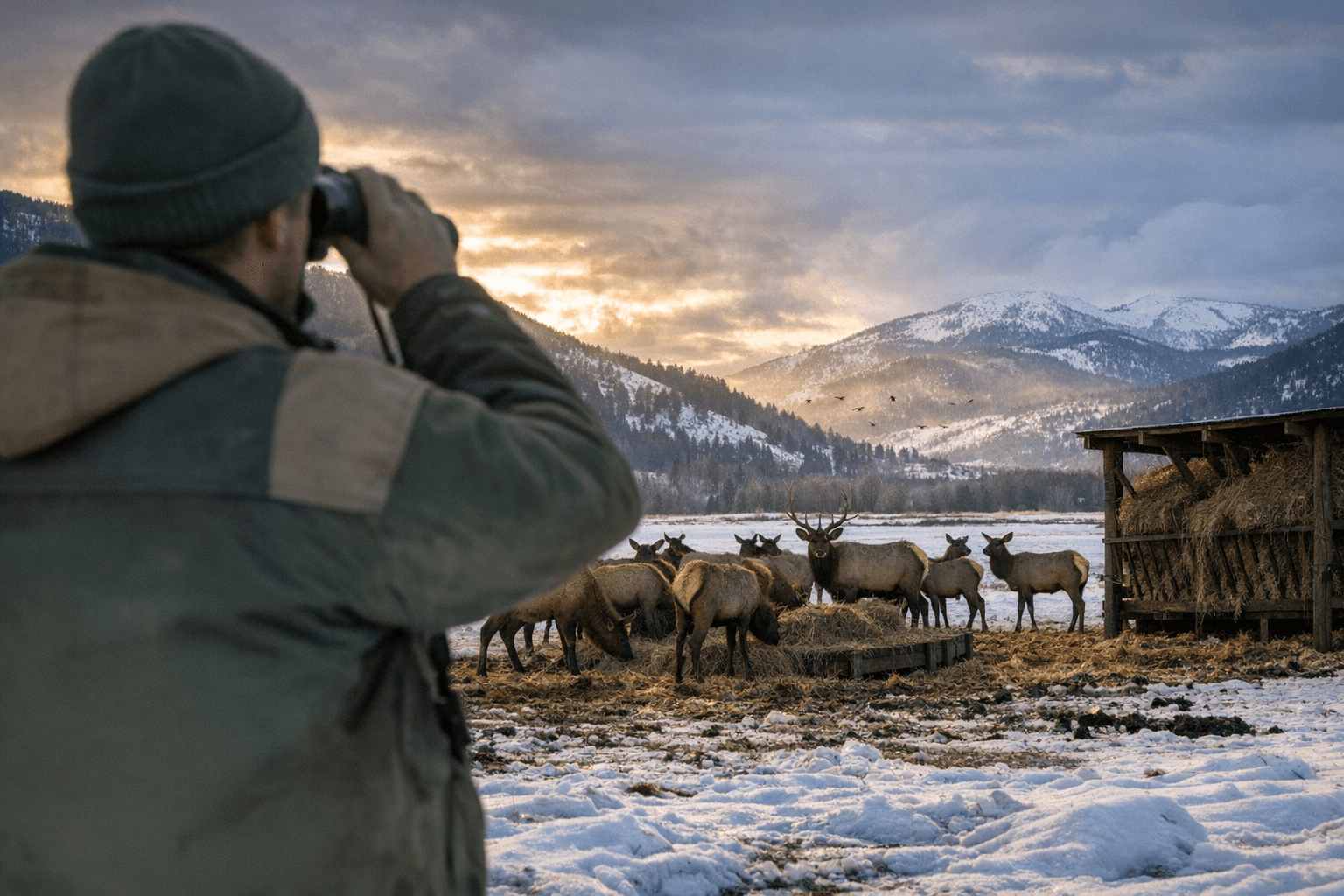
It has been a lonely winter for the crew that tends the Elkhorn Wildlife Area feed stations, where elk attendance has been far thinner than in a typical season. Managers say mild weather and light snow have allowed animals to continue foraging away from the 10 ODFW feeding stations that run from Auburn to Shaw Mountain, reducing the need for supplemental hay.
Dan Marvin, manager of the Oregon Department of Fish and Wildlife’s Elkhorn Wildlife Area and entering his eighth winter in that role, reported day-to-day swings in herd size. Marvin counted about 40 elk at the Anthony Creek feed site on Dec. 21, then about 200 the next day. Those numbers compare with a more typical Christmas-week total of 300 to 350 elk at Anthony Creek and with broader seasonal estimates that rise from roughly 1,000 by Christmas to nearly 2,000 by mid-winter across all 10 stations in an average year.
“The mild winter has definitely slowed down our feeding program. Animals have the ability to still forage, and they choose to do so,” Marvin said. He added that “they don’t like being on the feed sites any longer than they have to,” underscoring why attendance can vary rapidly with snow and forage conditions.
The Elkhorn feeding program exists not primarily to stave off starvation but to keep famished elk from raiding private cattle hay. ODFW disburses alfalfa at each site before Dec. 1 to head off elk moving onto ranchers’ bales. The 10 sites can hold about 1,200 to 1,300 tons of alfalfa, and crews typically feed 700 to 800 tons over a normal winter; in long, harsh winters staff can go through the full supply. Managers expect there will “definitely have quite a bit of hay left when the season ends” this year because of lower demand.
Despite lower elk numbers, wildlife area workers continue daily checks of each feed station to ensure hay is available and to reduce the risk that hungry animals will drift onto private property. “If elk show up and gobble up all the hay before they’re satiated, they might keep wandering until they find a ranchers’ bales, and coaxing the animals back to the feed sites can be a challenge,” the program bulletin noted.
Public viewing remains limited: feed sites are closed to the public through April 10, though Anthony Creek and Old Auburn Road remain the easiest places to see elk from public roads; Anthony Creek has a small parking area and an information kiosk. For Baker and Union County ranchers and wildlife watchers, the immediate implication is fewer elk at traditional viewing spots and a smaller draw on the hay supply, but continued monitoring through spring will determine whether elk begin moving more widely as conditions change.
This article was produced by Prism’s automated news system from verified source data, official records, and press releases, then run through automated quality and moderation checks before publishing. The system is built and supervised by the people who set the standards it runs under. Read our full AI policy.
Did this article answer your question?