Haines packs Baker County history into museum and heritage park
Haines squeezes Baker County’s railroad, ranching and mining past into two walkable stops: the Eastern Oregon Museum and Dick Camp Memorial Park.
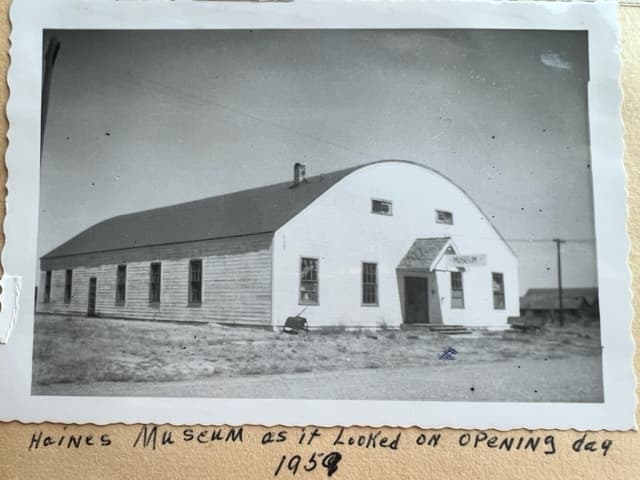
A single stop in Haines can take you from a 1932 school gym packed with artifacts to a park where cabins, interpretive panels and a replica gold mine explain how Baker County took shape. The concentration matters because it gives visitors a fast, tangible read on the county’s past without turning history into a museum piece that sits far from daily life.
What you can see in one visit
The strongest part of Haines is how much history is layered into a very small footprint. The Eastern Oregon Museum and Dick Camp Memorial Park sit close enough together to make the town feel like a compact heritage corridor, not a scatter of isolated stops. That matters for anyone trying to understand Baker County through places that still feel rooted in the county’s present-day geography.
At the museum, the range is broad enough to cover railroads, ranching, recreation and domestic life in one pass. The collection includes the original 1884 Union Pacific Depot, a farm equipment shed, an Anthony Lakes Ski Area exhibit and a Carriage House, along with pioneer tools, quilts, military items, rodeo memorabilia, documents, photographs and more. It is the kind of collection that lets one building tell several different stories at once, from transportation to settlement to the work that sustained valley life.
From a Grange hobby show to the Eastern Oregon Museum
The Eastern Oregon Museum began in 1953 as a Grange hobby show put on by Elkhorn Grange 908. It later moved into the former Haines school gym, a 1932 building that the museum says spans 5,700 square feet. By 1959, it had become the Eastern Oregon Museum, and the institution describes it as the first museum of its kind in Eastern Oregon.
That evolution matters because it shows how local preservation in Baker County grew from volunteer effort rather than from a top-down cultural plan. Today the museum remains volunteer-run and donation-based, with thousands of artifacts from the upper Baker and Powder Valleys. The building itself, once a school gym, now functions as a community archive, the kind that keeps family histories, work histories and settlement patterns visible in one place.
The museum’s scope also gives Haines a practical edge for visitors who want more than a quick roadside stop. Instead of a single theme, the site gathers a wide cross-section of material culture: tools used to build farms and homes, quilts that reflect domestic labor, military items that trace service and sacrifice, rodeo memorabilia that reflects regional identity, and photographs and documents that preserve names and places that might otherwise fade from public memory. In a county where distance often separates historic sites, that density turns one building into a useful starting point for understanding the whole area.
Dick Camp Memorial Park brings the landscape story outside
Just down the road in downtown Haines, Dick Camp Memorial Park extends that history into the open air. The park sits along the Elkhorn Scenic Byway and serves as more than a green space. It is an outdoor interpretive site built around historic cabins and buildings relocated from around the county, so the setting itself becomes part of the exhibit.
The original Chandler Cabin is one of the park’s anchor pieces and is described there as the oldest cabin in Baker County. The site also includes the Mount Carmel Letter Drop Cabin, interpretive panels and a replica gold mine. Together those features connect pioneer settlement, mining, ranching and preservation in a way that is easy to read on foot.
That makes the park especially important as a companion to the museum. The museum’s collection shows what people used and kept; the park shows where some of those early lives unfolded. A visitor can move from artifacts inside a former school gym to cabins and interpretive displays outdoors and get a more complete sense of how Baker County’s early communities were built, moved and remembered.
Why this concentration matters now
Haines offers more than nostalgia. It offers a working model for how a small town can preserve a large share of local memory without stretching people across multiple long drives. In a county with plenty of ground to cover, clustering history in one stop helps families, school groups and travelers actually see it instead of just hearing about it.
The county’s own museums page also lists both the Eastern Oregon Museum and Dick Camp Memorial Park among Baker County’s heritage sites, which places them inside a broader countywide network rather than treating them as stand-alone attractions. That helps reinforce a larger truth about Baker County preservation: the museum and the park are not separate curiosities, but part of a shared effort to hold onto the county’s rail, ranching, mining and settlement history.
For small-town tourism, that concentration is an asset. A visitor who arrives in Haines can trace the county’s past through a few tightly linked stops, and that is the kind of experience that gives a town identity beyond its size. In Baker County, history is not spread thin across the landscape in Haines. It is concentrated enough to walk, study and remember.
This article was produced by Prism’s automated news system from verified source data, official records, and press releases, then run through automated quality and moderation checks before publishing. The system is built and supervised by the people who set the standards it runs under. Read our full AI policy.
Know something we missed? Have a correction or additional information?
Submit a Tip