Jury Awards Baker Valley Couple $56,000 From Idaho Power for B2H Easement
A Baker County jury ordered Idaho Power to pay Mark and Savannah Kerns $56,000 for easements on their 1,050‑acre Baker Valley ranch, a decision reached March 6 after a day of deliberations.

A Baker County jury on March 6 ordered Idaho Power Co. to pay Mark and Savannah Kerns $56,000 for use of part of their 1,050‑acre property on the east side of Baker Valley for the Boardman‑to‑Hemingway 500‑kilovolt transmission line. Deliberations began about 10:30 a.m. and the jury returned its verdict about 3 p.m., with Judge Matt Shirtcliff noting at least nine jurors were required for a verdict and the final count was 10 in favor, two opposed.
The trial began Monday, March 2, with 13 jurors initially selected, eight men and five women, and one juror designated as an alternate. After opening statements the same day jurors were transported by bus to the Kerns’ parcel, located about five miles northeast of Baker City, to view the land where Idaho Power seeks roughly 25.5 acres of easements, an area the company says is less than 3 percent of the total parcel.
Valuations at trial diverged sharply. Both appraisers agreed the parcel’s market value is about $788,000, calculated at $750 per acre for 1,050 acres. Benjamin Ward, the Kernses’ appraiser, testified that construction and the presence of the line would reduce value by 25 percent, about $197,000. Idaho Power’s appraiser Rouke Aboubacar estimated loss at about $8,600. Those competing estimates framed jurors’ choices between Idaho Power’s pretrial offer of $27,810 and the Kernses’ demand of $215,694.
Idaho Power previously paid $26,070 to the Kernses last year as an advance occupancy payment while the company was granted the right to use properties during litigation. The reporting does not specify whether the jury’s $56,000 award is intended to be reduced by that earlier payment.
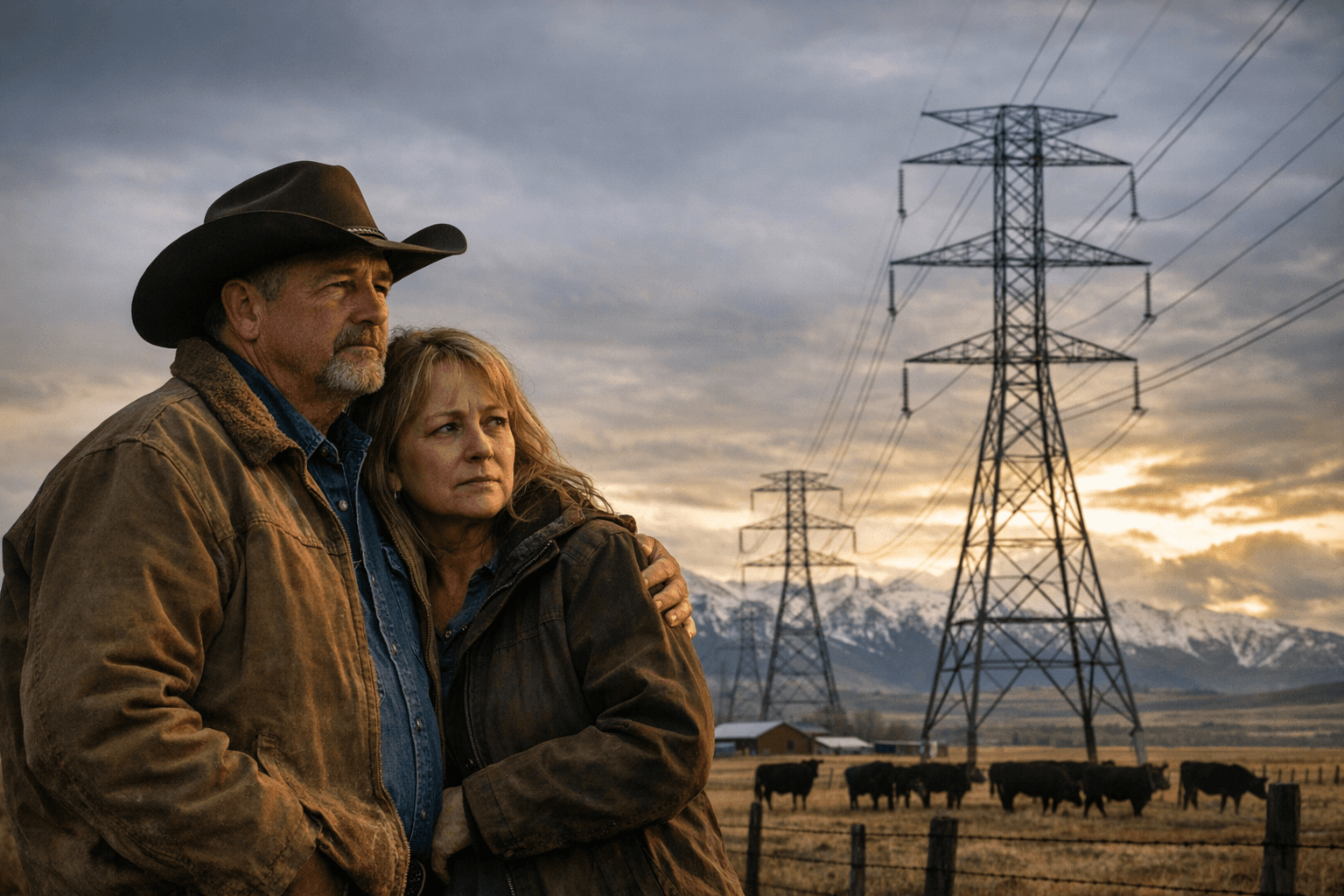
Plaintiffs’ attorneys Andrew Martin and David Auxier urged jurors to account for broader diminution beyond the physical easement, arguing the line would harm the property’s highest and best use for a home and recreation. Auxier told jurors, “It’s absurd to think that once a person steps outside the easement, the effect of the power line goes away,” and called Idaho Power’s position “patronizing,” adding, “This is what bureaucrats do.” Martin told jurors to use “common sense” in deciding just compensation. Idaho Power’s Ontario attorney Tim Helfrich emphasized the small size of the easements and that grazing could continue, and after the verdict he thanked jurors, saying, “We all owe them a debt.” Neither Mark and Savannah Kerns nor Helfrich offered further comment after the verdict.
The Kernses’ case was the first of more than 15 condemnation lawsuits Idaho Power filed in 2023 and 2024 related to the 293‑mile, $1.15 billion B2H project, which began construction last fall and is targeted for completion by the end of 2027 or early 2028. More trials for property owners along the corridor are expected as early as late March and early April, and unresolved legal questions remain, including a February 12 contention by Martin that changes in how partner PacifiCorp will use power on the line could affect Idaho Power’s authority to use specific properties.
This article was produced by Prism’s automated news system from verified source data, official records, and press releases, then run through automated quality and moderation checks before publishing. The system is built and supervised by the people who set the standards it runs under. Read our full AI policy.
Did this article answer your question?