Oregon Trail Center's Covered Wagon Collection to Receive Expert Conservation Assessment in June
Doug Hansen's wagon team from South Dakota will examine all 10 covered wagons at the Oregon Trail Interpretive Center in June, with findings that could trigger fundraising for repairs.

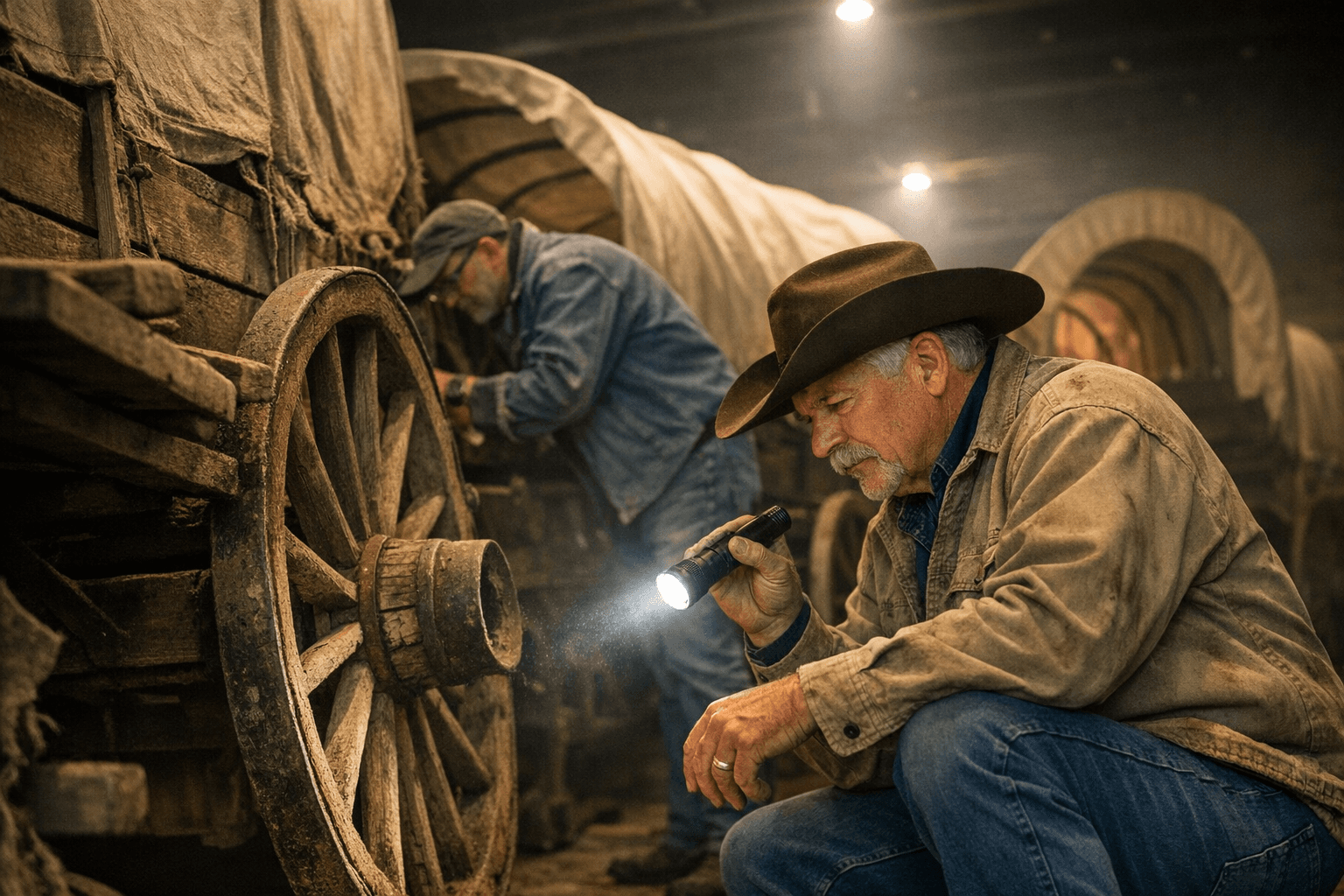
Doug Hansen and a team of specialists from Hansen Wagon and Wheel in Letcher, South Dakota will arrive at the National Historic Oregon Trail Interpretive Center in June to examine all 10 covered wagons in the center's collection, assessing each one for structural damage, safety concerns, and estimated repair costs.
The project is backed by the Oregon Heritage Commission, Oregon Parks and Recreation Department, and Oregon Community Foundation Historic Trail Fund. Crossroads Carnegie Art Center, the Friends organization for the center, wrote the grants that secured funding for Hansen's visit.
"We are thrilled to welcome Doug Hansen to Baker City to assess the wagons in the Interpretive Center collection in June," said Ginger Savage, Crossroads executive director.
Hansen's team will produce a condition report for each of the 10 wagons. That documentation will help center staff and Crossroads determine whether additional fundraising is needed to cover restoration work. Conservators working on 19th-century wooden vehicles typically probe for wood rot, metal corrosion, wheel and axle integrity, textile deterioration in canvas coverings, paint failures, and pest damage, and evaluate whether the display environment adequately controls temperature and humidity. A wagon that looks intact from the exhibit floor can carry hidden structural problems that accelerate if left unaddressed.
Those risks extend well beyond the artifacts themselves. The interpretive center, managed by the Bureau of Land Management on 500 acres along Oregon 86 about five miles east of downtown Baker City, drew more than 20,000 visitors in the summer of 2024 after reopening following a closure of more than three years. In its peak year, 1992, the facility recorded 201,000 visitors. For hotels, restaurants, and fuel stops along the Interstate 84 corridor, the center is a primary reason travelers exit and spend in Baker County.
If Hansen's team flags serious problems with any wagon, some artifacts could require temporary removal from the exhibit floor while restoration proceeds. The greater risk, though, is deferred maintenance: deterioration in 19th-century wooden vehicles compounds quickly, and what can be stabilized today for a modest cost can become a far more expensive reconstruction within a few years.
A detailed condition report also strengthens the center's position when applying for larger state and federal heritage grants. Documented assessments are often a prerequisite for preservation funding awards, meaning Hansen's June visit could return value well beyond the immediate scope of the inspection.
This article was produced by Prism’s automated news system from verified source data, official records, and press releases, then run through automated quality and moderation checks before publishing. The system is built and supervised by the people who set the standards it runs under. Read our full AI policy.
Did this article answer your question?