Oregon Trail Interpretive Center near Baker City unveils three curriculum-based field trips
The National Historic Oregon Trail Interpretive Center near Baker City launched three curriculum-based, two-hour field trips for grades 2-8 in 2026, free to school groups to boost local access to Oregon Trail history.

The National Historic Oregon Trail Interpretive Center, about 5 miles east of Baker City and managed by the Bureau of Land Management, has rolled out three new curriculum-based school field trip programs for 2026. The two-hour experiences, aimed at grades 2-8, were introduced as part of the nation’s 250th birthday observances and the BLM’s 80th anniversary and are free to school groups this year through local funding support.
Don Manuszewski, BLM spokesperson, said, “We’re excited to offer students the opportunity to explore the challenges, triumphs and cultural intersections that shaped America’s westward migration.” The offering is designed to pair hands-on exhibits, storytelling and panoramic views of the Oregon Trail with small-group discussions led by educators, chaperones and Trail Center staff. Center staff provide materials and guidance so classroom learning can be reinforced on site.
The three programs target narrower grade bands so schools can build on prior visits over multiple years. Daily Life on the Oregon Trail (grades 2-3) explores what everyday life was like for children and families traveling the trail. Survival and Success on the Oregon Trail (grades 4-5) examines the choices and hardships faced by pioneers and Indigenous peoples. Whose Land Is It? (grades 6-8) investigates complex questions of land use and ownership during westward expansion.
Field trips may be extended with self-guided activities, a visit to the Ruts, hikes or a stop at the gift shop. On-site amenities include outdoor benches with scenic views and an Acknowledgement Room with seating for lunches and breaks. The center’s maps and resources support pre-visit planning and follow-up lessons. NHOTIC materials also note regional partners and context, including the Tamástslikt Cultural Institute and the presence of multiple tribal boundaries involving the Nez Perce, Cayuse and Northern Paiute, underscoring the center’s effort to foreground Indigenous perspectives and local histories.
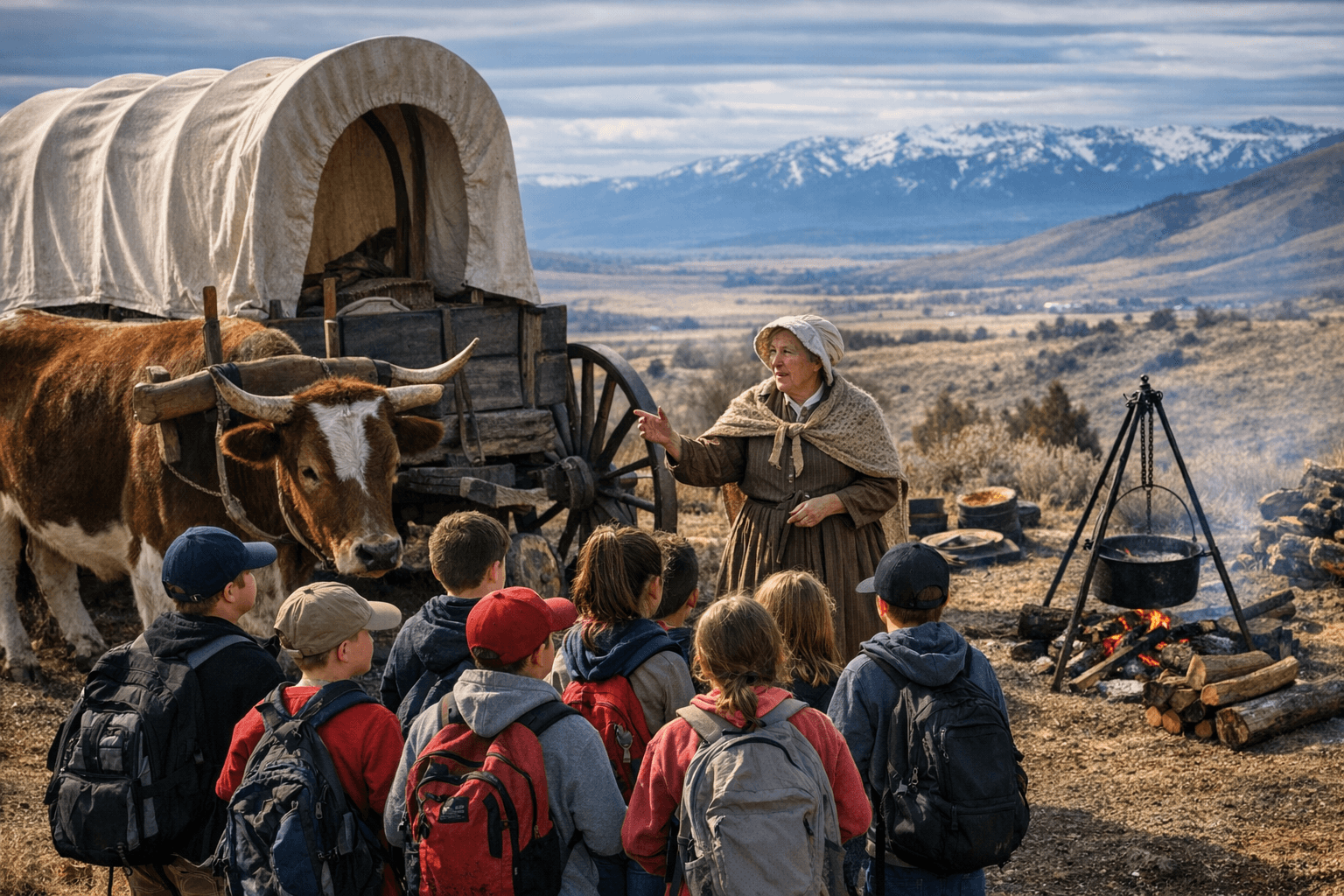
Field trips are free to school groups in 2026 thanks to donations from Friends of NHOTIC and Crossroads Carnegie Art Center. The National Parks Trust Kids to Parks grant program is also listed as a resource for transportation and other expense assistance. Tours are limited; request specific dates or time frames at least two months in advance, or four months for trips in late April through June. For more information and to register, contact the National Historic Oregon Trail Interpretive Center at 541-523-1843 or use the center’s field trip form on its website.
For Baker County schools and community groups, the new programs reduce financial barriers to bringing students to a local site where history, landscape and multiple cultural perspectives meet, and they offer a practical way to connect classroom standards to place-based learning that can deepen understanding across grade levels.
This article was produced by Prism’s automated news system from verified source data, official records, and press releases, then run through automated quality and moderation checks before publishing. The system is built and supervised by the people who set the standards it runs under. Read our full AI policy.
Did this article answer your question?


