Pine Eagle School Receives Digital Kiosk for Drug, Suicide Prevention Resources
Pine Eagle School in Halfway installed a digital kiosk with drug and suicide-prevention resources to boost student access to local programs and timely community updates.
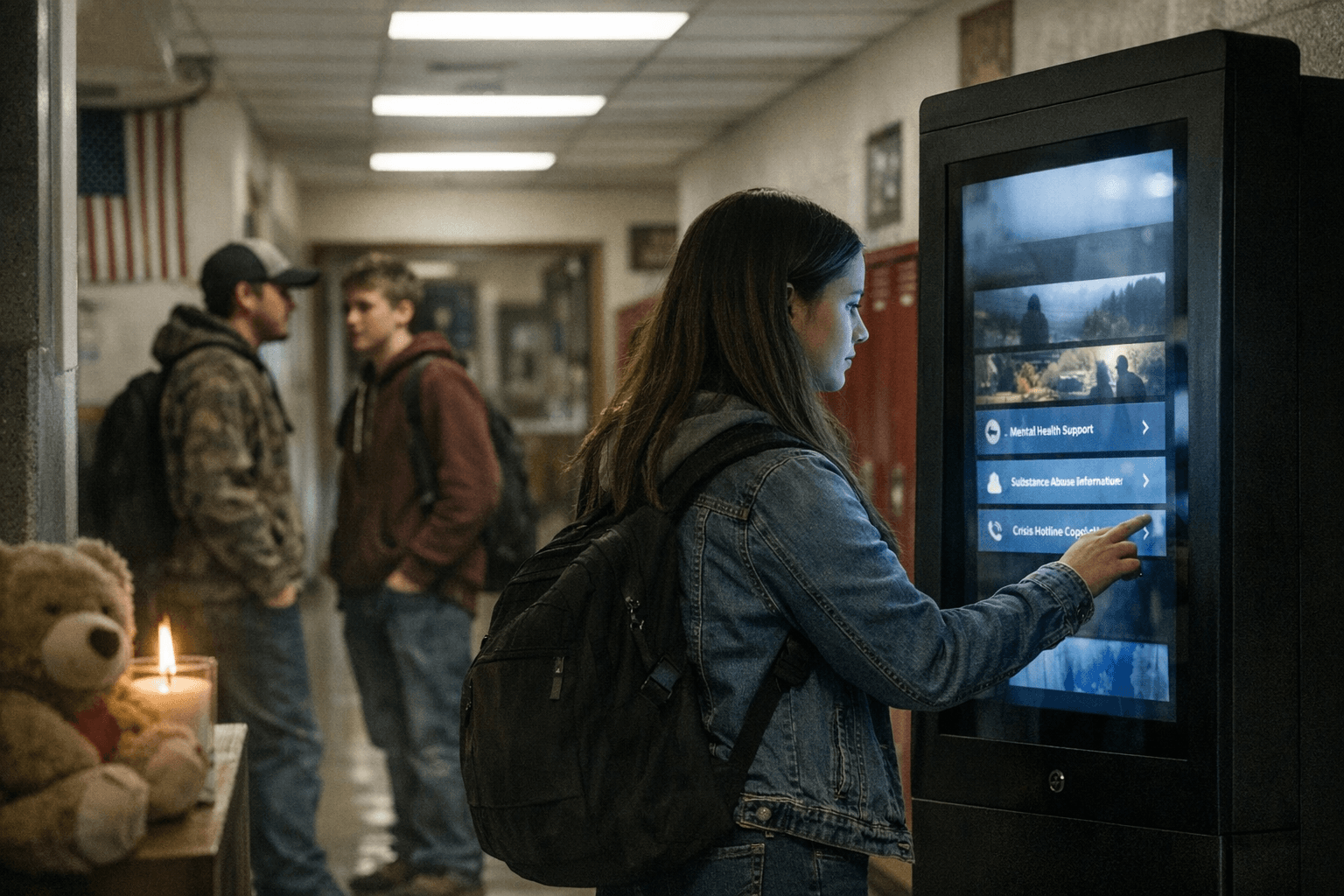
Pine Eagle School in Halfway received a digital kiosk intended to display drug- and alcohol-prevention education, suicide-prevention messaging, and timely school and community updates. The kiosk was purchased with Oregon Health Authority Alcohol, Drug Prevention and Education grant funds awarded to New Directions Northwest’s Prevention Department and will be shared with the school district by the Baker County Safe Communities Coalition. The effort is designed to increase students’ direct access to resources and program information in a rural setting where physical access to services can be limited.
The kiosk installation took place January 23, 2026, and represents a coordinated approach between a state-funded prevention program, a county coalition, and local education officials. By colocating prevention messaging and community notices in a single, visible device on campus, the kiosk aims to bridge gaps between prevention programming and day-to-day student life. For Halfway and surrounding Baker County communities, that means prevention materials and suicide-prevention contacts will be available without requiring travel to larger towns or waiting for scheduled outreach events.
The institutional partnership highlights how state grant policy translates into local-level practice. Funds from the Oregon Health Authority’s Alcohol, Drug Prevention and Education program flowed to New Directions Northwest’s Prevention Department, which purchased the kiosk; the Baker County Safe Communities Coalition will manage content sharing with school administrators. This model reduces startup costs for the district and creates a shared governance arrangement that could influence future prevention investments across the county. It also raises questions common to grant-dependent programs: who will fund maintenance, who sets content priorities, and how will usage be monitored to demonstrate impact?
For parents, students, and school staff, the kiosk may offer immediate benefits: quicker access to contact information, visible suicide-prevention messaging, and announcements about local programs. For policymakers and budget committees, the kiosk underscores the value of targeted prevention funds while spotlighting sustainability needs, ongoing technical support, content updates, and integration with school counseling services will determine long-term effectiveness.
The Baker County Safe Communities Coalition’s role signals active community engagement in public health prevention. Local civic leaders and school board members can use this deployment as a case study when considering future allocations of scarce resources or when weighing expanded prevention strategies in school budgets and grant applications. Tracking usage data, referral rates to services, and any changes in student help-seeking behavior will be important to justify continued investment.
For Halfway residents, the kiosk introduces a visible, practical tool aimed at reducing barriers to prevention and crisis resources. Next steps will include coordinating content with school counselors, maintaining the kiosk hardware and software, and evaluating whether this shared approach can be scaled to other Baker County schools.
This article was produced by Prism’s automated news system from verified source data, official records, and press releases, then run through automated quality and moderation checks before publishing. The system is built and supervised by the people who set the standards it runs under. Read our full AI policy.
Did this article answer your question?


