Rural Volunteers Count Birds, Track Long Term Trends in Baker County
Volunteers took part in the National Audubon Society Christmas Bird Count beginning December 28, 2025, conducting systematic surveys in circles that included Baker City and nearby rural areas. The effort documented hawks, doves and waterfowl, and organizers say the count contributes to long term monitoring that matters for conservation, local economies and community wellbeing.
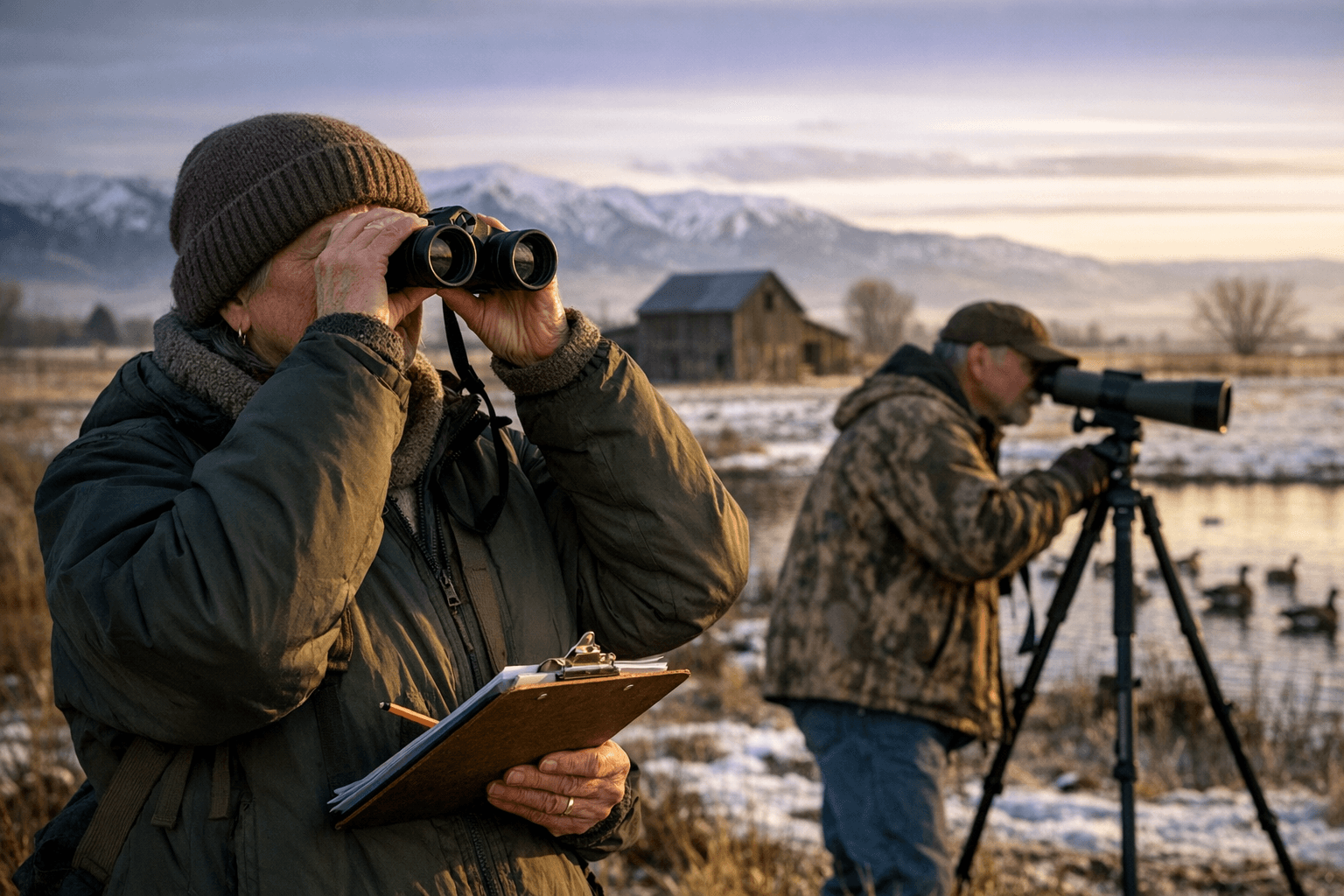
On December 28, local volunteers joined a nationwide annual bird census, driving and walking assigned sectors within designated count circles that include Baker City and surrounding countryside. Teams recorded a variety of species, with hawks, doves and waterfowl among those tallied. Regional compilers noted participation and variable field conditions during the count, and emphasized the event offers both scientific data and social connection for local birding communities.
The Christmas Bird Count is one of the longest running citizen science programs in the country, and its local iterations feed into long term datasets that researchers use to detect population shifts and distribution changes. For Baker County residents, those findings can influence habitat protection, recreation planning and agricultural practices that depend on balanced ecosystems. Changes in bird populations can foreshadow broader environmental shifts that affect pollination, pest control and the health of wetland and riparian areas that many residents depend on for water and recreation.
Beyond ecological signals, the count is a community event. Volunteers who otherwise might not cross paths contributed side by side, reinforcing social ties in a rural region where organized civic activities are fewer and distances are long. The mix of driving and walking routes highlights both the accessibility and limitations of volunteer science in a sparsely settled county. Ensuring that future counts reflect the full diversity of local experience will require attention to transportation, outreach to underrepresented groups and support for older volunteers who bring experience but may face mobility challenges.
Public health and equity intersect with bird monitoring in ways that are often indirect but important. Healthy bird populations are components of resilient environments that support clean water and agricultural productivity, and community based science programs can improve mental wellbeing by fostering outdoor activity and social connection. At the same time, policymakers and conservation partners need to consider who can participate and whose neighborhoods and habitats receive attention. Equitable investment in habitat restoration, access to green space and volunteer support will help ensure that the benefits of monitoring reach all residents.
As compilers compile the local tallies into regional records, the numbers gathered on December 28 will join decades of observations. For Baker County, that continuity matters as the community navigates environmental change, rural health challenges and efforts to sustain the places that define local life.
This article was produced by Prism’s automated news system from verified source data, official records, and press releases, then run through automated quality and moderation checks before publishing. The system is built and supervised by the people who set the standards it runs under. Read our full AI policy.
Did this article answer your question?