Tall trailer knocks down powerlines near Halfway on Highway 413
A white Chevrolet pickup pulling a trailer brought down powerlines near Halfway, exposing how one oversized load can trigger a rural safety and utility response.
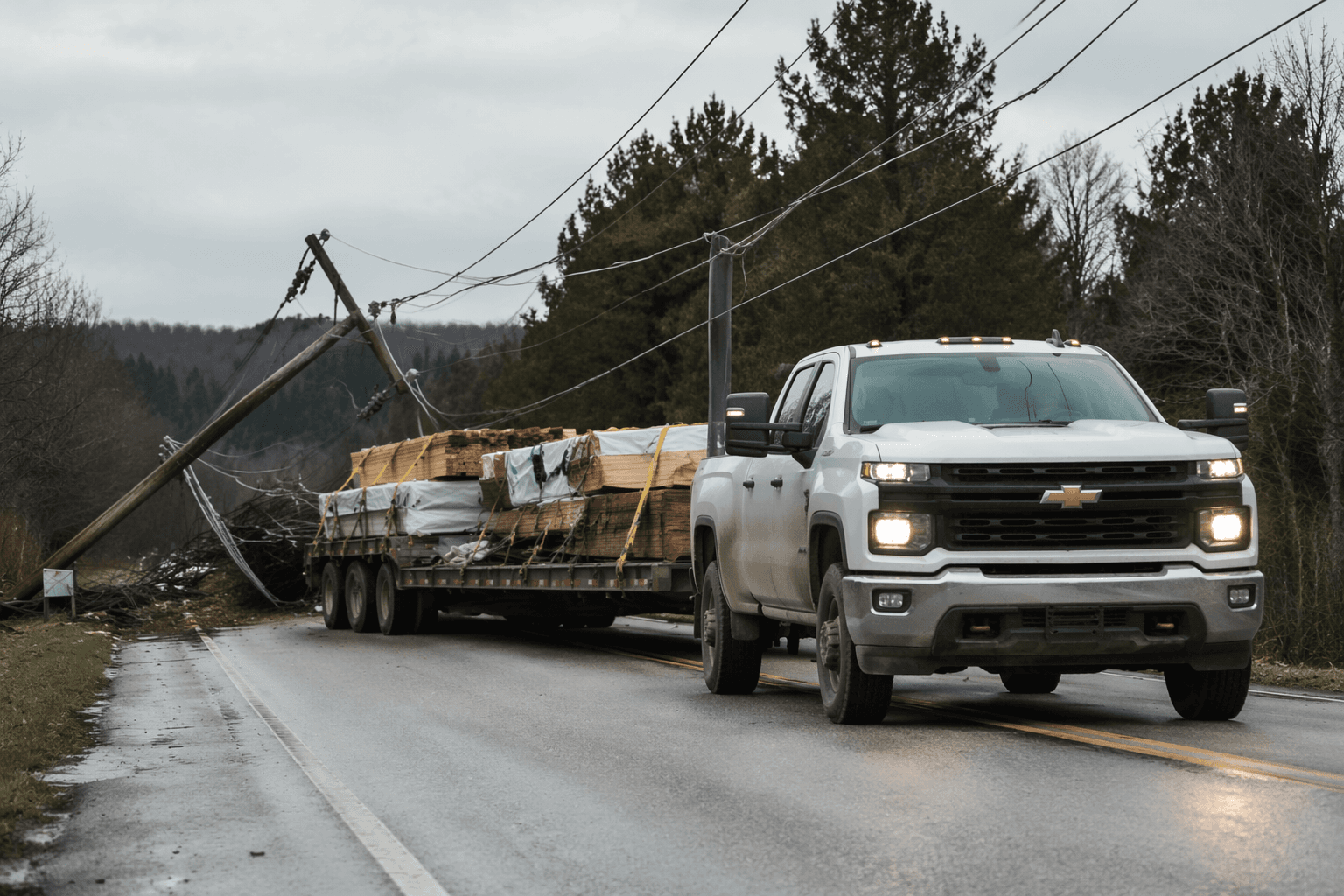
A trailer that was too tall for the route pulled down powerlines near milepost 7 on Oregon Highway 413 in Halfway, turning a routine haul into a public-safety and utility disruption with little margin for error.
Oregon State Police said a trooper was dispatched Saturday, May 9, after the lines were reported down. Investigators said a white Chevrolet pickup pulling a trailer traveled under the powerlines and the load pulled them down. The driver did not realize the vehicle had hit the lines and kept going before being identified. A crash report was issued, but no injuries were reported and no enforcement action was taken at the scene.
The incident is the kind of roadside failure that can create danger well beyond the shoulder where it starts. Idaho Power warns that downed powerlines should be treated as energized and dangerous, with people kept at least 100 feet away. The utility says anyone who encounters a fallen line should keep others back and call Idaho Power or 911 immediately.
For Baker County, the case also points to a practical question about route checks and oversize-load compliance. Oregon’s legal vehicle height is 14 feet 00 inches and its legal width is 8 feet 06 inches. Oregon Department of Transportation says any vehicle or load that exceeds those dimensions must obtain an over-dimension permit before moving, and overwidth loads wider than 8 feet 6 inches require a permit. ODOT’s permit system can also authorize county roads, and in some annual permit cases, city streets, which makes route planning as important as load measurements.
In a county where equipment, ranch materials and other large loads regularly move through narrow rural corridors such as Pine Valley and Highway 413, a misjudged trailer height can become more than a traffic problem. It can leave nearby residents without service, place utility crews in harm’s way and create a hidden hazard for other drivers who may not see the damage until they are already close to it.
Baker County Sheriff Travis Ash and local emergency planners already work within a hazard-mitigation framework that includes a Halfway addendum, a sign that roadway and utility disruptions are not abstract concerns here. This incident shows how quickly an oversized load can strain that system, and how much depends on getting dimensions, permits and routes right before a trailer ever reaches the road.
This article was produced by Prism’s automated news system from verified source data, official records, and press releases, then run through automated quality and moderation checks before publishing. The system is built and supervised by the people who set the standards it runs under. Read our full AI policy.
Did this article answer your question?