Baltimore City schools tout faster reading, math gains on new scorecard
Baltimore schools say graders are gaining faster in reading and math, but city test scores and NAEP results still show a long climb ahead.
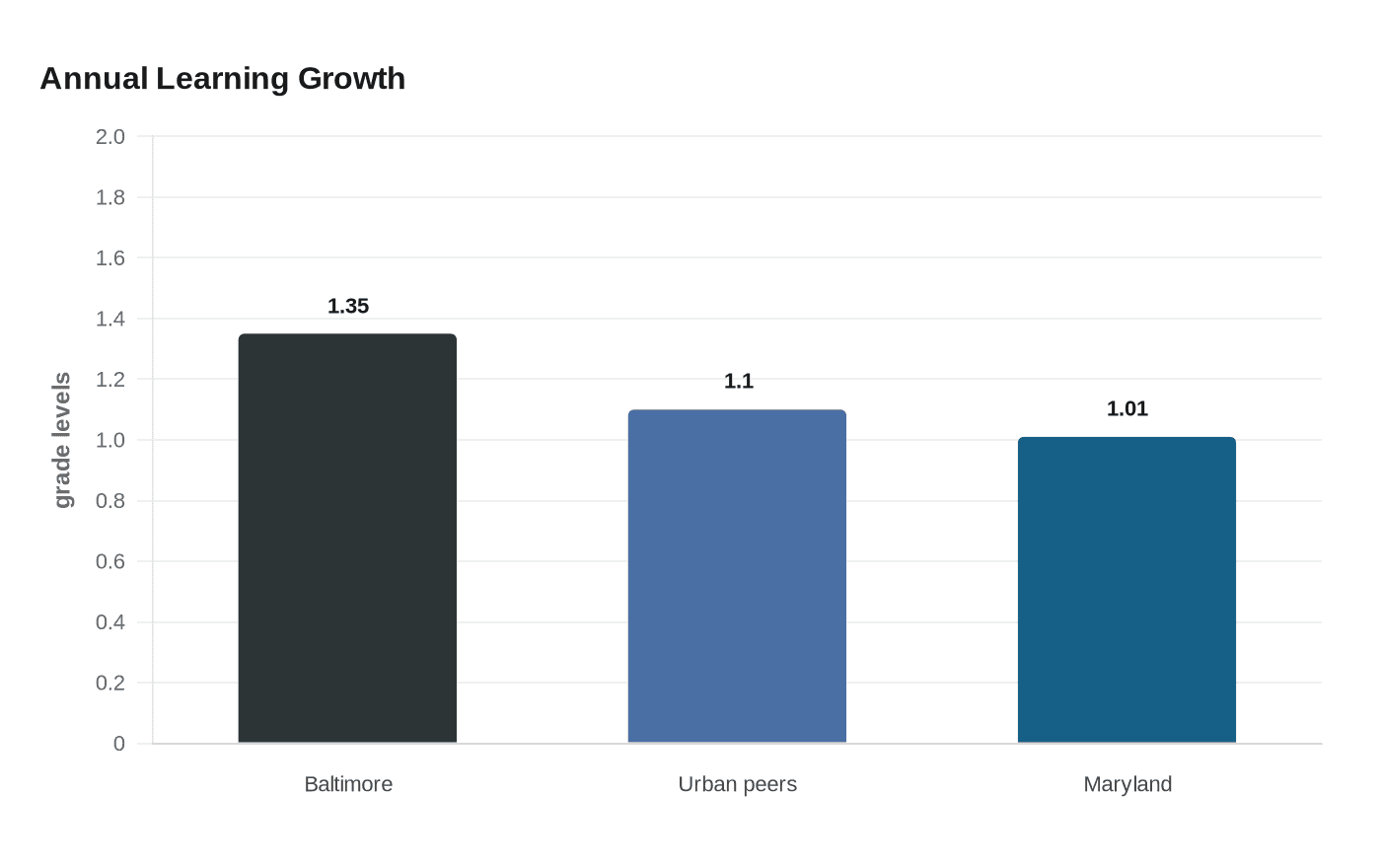
Baltimore City Public Schools is pointing to a new national scorecard to argue that its students are moving faster in reading and math than peers across Maryland and the country, even though the city is still far from the proficiency levels families want to see. In grades 3 through 8, the district said students gained the equivalent of 1.35 grade levels of learning a year in combined math and literacy growth from 2022 to 2025, ahead of comparable urban districts nationally at 1.10 and Maryland at 1.01.
The Education Scorecard, released May 13, also said Baltimore posted the largest increases in reading achievement among large urban districts from 2019 to 2025 and again from 2022 to 2025. The benchmark matters because it comes from researchers connected to Harvard University, Stanford University and Dartmouth College, giving City Schools an outside measure that goes beyond the district’s own reporting.
The strongest case Baltimore is making is not that its students have caught up, but that the recovery trend is better than the city’s reputation sometimes suggests. The scorecard’s Baltimore case study says the district has outpaced Maryland in ELA growth over the past nine years and posted three straight years of math gains equal to the state’s gains. It also ties that progress to more than $420 million for community schools and $23 million for secondary literacy, investments the district says have helped support the gains.
But the numbers also show how much ground remains. National Assessment of Educational Progress results for 2024 put Baltimore City’s average fourth-grade math score at 209, well below the 231 average for large cities. Eighth-grade math came in at 245, compared with 266 in large cities, and eighth-grade reading was 240, below the 252 large-city average. Only 13 percent of Baltimore City fourth-graders were at or above NAEP proficient in reading.
Baltimore’s own state testing data show improvement, not closure of the gap. The district said 2024-25 MCAP literacy proficiency reached 31.2 percent, up 3.5 percentage points from the year before and ahead of Maryland’s 2.4-point increase. That rise suggests the city is recovering faster than the state in literacy, but it still leaves most students below proficiency.
Maryland’s broader Education Scorecard places the state in the top five nationally for both math and reading recovery, yet it also notes chronic absenteeism remains above pre-pandemic levels, a reminder that attendance continues to slow academic rebound. For Baltimore families, the real question is whether the recent gains in specific grades and subjects are large enough to change outcomes in classrooms, and the answer, for now, is only partially.
Know something we missed? Have a correction or additional information?
Submit a Tip