Baltimore council advances charter changes on buying, public space and budget rules
Baltimore lawmakers advanced three charter bills that could loosen bidding rules, cut approvals for sidewalk uses and shift budget power before a possible November vote.

Baltimore City Council moved three charter amendment bills forward Monday, setting up a possible November ballot fight over who controls city spending, public-space approvals and the budget process. The measures were split out of a larger package after some lawmakers said the original version mixed too many unrelated changes into one vote.
The sharpest change would erase Baltimore’s long-standing competitive bidding requirement. Under the current charter, contracts and formal purchases are supposed to go to the lowest responsive and responsible bidder, with limited exceptions when bids are impracticable or an emergency makes the process impossible. Today, the Board of Estimates handles those awards and can waive bidding only under those narrow conditions, with notice and approval requirements. Council President Zeke Cohen defended the proposal by arguing that the lowest bid is not always the lowest cost if a contractor later comes back with change orders that push the final price higher.
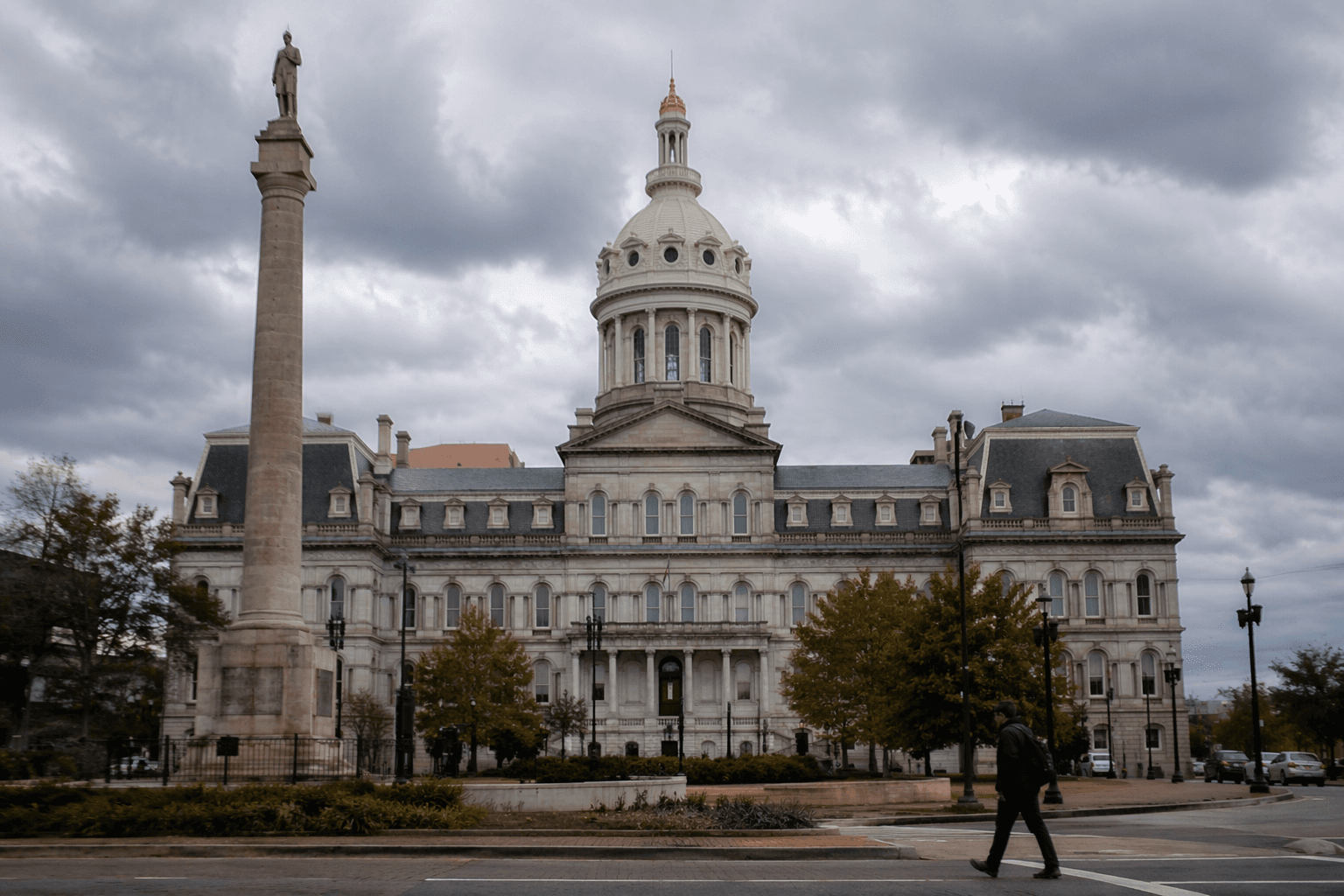
A second bill would strip the Board of Estimates from approving minor privileges, the category city records use for encroachments into the public right-of-way such as signs and outdoor seating. Baltimore says outdoor café seating in the public right of way now requires a Minor Privilege Permit. The change would affect the kind of sidewalk and curbside uses that shape commercial corridors from Hampden and Canton to downtown, reducing one layer of review for small encroachments that currently pass through City Hall.
The third bill would reshape Baltimore’s budget and veto process by giving the council more time to override vetoes and removing the Board of Estimates from the first stage of budget preparation. That matters because the five-member board, made up of the mayor, city council president, comptroller, city solicitor and director of public works, is one of the city’s main fiscal gatekeepers. The board says it formulates and executes fiscal policy, adopts the Ordinance of Estimates each year and oversees major spending and procurement.
Council Vice President Sharon Green Middleton said she was not comfortable advancing the measure as one package, while Councilman James Torrence warned that the city appeared to be hiding transparency inside a block of text most voters would not read. The council ultimately advanced the bills on voice votes. If they make the ballot, residents could be asked to decide whether Baltimore should keep concentrating power in the Board of Estimates or shift more authority to the council and city agencies.
That vote would carry extra weight in Baltimore, where the Board of Estimates has anchored city government since the 1898 municipal charter and held its first meeting on March 20, 1900. Voters also approved a 2020 amendment creating a decennial Charter Review Commission, meant to confront structural challenges, transparency and accountability gaps. Charter amendments approved by the council by May would appear on the November 2026 ballot, putting these changes on a fast track toward a citywide decision.
This article was produced by Prism’s automated news system from verified source data, official records, and press releases, then run through automated quality and moderation checks before publishing. The system is built and supervised by the people who set the standards it runs under. Read our full AI policy.
Know something we missed? Have a correction or additional information?
Submit a Tip