Baltimore drivers hit by JFX potholes, no I-83 repaving planned this year
A southbound JFX pothole blew out two tires for one Baltimore couple, and the city said no I-83 repaving was planned this year.
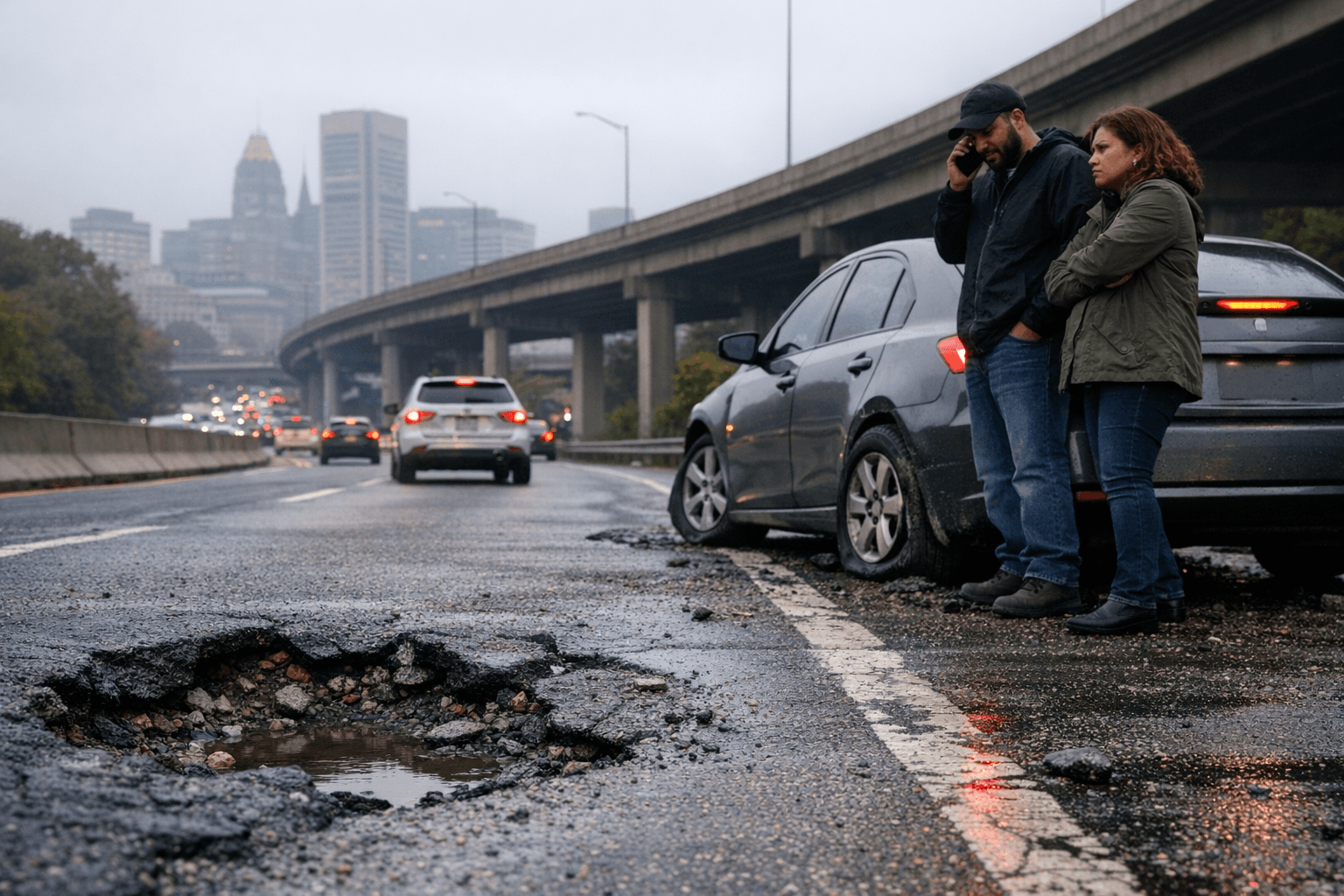
A southbound Jones Falls Expressway pothole blew out two tires for Paul Petrov and Emily Morgan, forced them to call AAA for a tow and left them facing the kind of repair bill Baltimore drivers say has become routine on I-83, even as the city said no repaving was planned for the corridor this year.
Petrov said he usually tries to avoid the middle lane downtown because it can be rough, but this hit came without warning. The pothole “blew not just one but two tires,” he said, turning a normal trip into an immediate expense and a delayed arrival. For commuters, delivery drivers and anyone crossing the city on the JFX, the damage is not limited to tires. It can mean alignments, towing, lost work time and the uncertainty of whether patched pavement will hold up long enough to get home.
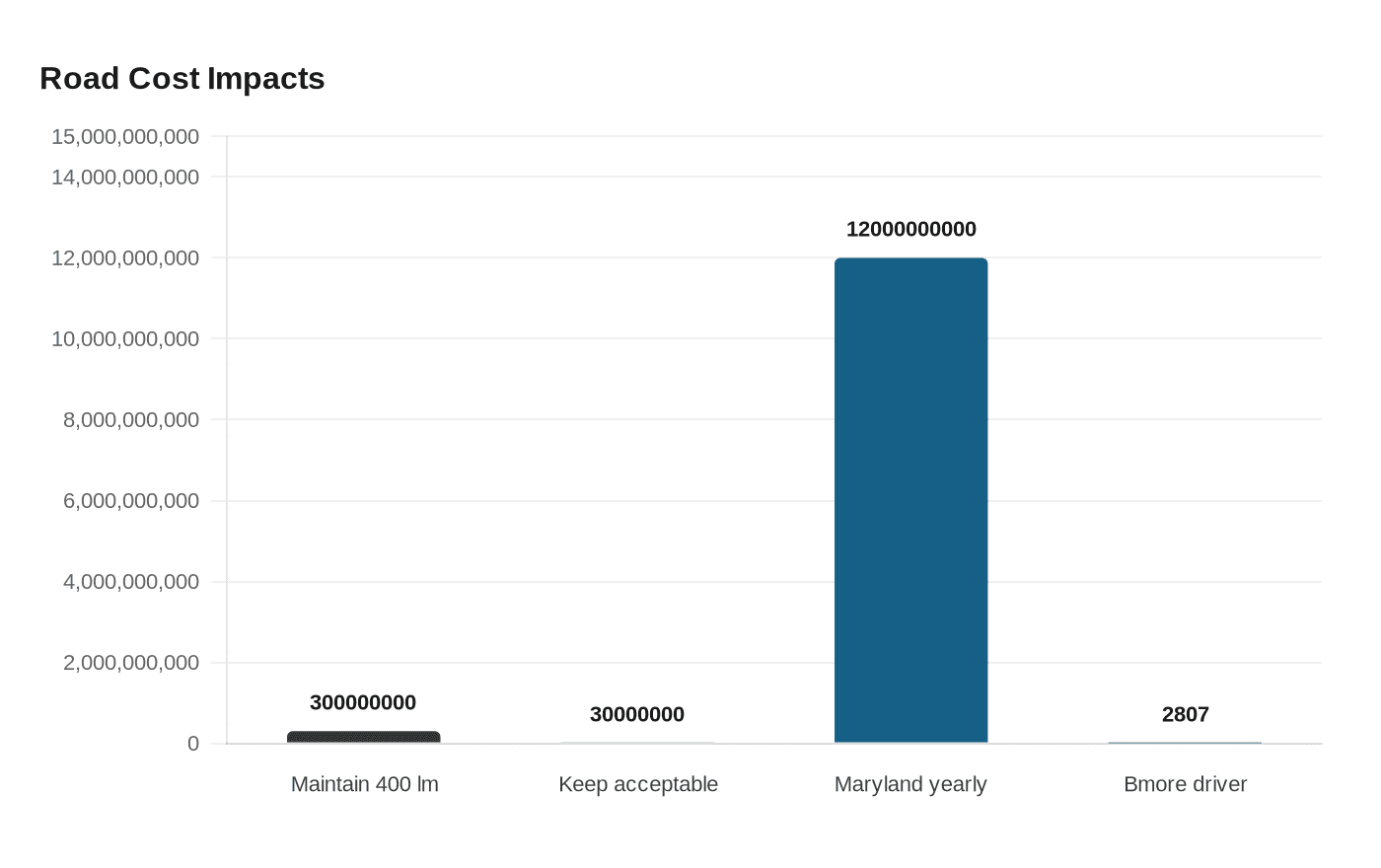
Baltimore City’s transportation priorities document says I-83’s pavement is in poor condition and needs reconstruction. The same plan puts the cost of maintaining 400 lane miles of concrete roads at $300 million and says about $30 million, or 10%, is needed just to keep those roadways at an acceptable level. City transportation officials have also said Baltimore manages 2,000 miles of roads, 7 miles of highways and hundreds of bridges, a footprint that stretches repair dollars thin across the city.
Mayor Brandon Scott’s 90-day spring service sprint set a target of filling 25,000 potholes, along with resurfacing 25 lane miles, removing 6,000 graffiti markings, sweeping 25,000 road miles, completing 12,000 bulk pickups and cleaning and cutting 500 trees. City officials said crews filled nearly 9,000 potholes in February as part of that effort. But on the JFX, many motorists say the work feels temporary, more like damage control than a fix for a road built for much heavier traffic than patch jobs can handle.
The city has also tied the JFX to enforcement and revenue. Baltimore installed speed cameras along the expressway in 2022, said the cameras operate 24 hours a day, 365 days a year, and said state law sends remaining revenue, after operating costs, to expressway improvements. A 2023 report said slower-than-expected speeding citations created budget pressure tied to that revenue. In March 2025, the city announced the cameras would be moved to new locations along the expressway.
A March 2025 TRIP report cited by WYPR estimated poor road conditions cost Maryland about $12 billion a year and said Baltimore motorists lose about $2,807 annually in extra maintenance and fuel costs. On the JFX, that figure now sounds less like a statewide estimate than a daily toll.
This article was produced by Prism’s automated news system from verified source data, official records, and press releases, then run through automated quality and moderation checks before publishing. The system is built and supervised by the people who set the standards it runs under. Read our full AI policy.
Did this article answer your question?