Baltimore filmmaker challenges The Wire shadow over city image
Dr. S. Rasheem’s *Beyond the Wire* reframes Baltimore through Black civic life and lived reality, arriving as the city posts historic crime declines and prepares a Senator Theatre premiere.
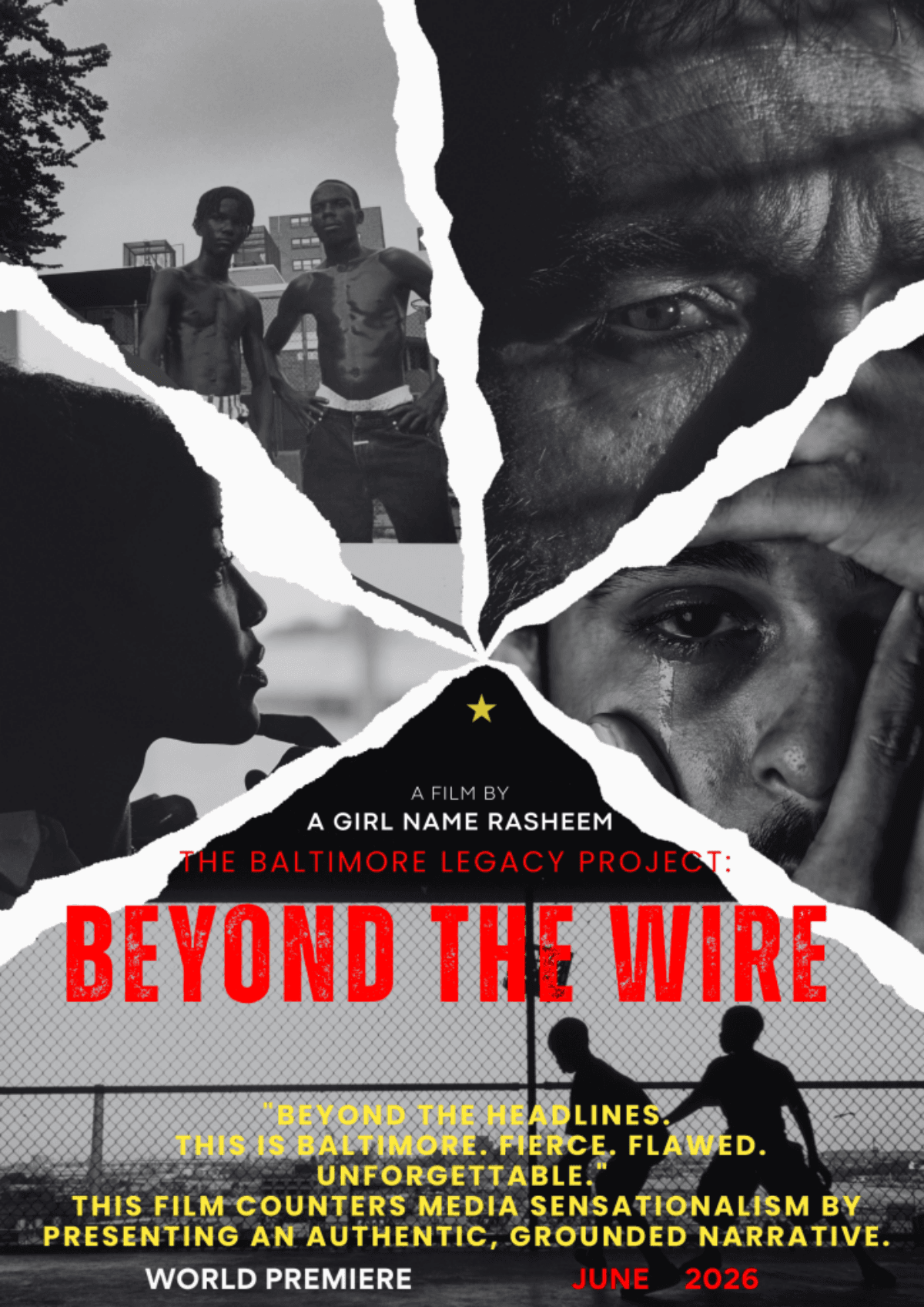
Dr. S. Rasheem’s *Beyond the Wire* is taking direct aim at one of Baltimore’s most stubborn public images: the idea that HBO’s *The Wire* can stand in for the city itself. Instead of leaning into crime-and-decline shorthand, the documentary pushes viewers toward the Baltimore that residents know every day, a city shaped by neighborhoods, organizing, institutions, and cultural memory that rarely get equal time.
A fight over who gets to define Baltimore
Baltimore has long lived with a split identity. The Inner Harbor, with its familiar tourism polish, has served as the city’s postcard image, while national TV and commentary have often fixed attention on violence, abandonment, and institutional failure. *The Wire* intensified that tension by placing Baltimore’s hardest realities at the center of a story that many outsiders came to treat as the whole city.
Rasheem’s film enters that debate with a different argument: Baltimore is bigger than one show, one era, or one narrative of decline. That matters for civic pride, but it also matters for arts visibility. When a city is repeatedly flattened into a single reputation, its artists spend extra energy proving that local stories are worth seeing on their own terms.
What the film restores to view
Visit Baltimore describes the documentary as built from interviews with local organizers, educators, historians, and residents, and says it centers Black Baltimore’s grassroots leadership, civic engagement, and self-determination. That framing is important because it shifts the focus away from outside observers and toward the people who have been building, teaching, and holding communities together in plain sight.
The film’s value lies in what it restores. It makes room for the daily realities that rarely drive national coverage: the people who keep civic life moving, the educators who shape the next generation, the historians preserving memory, and the organizers who turn local concern into neighborhood action. Those voices matter because Baltimore’s story has never been only about crisis. It has also been about resilience, political imagination, and a stubborn insistence on belonging.
That broader view is especially necessary in a city where representation has real consequences. When outsiders think only of the most damaging version of Baltimore, they miss the institutions and civic networks that actually determine whether neighborhoods feel stable, visible, and invested in. *Beyond the Wire* pushes back by insisting that Black Baltimore is not a footnote to the city story, but one of its central engines.
Why the timing lands now
The documentary arrives as Baltimore’s public conversation about safety has become more complicated and, in some ways, more hopeful. On May 1, Mayor Brandon M. Scott said April 2026 had the fewest homicides for a single month in Baltimore since at least 1970. The city also reported 33 homicides and 89 non-fatal shootings through the morning of May 1.
That follows a March update showing 28 homicides and 61 non-fatal shootings through March 31, 2026, compared with 32 homicides and 66 non-fatal shootings over the same period in 2025. Baltimore ended 2025 with 133 homicides, the fewest in nearly 50 years, and a 60% decline from 2020. The city has described the reductions in homicides and shootings in 2023, 2024, and 2025 as historic.
Those numbers do not erase pain, and they do not make old narratives disappear overnight. But they do create a different context for how Baltimore is seen and discussed. If the city is experiencing measurable progress while still carrying a national reputation built on its most difficult chapters, then a film like *Beyond the Wire* becomes more than media criticism. It becomes part of the civic work of telling the truth about change.
The Baltimore Legacy Project behind the film
*Beyond the Wire* is not a one-off statement. Rasheem has described The Baltimore Legacy Project as a documentary series of roughly 7 to 9 films, all focused on Baltimore Black intellectual history and Baltimore movement history. That scope suggests a deeper mission than correcting one pop-cultural misconception. It is about building an archive of memory, leadership, and resistance that can stand alongside the city’s better-known stereotypes.
That larger project gives the film its weight. Baltimore’s history has often been narrated from the outside, with the loudest stories coming from media institutions that arrive after the fact. Rasheem’s work tries to reverse that current by treating Baltimore’s own intellectual and movement traditions as the core story, not the side note.
What the premiere represents for the city
The film is set for a world premiere on June 18, 2026 at The Senator Theatre in Baltimore, with an encore screening on June 25. The choice of venue matters. The Senator is not just a screening room; it is part of the city’s cultural geography, a recognizable place where Baltimoreans can gather to see themselves reflected in a story that rejects easy caricature.
Visit Baltimore’s description of the project makes that local emphasis explicit, and the timing underscores the point. Baltimore is trying to speak with more confidence about both its cultural life and its public safety progress. A film about image, memory, and self-definition lands squarely in that effort, especially when it gives Black Baltimore’s leadership and everyday community life the center of the frame.
The most lasting impact of *Beyond the Wire* may be that it asks viewers to update their mental map of the city. Baltimore is still wrestling with real challenges, but it is also writing new chapters in public safety, arts, and civic identity. Rasheem’s documentary argues that the people who live there should be the ones who define what the city means now.
This article was produced by Prism’s automated news system from verified source data, official records, and press releases, then run through automated quality and moderation checks before publishing. The system is built and supervised by the people who set the standards it runs under. Read our full AI policy.
Did this article answer your question?


