Baltimore Flag House spotlights Mary Pickersgill ahead of America’s 250th
Downtown Baltimore’s Flag House is tying Mary Pickersgill’s 1813 flag commission to a new eight-artist exhibit, aiming to draw visitors through July 2028.
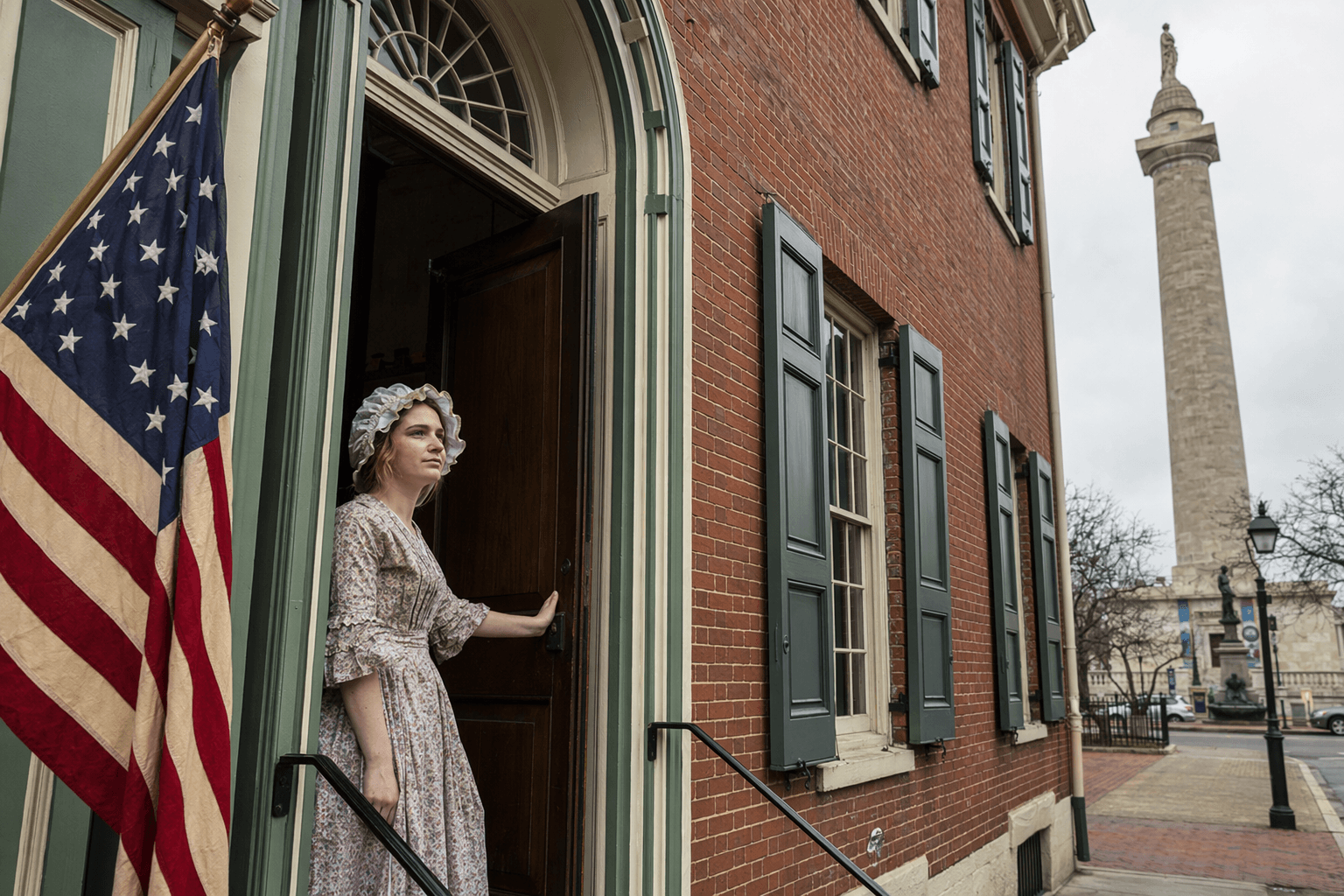
The Star-Spangled Banner Flag House is using America’s 250th anniversary to turn one of Baltimore’s best-known stories into a stronger downtown draw. At South Albemarle Street and East Pratt Street, the museum is centering Mary Pickersgill, the widow and businesswoman who was 37 when she took on the Fort McHenry flag commission, and the group of women and girls who helped her sew the banner that would become part of the national anthem.
Museum director Christopher Sniezek has framed the story as collective labor, not lone legend. In the summer of 1813, Pickersgill was contracted to make two flags for Fort McHenry: a 30-by-42-foot garrison flag and a 17-by-25-foot storm flag. The work took about seven weeks and was completed in August 1813 by Pickersgill, her 13-year-old daughter Caroline, her nieces Eliza Young and Margaret Young, and Grace Wisher, a 13-year-old African American indentured servant.
That labor happened at a time when Pickersgill stood out in Baltimore’s economy. Maryland state records show she returned to Baltimore in 1807 and established a flag-making business at 44 Queen Street, now 844 E. Pratt Street. She was Baltimore’s only female business owner at the time, and she later served as president of the Impartial Female Humane Society from 1828 to 1851. The organization opened a home for aged women in 1850, and a men’s home was added in 1863.
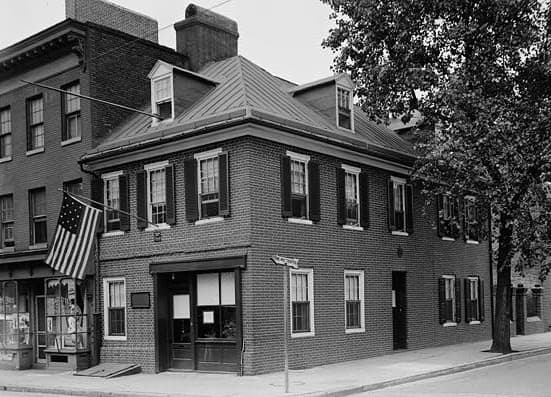
The Flag House itself carries that history into the present. The building was constructed in the late 1700s, later rented by Pickersgill and her family, and eventually purchased by Baltimore in 1929. Its location in the old waterfront core, near Baltimore Harbor and the streets that still anchor downtown and Old Town, puts it in the center of the city’s tourism corridor and its civic memory.

That positioning matters now because the museum is pairing commemoration with new programming. Visit Baltimore says the Flag House is marking its 100th anniversary as a museum in 2026 while also tying into America’s 250th. A new exhibit, Maryland’s America: 250 Years of American History through Marylander Eyes, is scheduled to run from July 2026 through July 2028 and will feature work by eight Maryland artists.
The broader historical backdrop remains unmistakably Baltimore. Fort McHenry withstood a 25-hour British bombardment on September 14, 1814, the event that helped inspire Francis Scott Key’s poem. By linking that past to a long-running exhibit schedule and contemporary Maryland art, the Flag House is trying to do more than preserve a familiar lesson. It is asking whether Baltimore’s most famous flag story can still bring school groups, tourists, and neighborhood foot traffic downtown.
This article was produced by Prism’s automated news system from verified source data, official records, and press releases, then run through automated quality and moderation checks before publishing. The system is built and supervised by the people who set the standards it runs under. Read our full AI policy.
Did this article answer your question?


