Baltimore Marks Edgar Allan Poe’s 217th Birthday With Tours, Readings, Reflections
WYPR marked Edgar Allan Poe’s 217th birthday with local tours, readings and reflections, highlighting his ties to Baltimore and the cultural and economic role of Poe-related programming.
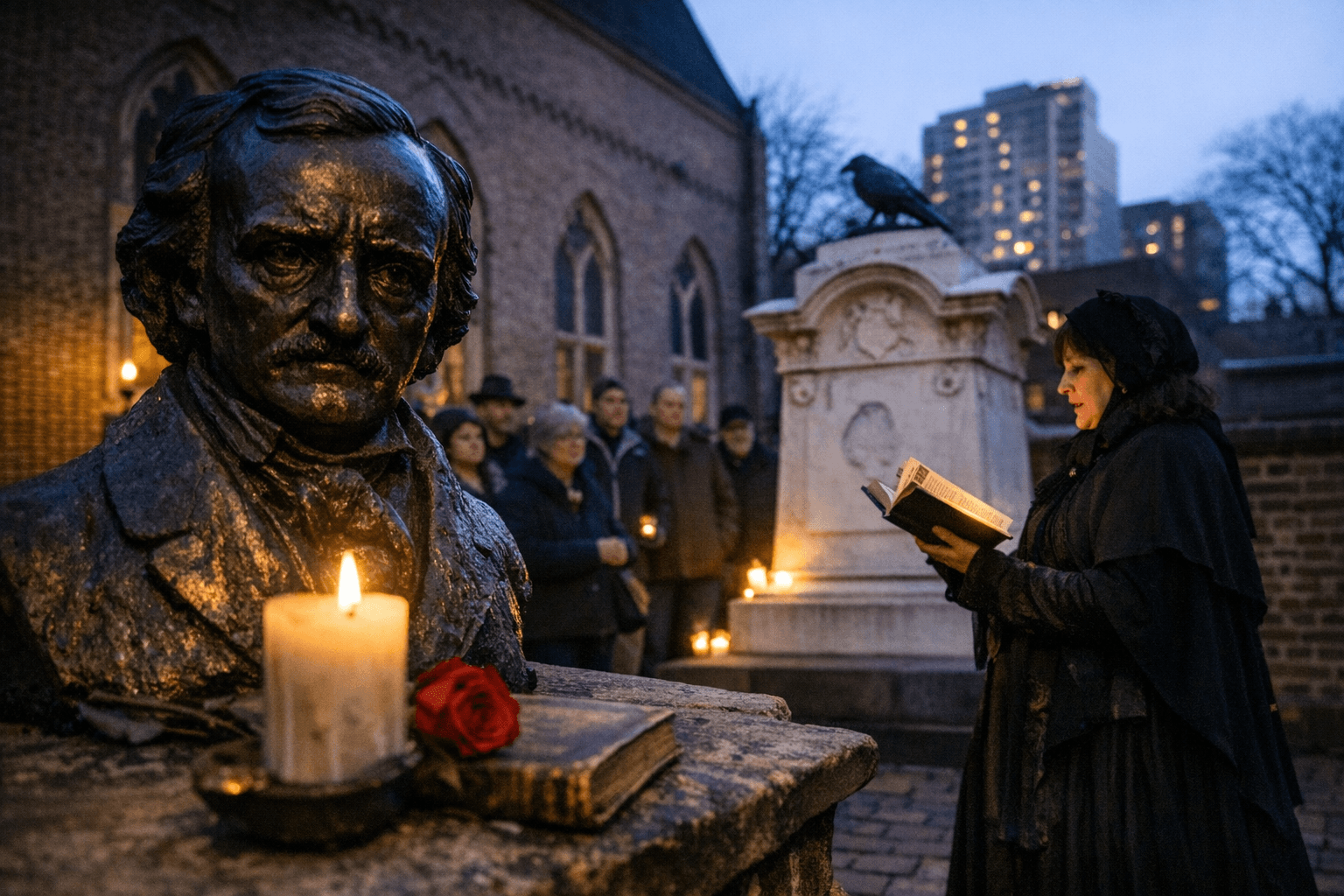
WYPR’s Midday feature on Jan. 16 marked Edgar Allan Poe’s 217th birthday with a look at the slate of readings, ceremonies and tours that Baltimore staged to honor the writer who died and was buried in the city. The broadcast framed the observances as more than anniversary rituals, noting how Poe-related programming drives cultural activity, draws visitors and prompts discussion about how the city reckons with a complicated legacy.
Organizers and community groups held readings at neighborhood venues, conducted guided walks that traced Poe’s Baltimore haunts, and staged ceremonies at sites linked to his life and death. Jan. 19 is often observed as Poe’s birthday, and the Midday segment examined how events clustered around that date reinforce annual patterns of literary tourism that local cultural institutions rely on to sustain winter engagement.
For Baltimore residents, the immediate impact was both cultural and economic. Cultural venues reported steady turnout for readings and tours during a period that typically sees lower foot traffic. Local tour operators and small businesses that host readings and post-event gatherings view Poe programming as a winter lifeline that keeps visitors in town beyond the summer peak around the Inner Harbor. WYPR’s report positioned Poe events as part of a broader strategy to stretch Baltimore’s tourism calendar and to monetize distinctive local assets tied to the city’s past.
The programming also prompted conversations about the way Baltimore remembers its past. Community groups used readings and discussions to surface the tensions in celebrating a figure whose life involved personal hardship and whose works have complex racial and social resonances. That reflective angle pushed events beyond spectacle into civic dialogue, signaling an appetite locally for history that acknowledges contradictions while still leveraging cultural heritage for community benefit.
From a policy perspective, the Midday feature suggested that modest public support for winter cultural programming could yield outsized returns in quieter months. City cultural planners and funders who aim to broaden Baltimore’s year-round tourism profile may find value in underwriting similar literary and history-focused initiatives that keep neighborhood venues active and funnel spending to nearby restaurants, bookstores and shops.
For Baltimoreans, Poe’s 217th birthday offered familiar frissons of Gothic lore alongside practical benefits. The gatherings reinforced Baltimore’s identity as a literary city and kept money circulating in local economies during mid-January. As the city moves toward spring programming, expect Poe-related tours and readings to remain a steady part of the cultural calendar that both celebrates a local icon and invites continued reflection on how the city tells its own story.
This article was produced by Prism’s automated news system from verified source data, official records, and press releases, then run through automated quality and moderation checks before publishing. The system is built and supervised by the people who set the standards it runs under. Read our full AI policy.
Did this article answer your question?


