Baltimore Releases Overdose Strategy Plan, Targets 50% Death Reduction by 2040
Baltimore raised its overdose death reduction target to 50% by 2040 after resident feedback from Cherry Hill, Penn North, Park Heights, and East Baltimore pushed the city to aim higher.

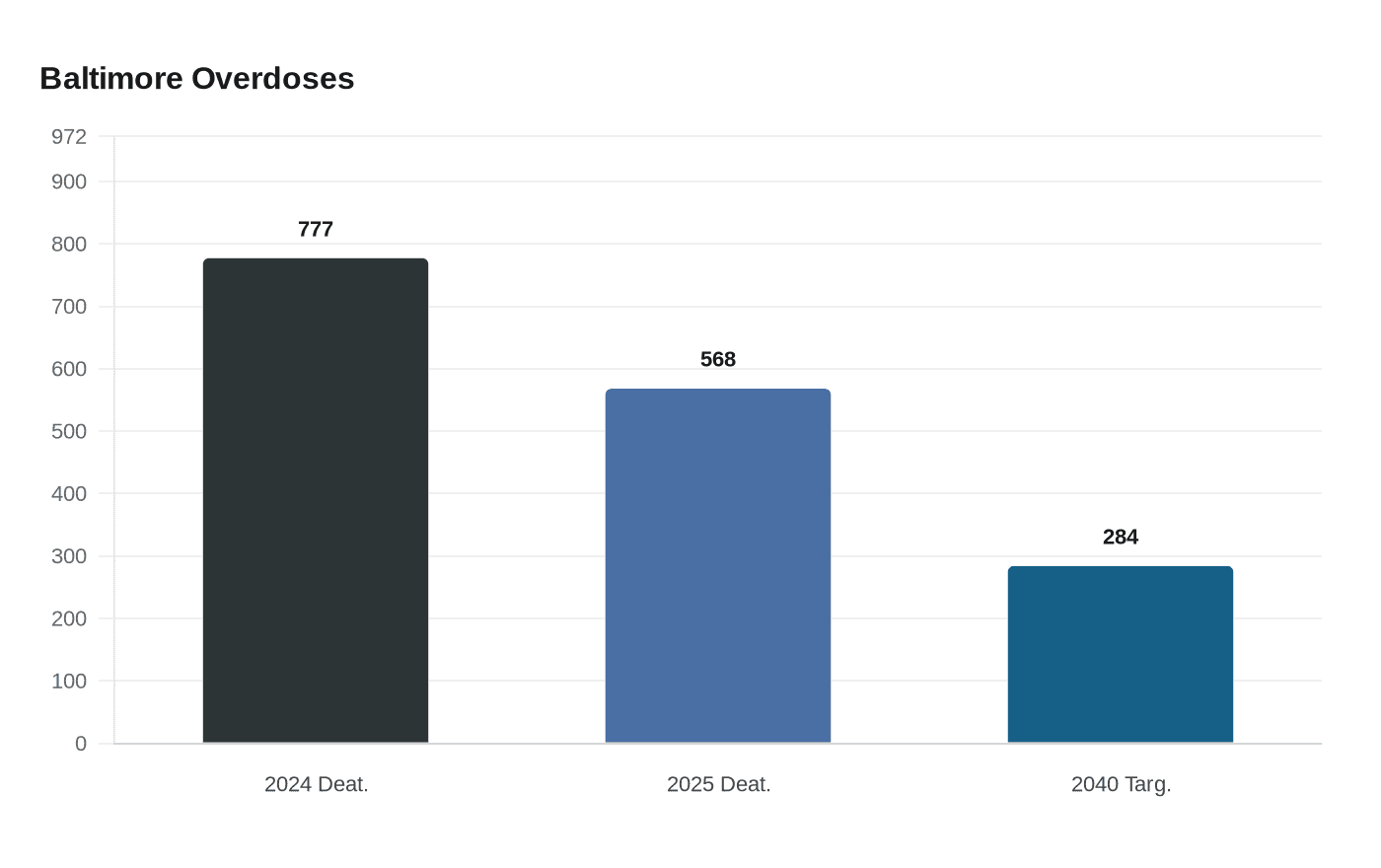
Baltimore recorded 568 fatal overdoses in 2025, down from 777 the year before. Mayor Brandon M. Scott wants to cut that number in half by 2040, and on March 19 his administration released a finalized strategy to get there.
The Overdose Response Strategic Plan for 2025–2027, prepared by the Baltimore City Mayor's Office of Overdose Response, sets a goal of reducing fatal overdose deaths 50% by 2040, an increase from the 40% target in the preliminary draft released last July. City officials said the higher target reflects recent progress on overdose numbers, with Maryland recording a nearly 26% decline in fatal overdoses statewide in 2025 compared to 2024, according to the governor's office.
The finalized plan is the product of nearly nine months of public engagement. After releasing a preliminary 20-page draft on July 2, 2025, BCMOOR held four community listening sessions in neighborhoods the city identified as disproportionately impacted: Cherry Hill, Penn North, Park Heights, and East Baltimore. Residents also submitted feedback through an online Community Input Form. Based on that input, BCMOOR rearranged the plan's strategies to better match its priorities, changed language to reflect resident suggestions, and simplified the document to better communicate the city's intended steps.
"Although there is no simple solution to the overdose crisis and we will not overcome it overnight, this strategic plan proposes an innovative approach to meet the present and immediate needs across our community — while laying the groundwork for the long-term changes to help end this crisis," Scott said.
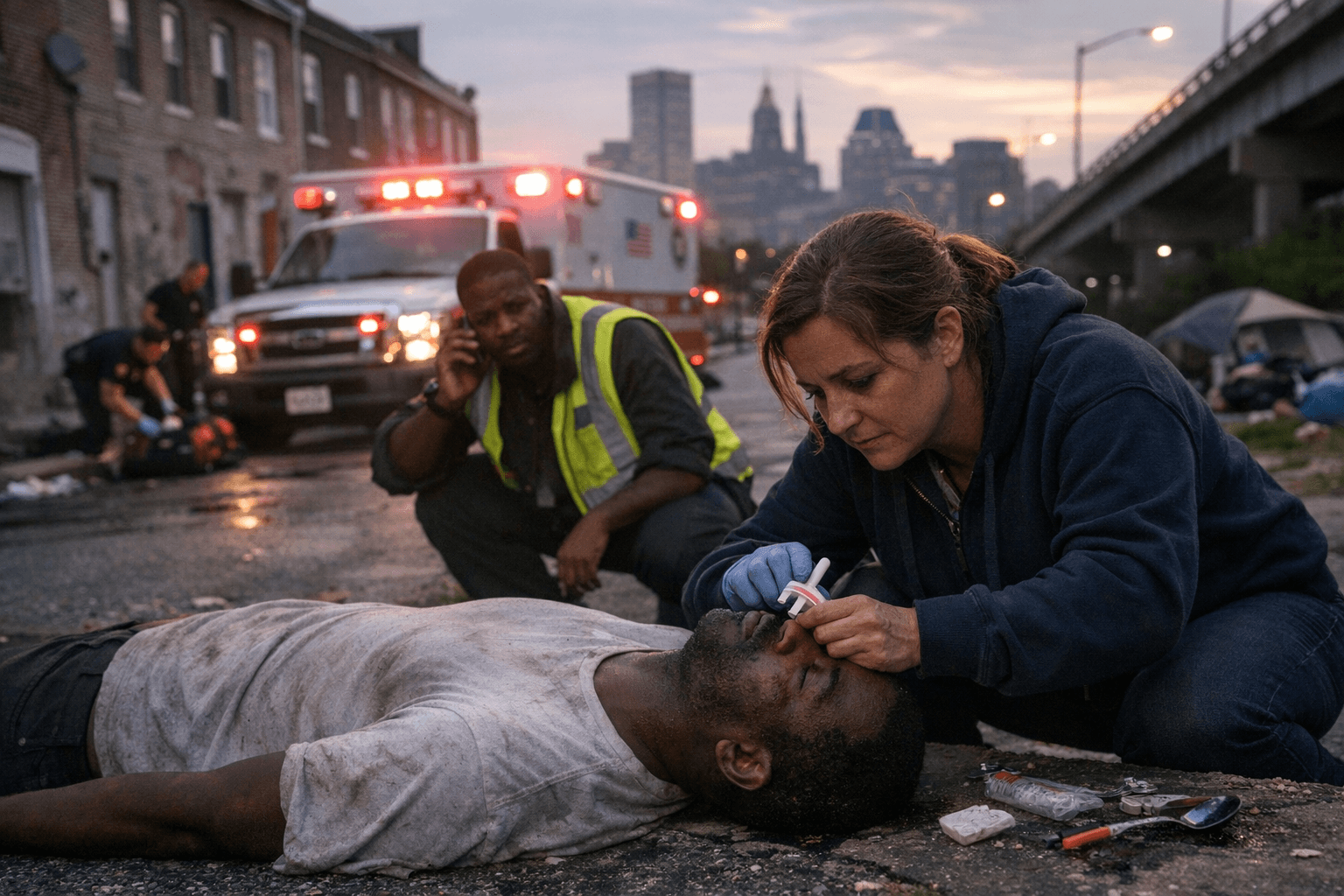
The plan will govern how Baltimore spends its Opioid Restitution Fund, which manages $242.5 million in settlement money won from pharmaceutical companies through at least seven separate lawsuits. Scott signed an executive order in 2024 to establish a framework for those funds, directing BCMOOR to invest them in evidence-based interventions carried out alongside community partners. Under the finalized plan, that money will go toward expanding naloxone availability, creating mobile treatment options, increasing support for peer overdose programs, and investing in harm reduction and 24/7 support services.
The plan is grounded in a needs assessment that drew quantitative data from more than 16 sources and qualitative input from over 300 stakeholders, including people who actively use drugs, people in treatment, family members, providers, and city staff.
The urgency behind the plan is not abstract. On July 10, 2025, about 25 people were taken to the hospital following a string of overdoses in West Baltimore. In December 2025, State's Attorney Ivan Bates announced the indictment of 19 people, including two juveniles, from three separate drug trafficking organizations tied to operations in the same area.
Public health officials have identified structural gaps the plan must close. Sadiya Muqueeth, chief health policy officer at the Baltimore City Health Department, said the city's approach remains inconsistent at its foundation: "The harm reduction approach, which is sort of a philosophy, is not consistently adopted in Baltimore City. Baltimore City's insufficient access to harm reduction services and lack of safe spaces increases overdose risk."
The preliminary draft drew scrutiny for what it left out. The Baltimore Beat noted the plan contained ambiguity around specific programs and made no mention of overdose prevention centers, which allow supervised drug use under medical observation.
The city describes the plan as a living document, with updates scheduled every two years and an open channel for ongoing community feedback. Residents can contact BCMOOR through City Hall at Room 250, 100 N. Holliday St., or by calling the city operator at (410) 396-3100.
This article was produced by Prism’s automated news system from verified source data, official records, and press releases, then run through automated quality and moderation checks before publishing. The system is built and supervised by the people who set the standards it runs under. Read our full AI policy.
Did this article answer your question?