Body found in Inner Harbor sparks calls for waterfront safety reforms
Branson Oduor’s body was recovered from the Inner Harbor, and a petition is pushing Baltimore to add barriers, lighting and rescue access along the waterfront.
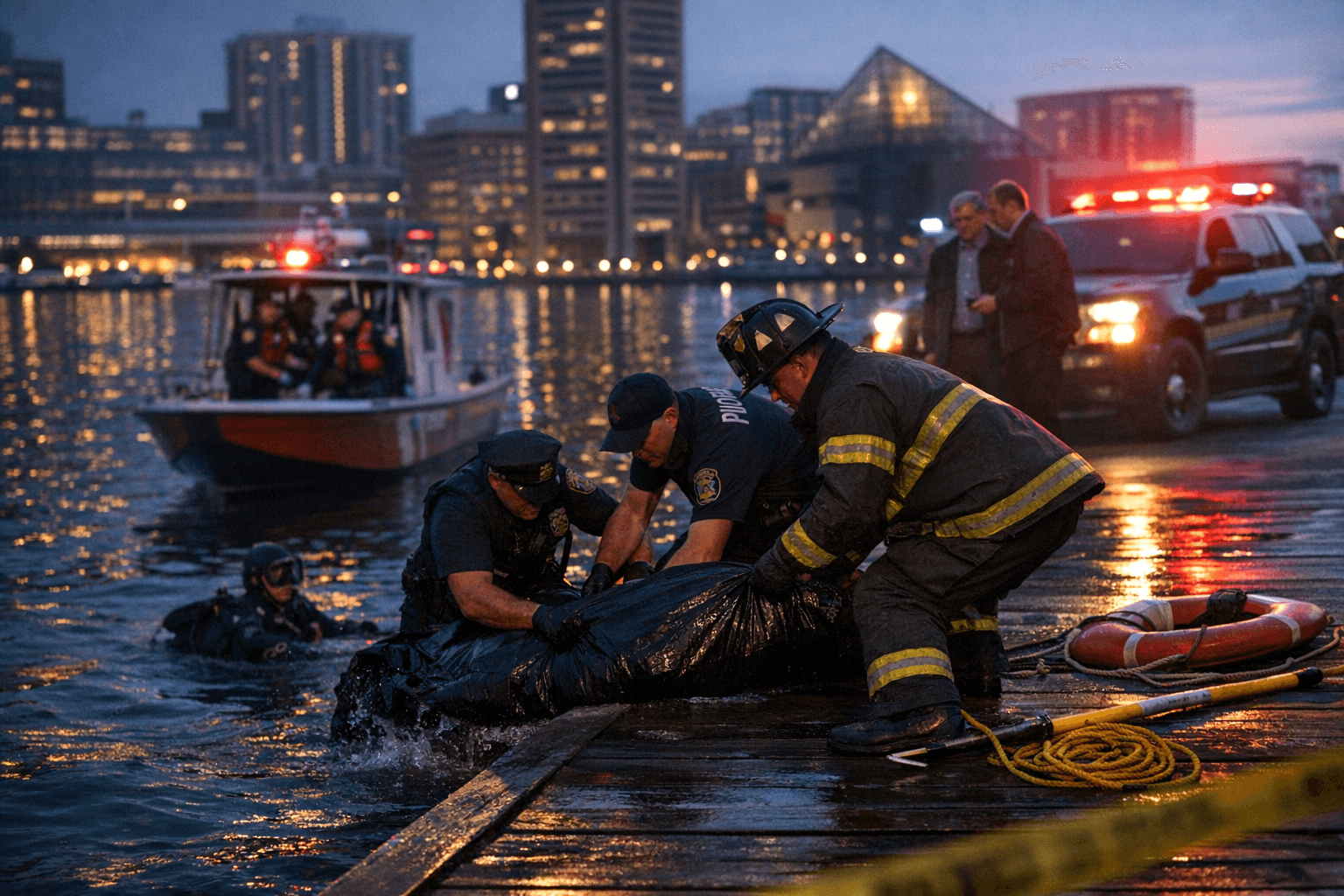
Branson Oduor’s body was recovered from Baltimore’s Inner Harbor on Tuesday, turning a missing-person case into a blunt question about how safe the waterfront really is after dark. The 27-year-old had last been seen in the early morning hours of April 4 near the 1600 block of Thames Street in Fells Point, close to The Horse You Came In On Saloon.
Now, a petition is pressing city officials to move beyond general reassurance and make physical changes at the harbor. The demands are specific: protective railings or barriers, more lighting along waterfront walkways, and clearly marked, accessible emergency ladders and lifesavers. The argument behind those requests is simple. The Inner Harbor is one of Baltimore’s most visited public spaces, but it also places nightlife, tourism and open water side by side.
That tension is built into the waterfront’s design. Baltimore City says the Inner Harbor promenade is an eight-mile public pedestrian and shared-use bicycle path created as part of the 1960s Inner Harbor Master Plan. City planning materials describe the shoreline as bulkheaded and lined with an extensive brick promenade, a setup that keeps people physically separated from the water but does not eliminate the risk of someone slipping, falling or ending up in the harbor after dark.
The safety debate is not new. In 2019, at least five bodies had been pulled from the harbor since the prior February, and the city approved $51,000 for 11 life rings and 10 ladders along the Inner Harbor. The new calls for barriers, better lighting and rescue access suggest that residents and waterfront users still see gaps between the harbor’s public image and the protections in place on the ground.
The broader backdrop is a waterfront that is marketed as both an amenity and an environmental project. The Waterfront Partnership of Baltimore launched its Healthy Harbor Initiative in 2010 with the goal of making Baltimore Harbor swimmable and fishable, and it monitors bacteria levels at five harbor sites five days a week during the water-recreation season. More recently, renewed public-safety concerns have also followed a large disturbance and shots fired at the Inner Harbor. Oduor’s death has now intensified pressure to test whether Baltimore’s best-known waterfront is being managed for the way people actually use it at night.
This article was produced by Prism’s automated news system from verified source data, official records, and press releases, then run through automated quality and moderation checks before publishing. The system is built and supervised by the people who set the standards it runs under. Read our full AI policy.
Did this article answer your question?


