Court Revives Negligence Suit Against Baltimore Activist DeRay McKesson Over 2016 Protest
A federal court revived a negligence suit against Baltimore activist DeRay McKesson, citing a cell phone video he recorded as evidence he led the 2016 Baton Rouge protest.

After eight years of pretrial litigation that at one point reached the U.S. Supreme Court, a federal appeals court declared Wednesday that a jury must now decide whether Baltimore activist DeRay McKesson bears legal responsibility for a police officer's permanent injuries during a 2016 protest in Baton Rouge, Louisiana.
The U.S. Court of Appeals for the Fifth Circuit reversed a lower federal district court's dismissal of the case on March 19, ruling two-to-one that a negligence claim filed by a former Baton Rouge officer identified in court documents as John Ford, a pseudonym in some filings, can proceed to trial. Ford sued McKesson and Black Lives Matter alleging negligence and civil conspiracy after he was struck in the face by a rock or piece of concrete thrown by a rioter during a July 2016 protest held in response to the killing of Alton Sterling. The blow caused what the appellate panel described as permanent injury.
"Eight years of pretrial litigation are enough," the Fifth Circuit wrote in its 36-page opinion. "It is time for Officer Ford to have a jury assess his claim that DeRay McKesson's negligence in leading a violent protest caused him to suffer injuries at the hands of rioters."
The appellate panel characterized the demonstration as one that "devolved into riots," resulting in businesses being looted and multiple officers being hurt. McKesson had argued the First Amendment shielded him from liability, an argument a lower federal district court in Louisiana accepted when it originally dismissed Ford's lawsuit. The Fifth Circuit disagreed with that conclusion at the negligence stage, finding disputed facts sufficient to send the claim to a jury.
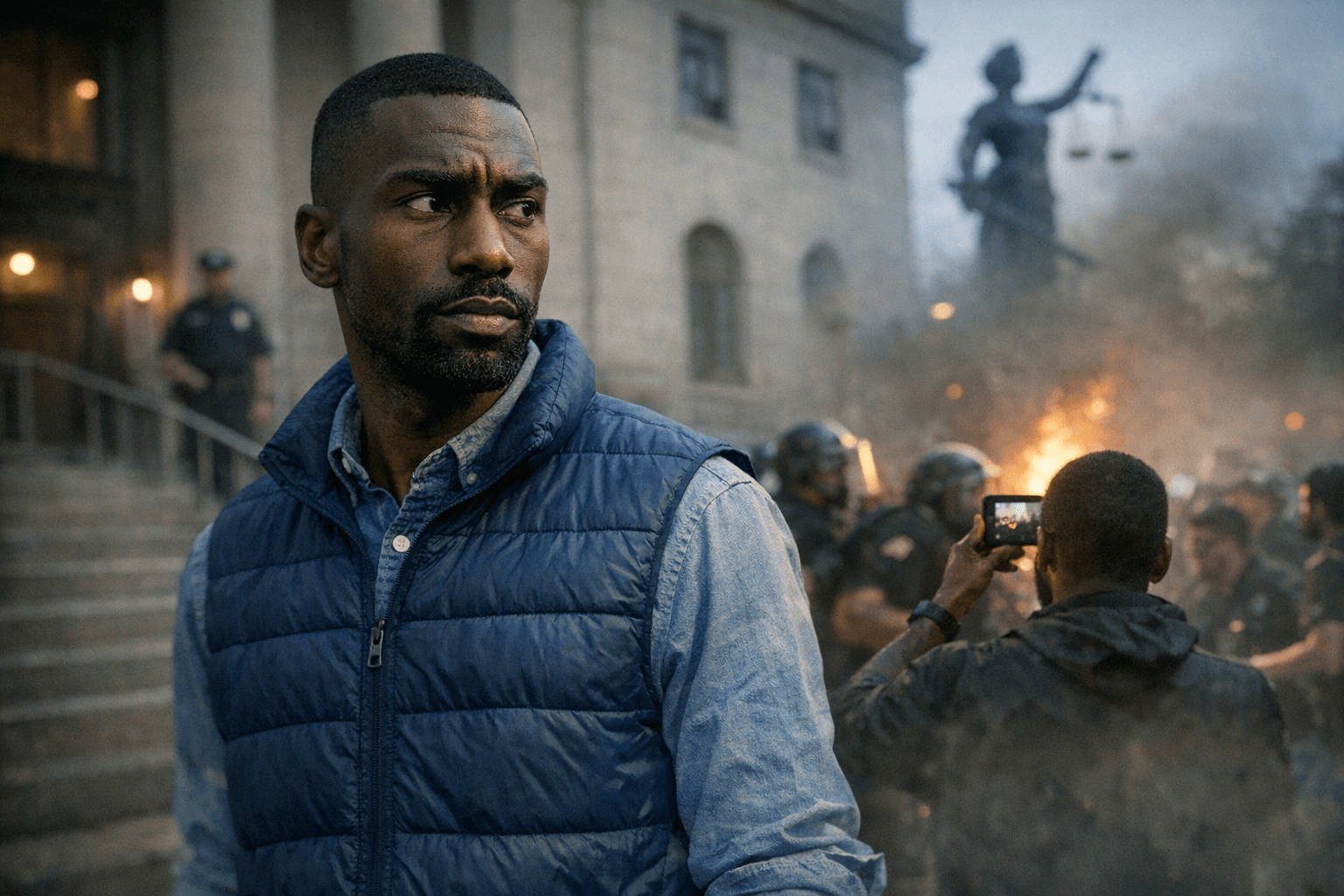
Central to the panel's reasoning was a video McKesson apparently recorded on his own cell phone, which the court said "demonstrates that he was leading the group." The majority also noted that McKesson "has attended hundreds of protests and received financial support for his efforts," framing his protest activity as organized and sustained rather than incidental.
Two of the three judges on the appellate panel sided with Ford; the third did not join the majority's conclusion that evidence of McKesson's leadership was sufficient to overcome the lower court's dismissal. The sources do not clarify whether the civil conspiracy claim was also revived alongside the negligence count, or what procedural steps the remand will require before a trial date is set.
McKesson, a prominent figure in the Black Lives Matter movement who is based in Baltimore, built much of his national profile through protest organizing in the years following the 2014 unrest in Ferguson, Missouri. The Fifth Circuit's ruling does not find him liable; it finds only that a jury should make that determination.
This article was produced by Prism’s automated news system from verified source data, official records, and press releases, then run through automated quality and moderation checks before publishing. The system is built and supervised by the people who set the standards it runs under. Read our full AI policy.
Did this article answer your question?


