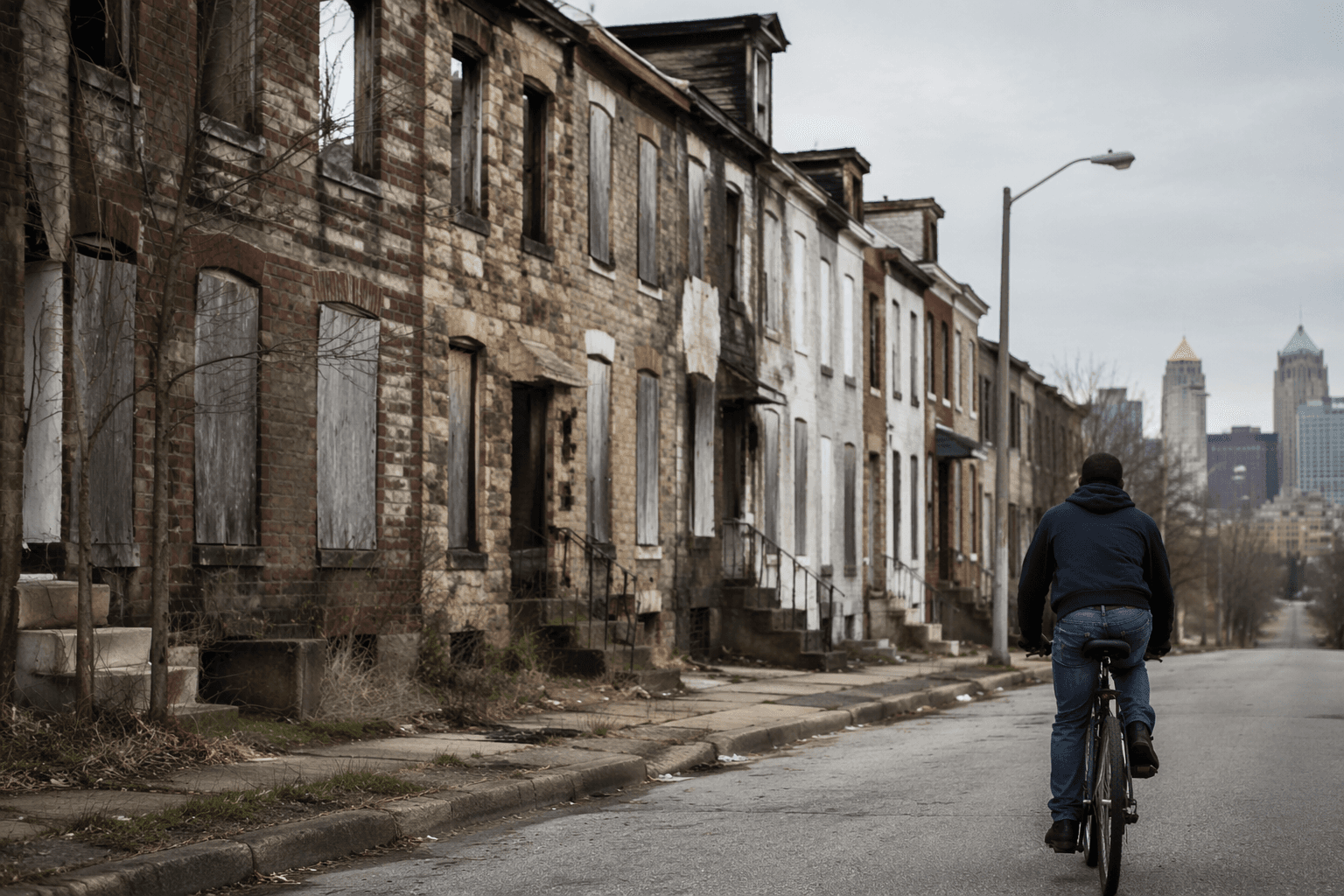
Downtown Partnership faces transparency questions over closed budget hearing
Downtown Baltimore’s budget hearing was open to the public but not to cameras, raising questions about a tax-funded authority that spends more than $6 million on downtown services.

A public hearing on downtown spending came with a private-room rule: no recording, no pictures, and no public archive of what was said while the Downtown Partnership of Baltimore reviewed a budget that helps fund the daily upkeep of Downtown Baltimore.
The restriction at the Downtown Management Authority hearing has become a flashpoint because the authority is not just any private nonprofit. Baltimore City code creates the Downtown Management Authority as a city-run district with a board of directors, requires it to adopt an annual financial plan with a proposed schedule of taxes or charges and a budget, and requires a public hearing before that plan is adopted. The City charter then puts the Authority’s financial plan, annual budget, and tax and fee schedule before the Board of Estimates for approval.
That matters because the money is real and recurring. DPOB says the DMA budget is funded entirely by a surcharge on commercial properties in the Downtown Management District, that the city collects the surcharge and passes it through directly to the Authority, and that the district covers 106 blocks in the heart of the city. City materials describe special benefits districts as a way to raise extra property taxes for supplemental public services. Baltimore’s fiscal 2026 materials list the general real-property tax rate at $2.248 per $100 of assessed value, with the downtown surcharge layered on top.
At the hearing, the public was being asked to look at how that money will be spent on services that affect the center city every day, including trash removal, power washing, alley cleaning, gutter and curb detailing, and homeless outreach. Thomas Jacobi, a downtown property owner, said he likely would have attended if he had known about the hearing ahead of time, and he questioned why there was no transparency around the process. With cameras and recordings blocked, residents and property owners could miss the specifics of what officials said, how the budget was defended, and whether any concerns were raised about priorities, costs, or service levels.
The Downtown Partnership said the hearing has been conducted the same way for more than 40 years and has never been challenged. But Maryland Attorney General guidance says the Open Meetings Act is designed to ensure public access to meetings, notices, and minutes, and the state’s quick guide says public business must be conducted openly and publicly so citizens can attend if they wish. One legal expert said the no-recording rule could run afoul of that law.
The governance structure adds to the scrutiny. DPOB says it has two separate boards, one for DPOB and one for the DMA. In October 2024, the organization said Carim Khouzami, president and CEO of BGE, chairs both boards, while Shelonda Stokes serves as president and CEO of DPOB and executive director of the DMA. As the budget heads to the Baltimore City Board of Estimates in May, the fight is no longer just about one hearing room at DPOB’s downtown office. It is about how much public access should attach to a tax-like levy that helps pay for downtown Baltimore’s day-to-day operations.
This article was produced by Prism’s automated news system from verified source data, official records, and press releases, then run through automated quality and moderation checks before publishing. The system is built and supervised by the people who set the standards it runs under. Read our full AI policy.
Did this article answer your question?