High Winds, Extreme Cold Alert Impact Baltimore Commuters and Residents
A Wind Advisory moved through Maryland on December 29 bringing gusts up to 45 to 55 miles per hour, an abrupt temperature drop, and wind chills expected in the teens the following morning. Baltimore City activated a Code Blue Extreme Cold Alert for the morning of December 30 to protect people experiencing homelessness and others most vulnerable to the cold, while transportation officials placed limited restrictions on the Chesapeake Bay Bridge.
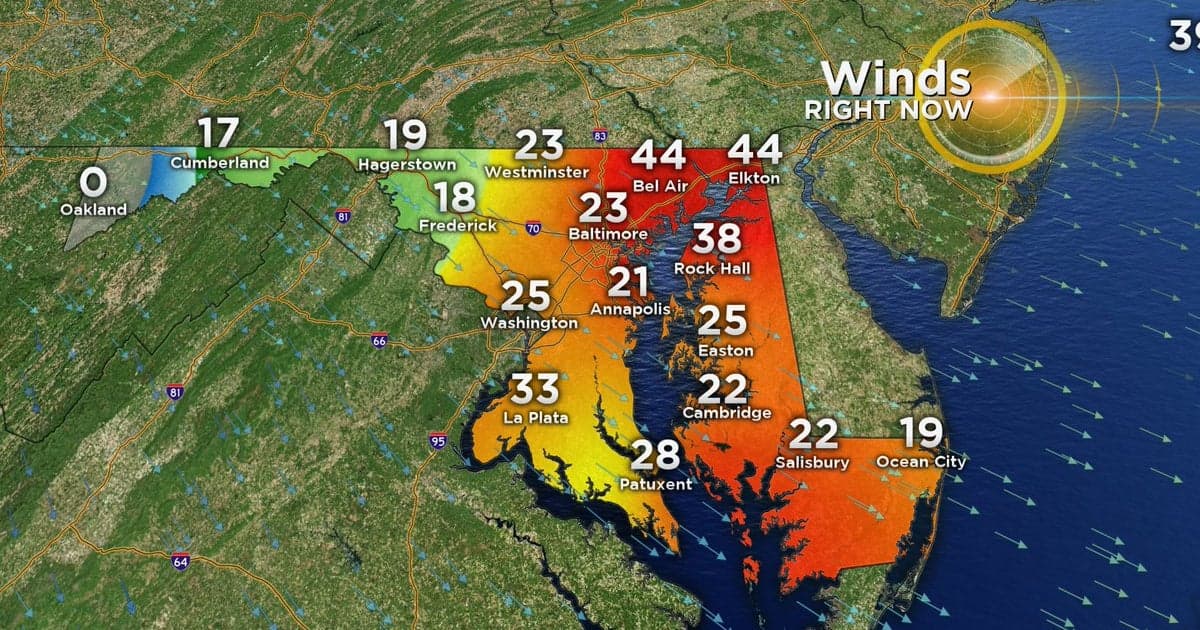
A Wind Advisory on December 29 produced strong gusts across Maryland and abrupt cooling that carried into the final days of the year. Meteorologists forecast gusts as high as 45 to 55 miles per hour in some locations, and temperatures fell quickly enough that forecasters warned of wind chills in the teens the morning of December 30. That combination raised risks for hazardous travel, downed tree limbs and intermittent power outages.
The Maryland Transportation Authority issued limited wind restrictions at the Chesapeake Bay Bridge, curtailing some crossings during the gustiest periods. The restrictions affected drivers using the span and prompted delays for commuters crossing the bay. City commuters and residents who rely on bridges and main arteries experienced slower travel during peak hours, and officials cautioned motorists to expect sudden bursts of wind that can challenge high profile vehicles and make handling more difficult.
Baltimore City declared a Code Blue Extreme Cold Alert for the morning of December 30. The declaration was intended to protect people experiencing homelessness and others vulnerable to the cold. The alert signaled heightened concern about early morning exposures when wind chills were forecast to fall into the teens. Public health and emergency responders prepared to address the immediate dangers that come with rapidly dropping temperatures, particularly the increased risk of hypothermia for people without adequate shelter or heating.
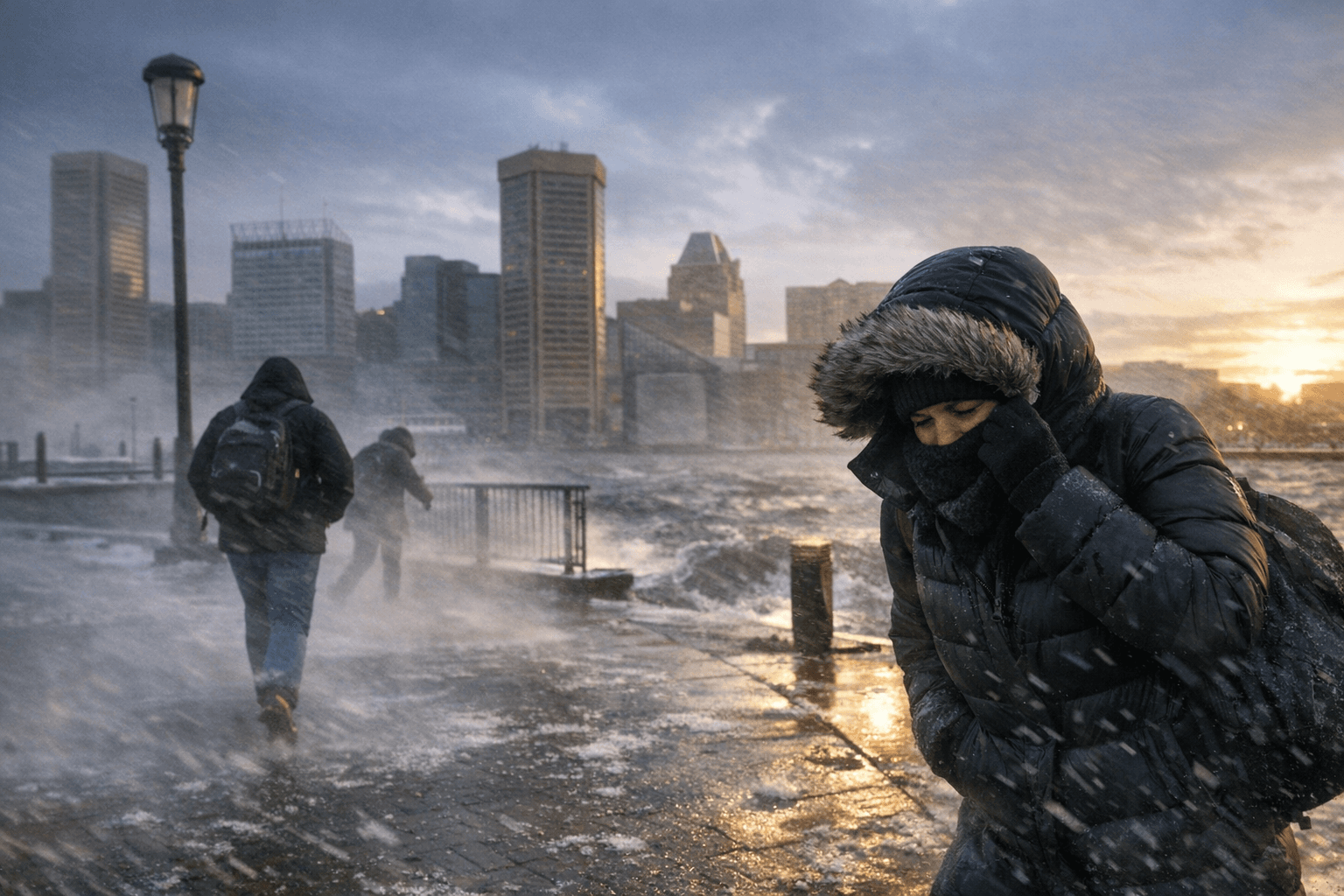
The forecast also included a small chance of light snow around New Year’s Eve and New Year’s Day, leaving open the possibility of slick roads and further disruptions. While the event passed, the episode underscored how quickly winter conditions can change in Baltimore, and how gusty winds and abrupt cooling can compound hazards from one weather element into multiple community impacts.
Residents should be aware that high gusts can bring down limbs and disrupt power, and that rapid temperature declines increase cold exposure risks. Local agencies used the December 29 advisory and the Code Blue declaration to coordinate responses for the most vulnerable, and the episode serves as a reminder to prepare for similar cold and windy conditions during winter months.
This article was produced by Prism’s automated news system from verified source data, official records, and press releases, then run through automated quality and moderation checks before publishing. The system is built and supervised by the people who set the standards it runs under. Read our full AI policy.
Did this article answer your question?