Johns Hopkins Finds Deinococcus radiodurans Survives Asteroid-Scale Ejection, Raising Concerns
Johns Hopkins researchers found Deinococcus radiodurans survived simulated asteroid ejection shocks of 1–3 GPa from a gas gun at up to 300 mph, with nearly all surviving at 1.4 GPa and about 60% at 2.4 GPa.

Johns Hopkins University researchers led by impact expert K. T. Ramesh and lead author Lily Zhao report in PNAS Nexus that the extremophile bacterium Deinococcus radiodurans survived shock pressures consistent with asteroid ejection, a result that strengthens the lithopanspermia idea and raises planetary protection concerns. The team used a gas gun to fire a projectile at speeds up to 300 miles per hour, sandwiching microbes between steel plates to generate pressures between 1 and 3 gigapascals.
The experimental setup produced striking footage and unexpected hardware failure: slow‑motion video recorded the steel plates slamming together, and investigators noted that the steel configuration holding the plates fell apart before the bacteria did. At the lower end of the test range, nearly all D. radiodurans survived 1.4 GPa impacts with no visible cell damage. At 2.4 GPa the survival fraction dropped to about 60 percent, and Scientific American coverage of the study indicated that even at the highest recorded pressures of 3 GPa more than half survived.
Lead author Lily Zhao described the team’s surprise: “We expected it to be dead at that first pressure.” Zhao, identified as a graduate student, added that the group “started shooting it faster and faster. We kept trying to kill it, but it was really hard to kill.” Ramesh, who supervised the work, said the expectation had been different: “Our expectation was that most of them would die.”

Microscopy and genetic analyses conducted after the shots showed a mixed picture of damage and repair. At higher pressures some cell membranes ruptured and internal structures were affected, yet survivors were observed to repair DNA, regrow and reproduce, indicating not only mechanical endurance but biological recovery. The team examined survivors’ genetic material to search for clues about pressure tolerance, with microbiologists Cesar A. Perez‑Fernandez and Jocelyne DiRuggiero guiding subsequent analyses at Johns Hopkins.
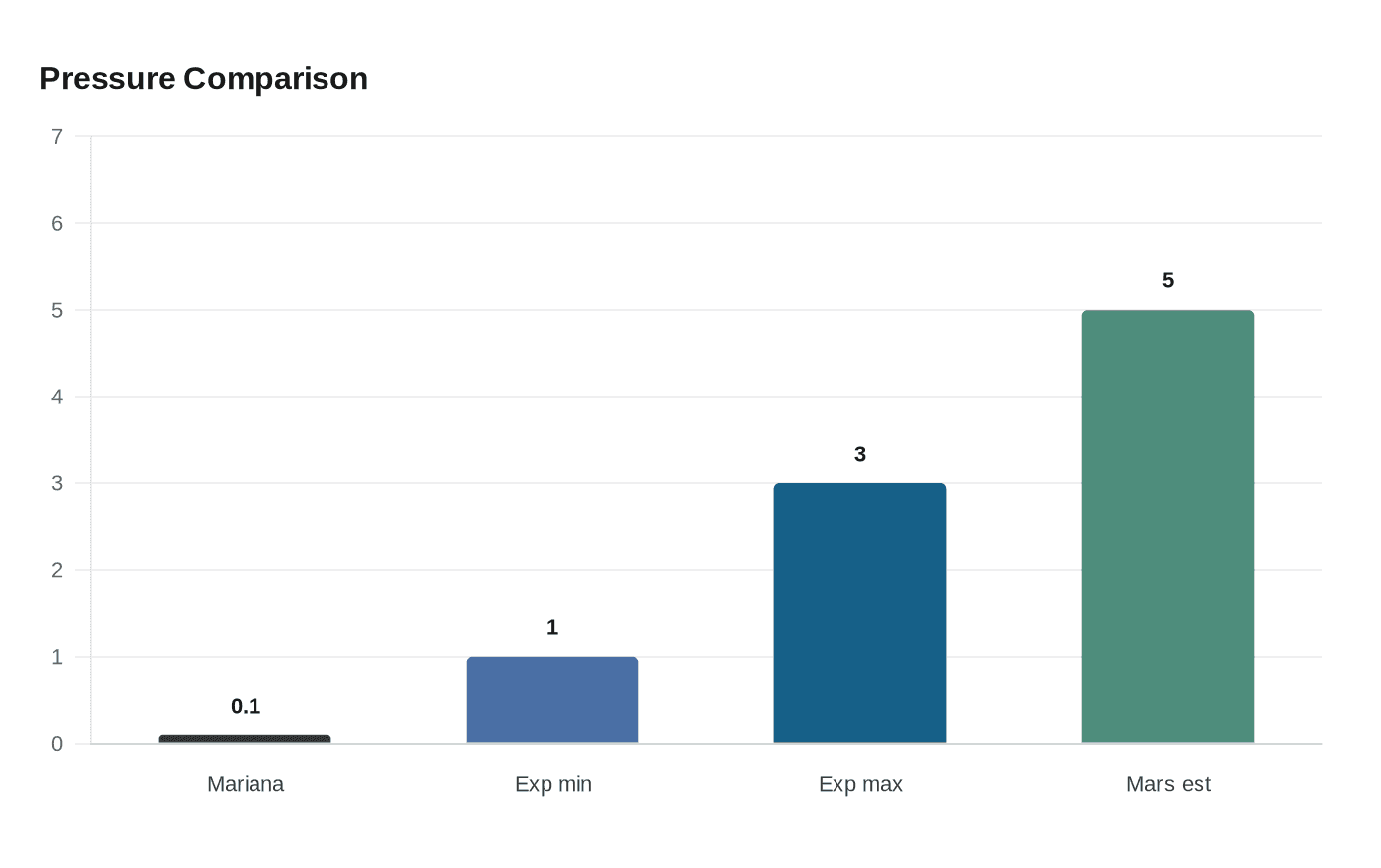
The pressures applied, 1–3 GPa, exceed the roughly 0.1 GPa experienced at the bottom of the Mariana Trench by more than tenfold, placing the experiment squarely in a regime relevant to planetary ejection. Johns Hopkins notes that ejected fragments from Mars can experience a range of pressures, perhaps close to 5 GPa in some cases, meaning the new results do not eliminate all barriers to transfer but expand the conditions under which microbes might survive launch from a planetary surface.
Beyond the headline resilience of “Conan the Bacterium,” the paper’s authors state the findings raise questions about the origins of life and have significant implications for planetary protection and space missions. The study, published in PNAS Nexus, prompts a closer look at protocols designed to prevent forward and back contamination as robotic and crewed missions to Mars and other bodies advance.
Johns Hopkins University in Baltimore provided video and imagery for the project, with microbial images credited to Lisa Orye. The JHU team says further work is needed to pin down sample sizes, replication and whether rock shielding or additional space conditions such as vacuum and radiation were fully simulated, but the core result is clear: a familiar Baltimore research institution produced evidence that a famously hardy microbe can survive asteroid‑scale ejection shocks, forcing scientists and mission planners to reassess long‑standing assumptions about interplanetary transfer and contamination.
This article was produced by Prism’s automated news system from verified source data, official records, and press releases, then run through automated quality and moderation checks before publishing. The system is built and supervised by the people who set the standards it runs under. Read our full AI policy.
Did this article answer your question?