Johns Hopkins mRNA Treatment Restores Embryo Implantation in Mouse Endometriosis Model
Johns Hopkins researchers used an mRNA treatment to restore embryo attachment in a mouse endometriosis model, a step toward new infertility options for Baltimore patients.
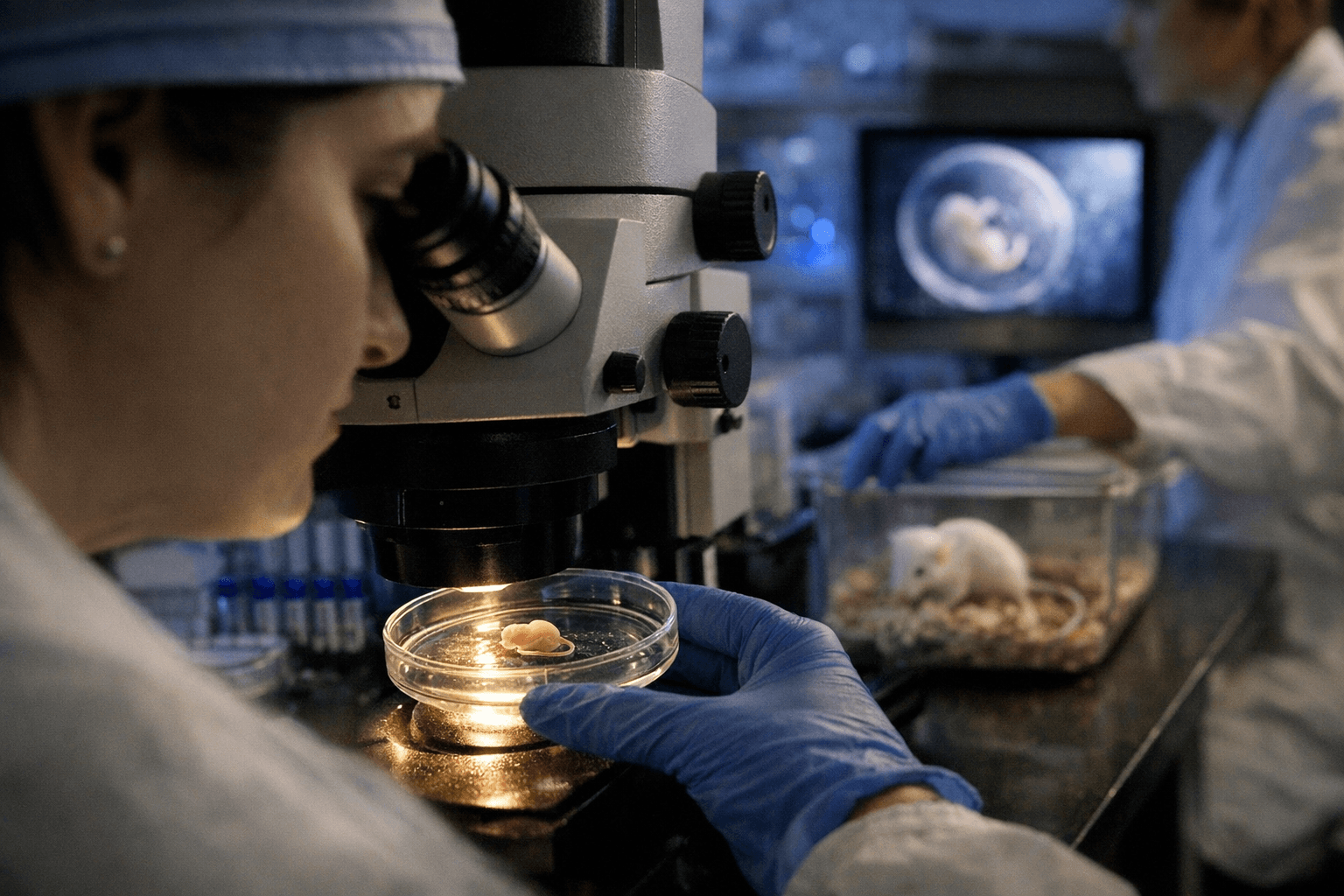
Johns Hopkins researchers reported that an experimental mRNA-based therapy restored embryo attachment in a mouse model of endometriosis, an early result that could reshape future infertility care. The team delivered tailored messenger RNA molecules directly to the uterine lining, improving implantation success in animals where endometriosis had impaired embryo attachment.
Endometriosis is a common condition that can interfere with fertility by altering the uterine environment and blocking embryos from implanting. In the Johns Hopkins study, investigators designed mRNA payloads to modify local uterine responses and then used targeted delivery to get those messages into the endometrium. Treated mice showed significantly higher rates of embryo attachment than untreated controls, demonstrating proof of principle that local mRNA therapy can correct implantation deficits caused by endometriosis.
The work was supported by the National Institutes of Health and appears in the journal Nature Nanotechnology. Researchers described the study as early-stage and planned further experiments to test broader fertility applications and to evaluate safety and effectiveness across models. Those next steps are intended to inform whether the approach could eventually move into clinical testing.
For Baltimore residents, the research matters because it comes from a local institution with a long history of translating lab discoveries into patient care. Johns Hopkins investigators lead many clinical trials that draw participants from the city and surrounding region, and this line of inquiry could open new avenues for couples affected by endometriosis-related infertility who have limited options today. The study does not provide an immediate treatment for patients, but it points to a biologically targeted strategy that might complement or one day replace more invasive interventions.
The ethical and practical hurdles ahead are substantial. Animal results do not guarantee safety or efficacy in humans, and targeted mRNA delivery to the uterus raises questions about dose control, off-target effects, and reproductive safety across pregnancy stages. Regulators will require rigorous testing in multiple species and carefully designed human trials before any therapy could become available to patients in Baltimore or elsewhere.
The Johns Hopkins findings inject fresh momentum into a difficult area of reproductive medicine and underscore how local research can reverberate through clinical practice. For now, the takeaway for patients and clinicians is cautious optimism: a new experimental approach restored implantation in mice, and follow-up studies will determine whether that promise can be translated into real-world options for people facing infertility linked to endometriosis.
This article was produced by Prism’s automated news system from verified source data, official records, and press releases, then run through automated quality and moderation checks before publishing. The system is built and supervised by the people who set the standards it runs under. Read our full AI policy.
Did this article answer your question?