Maryland approves $26.5 million for neighborhood revitalization, Baltimore receives major share
The Maryland Board of Public Works approved roughly $26.5 million in grants on December 18 to fund 130 community led revitalization and redevelopment projects statewide, with about 50 projects tied to the Baltimore Regional Neighborhood Initiative. The awards, which average about $204,000 each and range from $25,000 to $1 million, will support business expansion, affordable housing, community facilities and façade improvements that aim to spur local economic activity and leverage private investment.
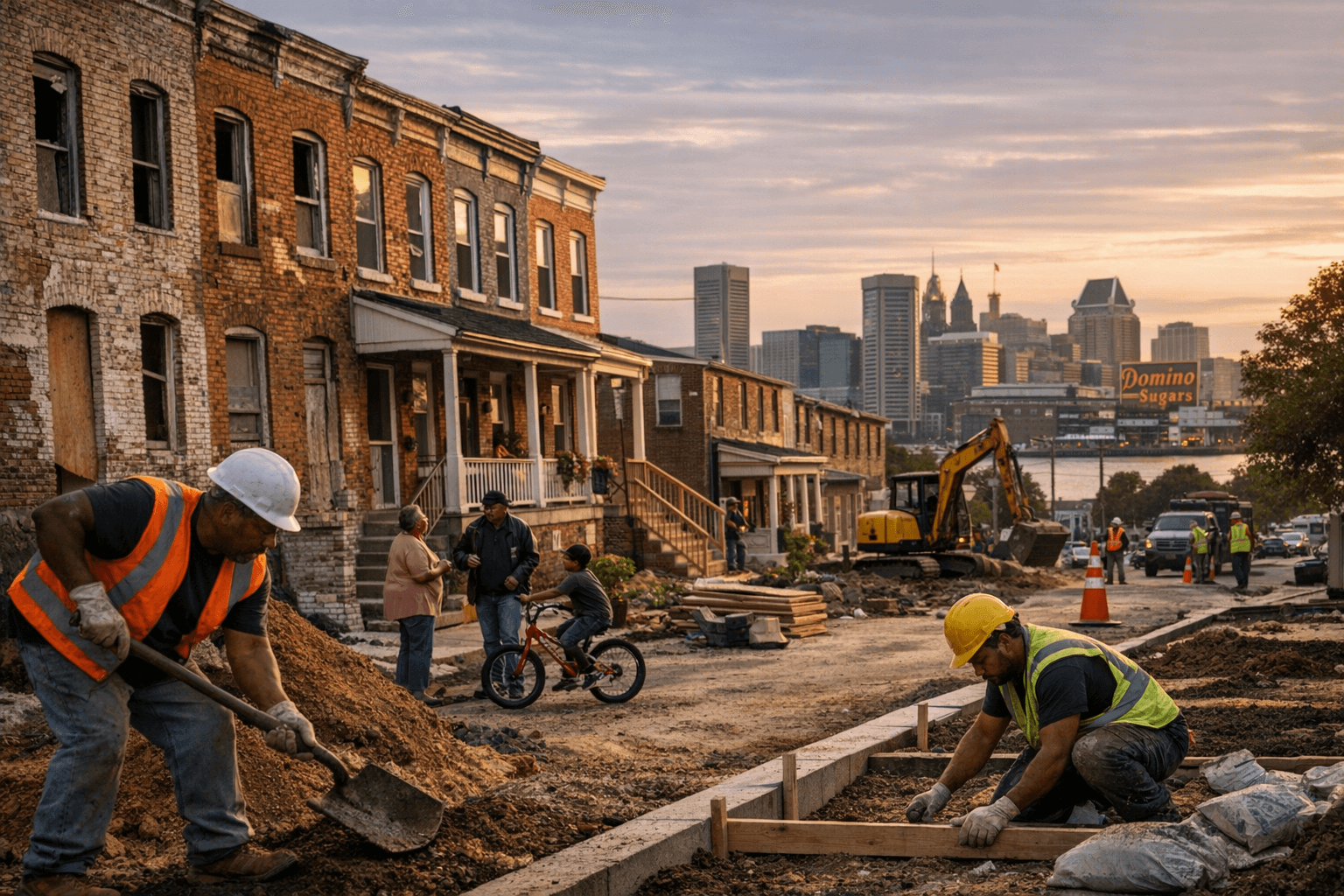
The state on December 18 approved a $26.5 million package to finance 130 community led projects across Maryland, with Baltimore City capturing a significant portion through nearly 50 projects under the Baltimore Regional Neighborhood Initiative. Awards in the program range from $25,000 to $1 million, producing an average grant value of roughly $204,000 per project and concentrating funding on acquisition and rehabilitation of vacant properties, business growth, and community facilities.
Local examples include Park Heights Renaissance projects that will rehabilitate the Delta Community Center and expand multi family affordable housing, along with the construction of new community resource centers and wellness centers in several Baltimore neighborhoods. These investments target long standing challenges in the city, including high vacancy rates, limited affordable housing supply, and gaps in neighborhood services.
Economically, the grants are designed to act as catalytic public capital that attracts private investment and increases local spending. Officials framed the awards as investments that spur local economic activity and leverage additional private investment. For Baltimore, rehabilitation of vacant properties and façade improvements can increase property values, reduce blight, and broaden the tax base, while construction and rehab work typically generate short term construction jobs and longer term jobs related to operations and services.
Policy implications include a continued state emphasis on place based investment that pairs housing with community facilities. The concentration of roughly 38 percent of grants in the Baltimore Regional Neighborhood Initiative underscores a targeted approach to address urban distress. Long term success will depend on coordination between state grants, city planning, and nonprofit operators to secure sustainable operating funds for new facilities and to manage risks of displacement as neighborhoods stabilize.
For Baltimore residents, these grants promise new affordable units, improved community spaces, and support for small businesses. The immediate measure will be visible in construction and rehab projects, while the larger test will be whether state and local partners can convert one time capital into sustained neighborhood economic growth and equitable access to services.
This article was produced by Prism’s automated news system from verified source data, official records, and press releases, then run through automated quality and moderation checks before publishing. The system is built and supervised by the people who set the standards it runs under. Read our full AI policy.
Did this article answer your question?


