Maryland Bill Would Let State Sue Private Schools Over Discrimination Claims
A Maryland bill giving the state power to sue private schools over discrimination claims, including gender identity, is days from Governor Wes Moore's desk.
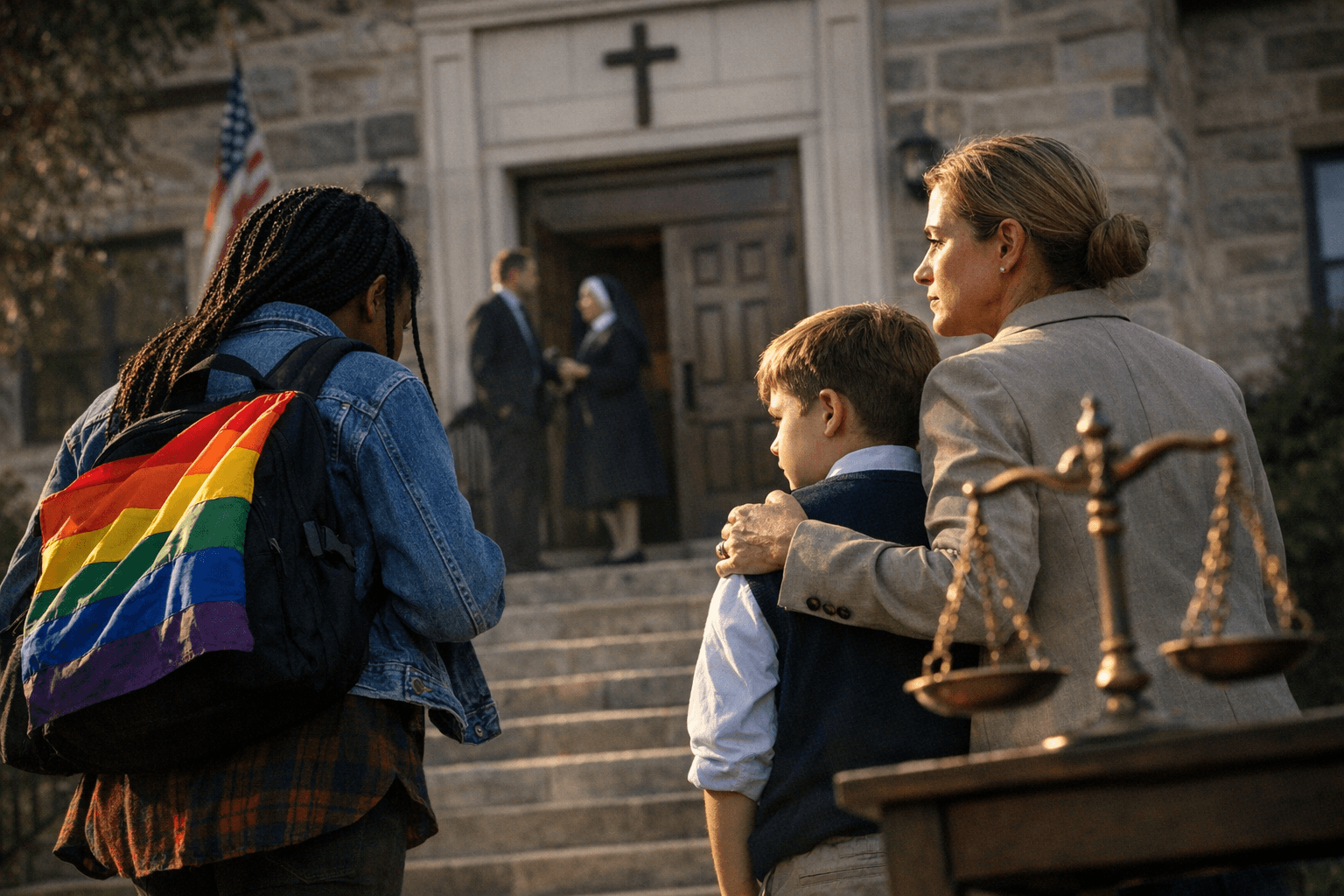
A bill moving through the Maryland General Assembly would give state officials the power to sue private and religious schools over discrimination claims, and for Baltimore City families navigating the dense network of parochial and independent schools that educate tens of thousands of children, the stakes are unusually high.
House Bill 649, formally titled the Advancing Equal Educational Opportunities for All Students in Maryland Act, passed the House of Delegates 100-35 on March 23. A Senate hearing followed on April 1, and with the legislative session deadline falling around April 13, the chamber has days to act before the bill reaches Governor Wes Moore's desk.
The bill does two distinct things. First, it authorizes the Maryland Commission on Civil Rights to enforce anti-discrimination rules at private schools, from pre-K through college, covering race, sex, disability, sexual orientation, gender identity, and a dozen other protected categories. Second, and more consequentially for individual families, it establishes a private right of action: students and parents could sue a private school directly in state court without waiting for a government agency to first investigate or act. The language prohibiting schools from excluding anyone from "any program or activity" is drawn directly from Title IX.
Those two provisions, operating in combination, are what alarm opponents. Under a 2022 state law, families at private and religious schools could already bring discrimination complaints, but those went to the state superintendent of education, a process critics of the new bill describe as more appropriately calibrated to weigh religious liberty concerns. HB 649 would discard that framework entirely, handing primary enforcement authority to the Maryland Commission on Civil Rights, an agency critics say is ill-equipped to weigh constitutional protections for faith-based institutions.
The Maryland Catholic Conference, the public policy arm of Maryland's Catholic bishops, called the bill "clearly unconstitutional and an overreach," warning that allowing the commission to police faith-based schools over broad discrimination terms, with the possibility of compensatory and punitive monetary damages, goes too far. Delegate Matt Morgan said the religious exemption written into the bill is "very narrowly tailored" and "opens them up to possible lawsuits." Jonathan Alexandre, legislative counsel for the Maryland Family Institute, raised specific concerns about how the bill would interact with religious teachings on gender identity and same-sex attraction.
The practical pressure points are concrete. A school that designates bathrooms or sports teams by biological sex could face a commission investigation and legal action. Admissions standards rooted in religious doctrine, discipline policies shaped by faith, and disability accommodation decisions could all generate complaints that escalate into state enforcement actions or private lawsuits seeking punitive damages. Schools weighing that exposure may have little choice but to revise student handbooks, adjust staffing, or narrow enrollment to reduce legal risk — changes that would ripple into families who rely on those schools, including Baltimore households accessing private education through Maryland's BOOST scholarship program.
Supporters argue the bill responds to a genuine crisis. The ACLU of Maryland testified that it is "seeing an increasing number of reports of discrimination in our schools related to gender identity, disability and race over the past year." After January 2025, the federal Office for Civil Rights effectively stopped processing complaints; when the Trump administration took office, more than 270 pending OCR complaints from Maryland residents existed, many reportedly dismissed without investigation. A 2025 school climate survey found two in three LGBTQ+ students felt unsafe at school, and 86 percent of transgender and gender-expansive students said they avoided certain spaces on campus entirely.
Cleveland Hort, a proponent of the legislation, framed the urgency plainly: "At its core, House Bill 649 is about making sure that when Maryland students experience discrimination there is a clear, reliable and timely place to turn at the state level."
Some legal experts have gone further in their warnings, describing the bill as unconstitutional targeting that could, in the most severe enforcement scenarios, threaten the financial viability of smaller religious institutions. The Senate must decide before April 13 whether filling the federal enforcement gap is worth that cost.
This article was produced by Prism’s automated news system from verified source data, official records, and press releases, then run through automated quality and moderation checks before publishing. The system is built and supervised by the people who set the standards it runs under. Read our full AI policy.
Did this article answer your question?