M&T Bank Stadium Visitor Fact Sheet Details Capacity, Address, Transit, Tours, Contacts
M&T Bank Stadium at 1101 Russell Street seats about 70-71,000 and hosts NFL games, concerts and major events; practical visitor details matter for travel, local businesses and public services.
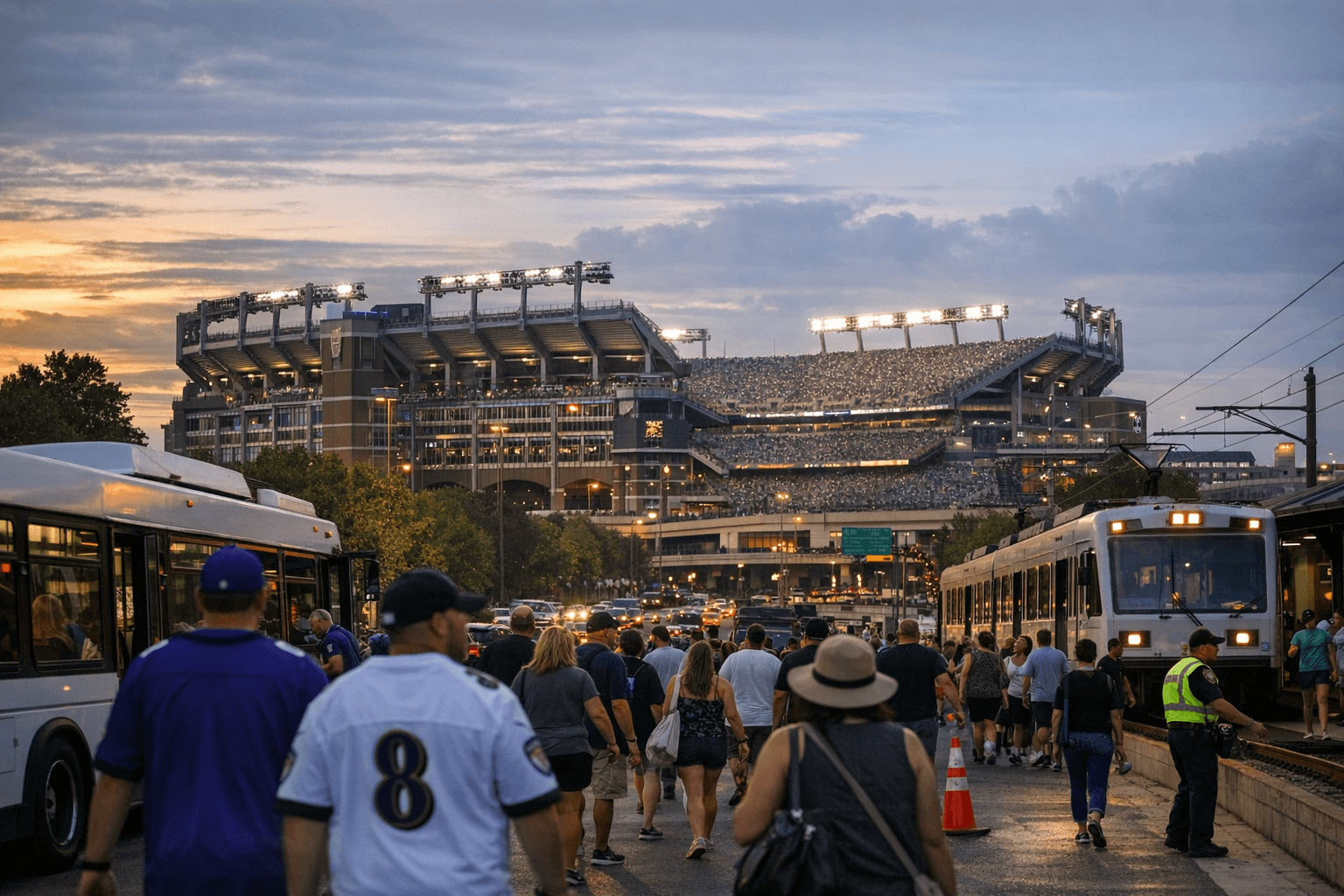
M&T Bank Stadium, home of the Baltimore Ravens, sits at 1101 Russell Street in south Baltimore and has a seating capacity of roughly 70–71,000. The facility stages NFL games, large concerts and other major sporting events that draw tens of thousands of attendees and create concentrated demands on transit, traffic management and neighborhood services.
The stadium is served directly by the Stadium/Federal Hill light rail stop and a range of nearby transit options. Ticketing, visitor contacts, tour schedules and premium seating details are published on the stadium’s official site at mtbankstadium.com/contact-us. Reporters, residents and visitors can use that page for the most current information about access, tickets and stadium services.
For local residents and businesses, the stadium’s event schedule translates into both economic opportunity and logistical strain. Game days and major events increase foot traffic for restaurants and retail in Federal Hill and the Inner Harbor corridor, while concentrated arrivals and departures create pressure on buses, light rail and surface streets. That dynamic places responsibility on city agencies and the stadium to coordinate transit service, parking management and public safety to minimize disruption to daily life for people who live and work nearby.
Institutional clarity matters. Clear, up-to-date contact information and published tour and premium seating procedures help residents and journalists get timely answers on security screening, entry points, accessible seating and lost-and-found procedures. For civic leaders, the stadium’s recurring events underscore the need to align transit schedules, crowd-control staffing and emergency planning with the private event calendar to reduce spillover impacts on neighborhoods.
The stadium’s role in Baltimore’s civic and economic life also raises questions about long-term planning: how the city balances entertainment-driven revenue with neighborhood quality of life, how transit investment addresses peak loads on event days, and how residents can access decision-makers about event impacts. Those are policy choices for the mayor’s office, the city council and transit authorities to weigh alongside the stadium’s operators.
Practical steps for readers: note the stadium address, confirm seating capacity for planning purposes, use the Stadium/Federal Hill light rail stop for rail access, and verify ticketing, tours and premium seating arrangements directly at mtbankstadium.com/contact-us before attending an event. As Baltimore continues to host large-scale events, coordination between M&T Bank Stadium, transit providers and city agencies will shape both the convenience for attendees and the everyday experience of surrounding neighborhoods.
This article was produced by Prism’s automated news system from verified source data, official records, and press releases, then run through automated quality and moderation checks before publishing. The system is built and supervised by the people who set the standards it runs under. Read our full AI policy.
Did this article answer your question?


