Scott defends pothole push, vacancy gains, shooting response in WBAL interview
Scott linked a Penn North shooting response, 25,000 potholes and falling vacancy counts to one City Hall strategy: set bigger targets and push crews to meet them.
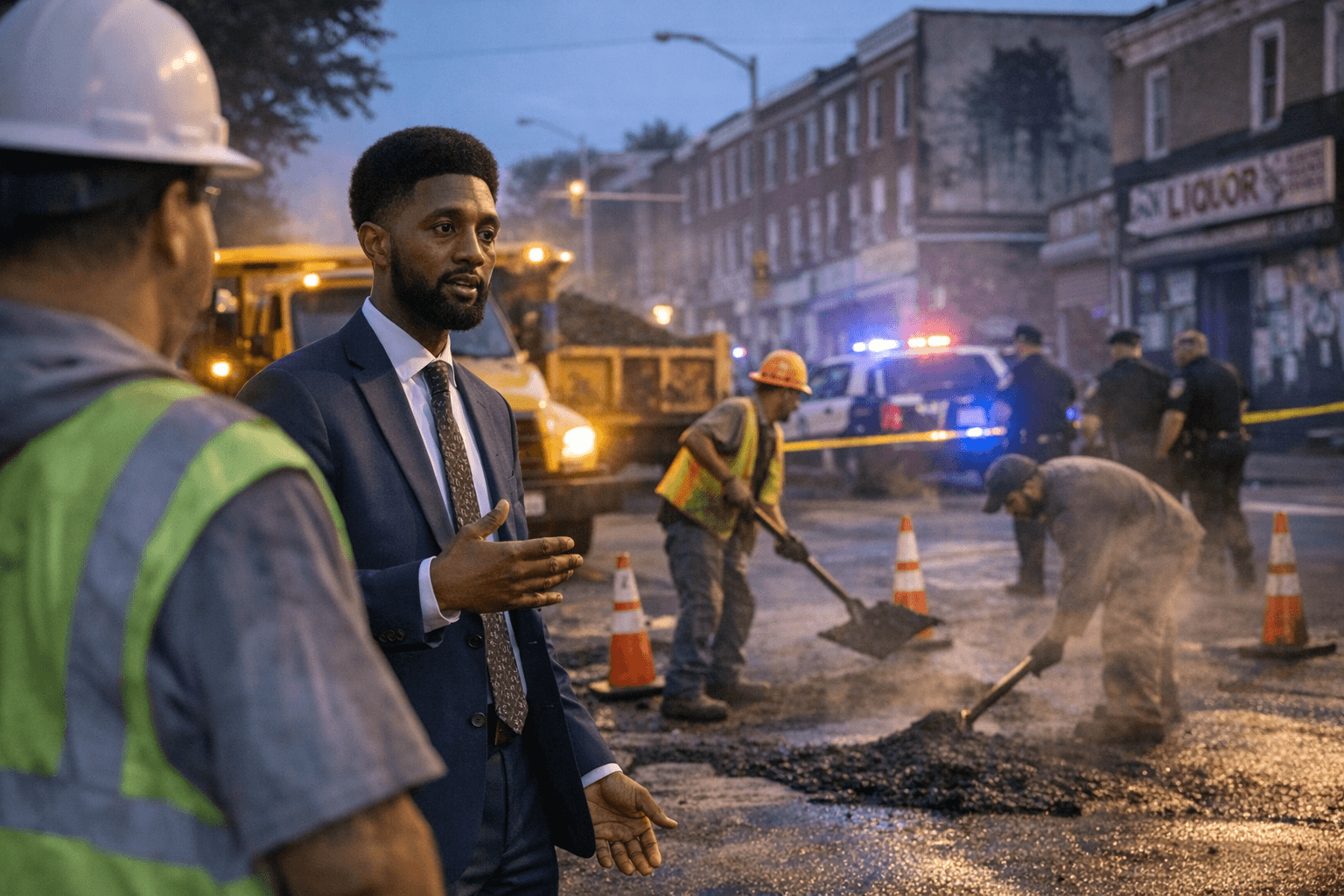
Mayor Brandon Scott used a WBAL interview to defend a City Hall approach that tries to treat a Penn North shooting, a cratered street and thousands of vacant homes as parts of the same civic problem. After the April 2 police-involved shooting in the 1700 block of Pennsylvania Avenue near Avenue Market, Scott said the city would follow the law, send the case to the Maryland Office of the Attorney General’s Independent Investigations Division and deploy a neighborhood stabilization response through the Mayor’s Office of Neighborhood Safety and Engagement.
The public safety response came as police said the man was armed with a knife and a gun and was resisting arrest, details that are likely to shape how residents in Upton and Penn North judge City Hall’s next steps. Baltimore City says a Coordinated Neighborhood Stabilization Response can last up to 45 days or longer and is used for incidents including police-involved shootings, mass shootings, youth-involved shootings and major law-enforcement takedowns.
Scott then shifted to the city’s roadwork campaign, defending Repave Baltimore and saying the administration would try to fill 25,000 potholes over 90 days. He said the city had already filled 23,000 in a shorter stretch, a figure he used to argue that Baltimore performs better when it sets aggressive targets. Baltimore City has said the 90-day service sprint begins in mid-April, with the Department of Transportation expected to pave 25 lane miles and Baltimore City Recreation and Parks set to clean, weed and mulch 500 tree pits.
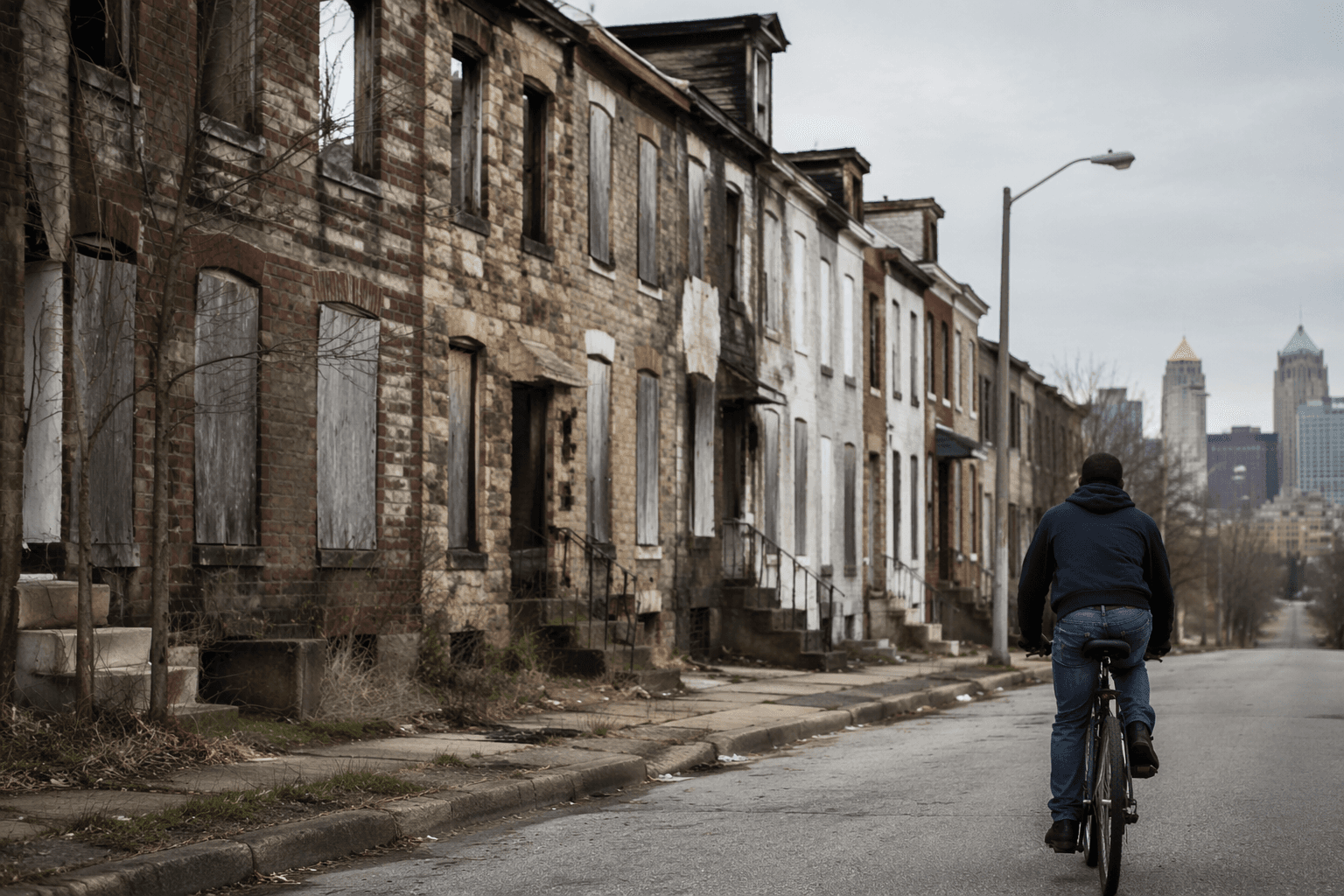
The mayor also pointed to vacant housing as a sign of progress, saying Baltimore had gone from roughly 16,000 vacant homes for many years to just under 12,000. That improvement does not erase the scale of the problem, and the city’s Vacants Reduction Plan still calls for at least $3 billion in spending over 15 years to repair properties and improve blocks. In Park Heights, local groups have pointed to redevelopment along Loyola Northway as one visible example of change.
The interview carried forward the message Scott delivered in his March 31 State of the City address, which the city framed as “Building Together, Block by Block.” It also showed the administration trying to connect daily complaints on Baltimore streets with longer-term measures of progress, from resurfaced roads to stabilized blocks and a police response that city leaders say can hold multiple pressures at once.
This article was produced by Prism’s automated news system from verified source data, official records, and press releases, then run through automated quality and moderation checks before publishing. The system is built and supervised by the people who set the standards it runs under. Read our full AI policy.
Did this article answer your question?