UMD Children's Hospital Teddy Bear Clinic Helps Kids Conquer Medical Fears
Golisano Children's Hospital's free Teddy Bear Clinic on April 3 used stuffed animals to walk Baltimore kids through real medical procedures, a technique child life specialists say measurably cuts procedure-day anxiety.
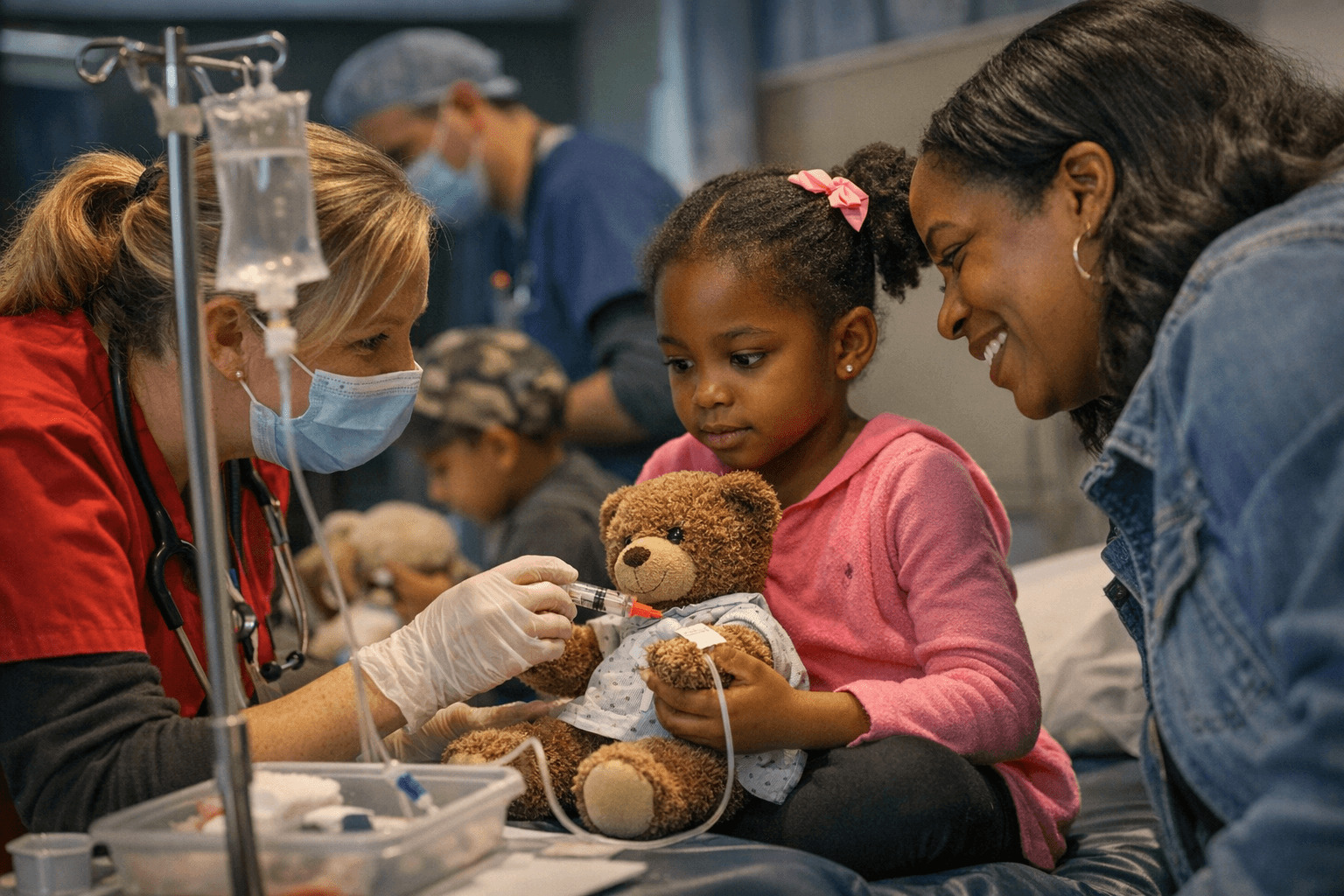
Stuffed bears don't usually need vitals taken, but at the University of Maryland Golisano Children's Hospital last Wednesday, plush patients received full check-ups courtesy of the children who carried them in. The April 3 Teddy Bear Clinic walked young visitors through a series of mock medical stations where stethoscopes, bandages, pulse oximeters, and simulated syringes were the tools of the trade, and the patients never flinched once.
That fearlessness on behalf of the stuffed animals is exactly the point.
The clinic is built around a practice called medical play, one of the primary therapeutic tools used by the hospital's certified child life specialists. By guiding a plush bear through a vitals check or pretend cast application, children encounter the same equipment and language they'll face during a real appointment, but at their own pace, without stakes, and with the freedom to set the stethoscope down whenever they want. Letting children take the provider role, not just the patient role, is especially effective: research in child life practice shows that children who engage in this kind of directed play before a procedure demonstrate lower anxiety and cooperate more readily with clinical staff when the real appointment arrives.
The technique works best with preschool and early school-age children, roughly ages 3 through 8, when imaginative play is a primary mode of processing experience and abstract reassurances about "quick pinches" tend to land poorly. Child life specialists at Golisano work across the hospital's inpatient floors, its 19-bed pediatric intensive care unit, and its dedicated pediatric emergency room, using medical play as part of a broader toolkit that includes guided breathing, distraction techniques, and pre-procedure education calibrated to a child's developmental stage.
Parents and teachers can replicate much of this without a hospital setting. Before any scheduled appointment, letting a child play doctor with a stuffed animal while narrating step by step what a nurse will actually do accomplishes more than most verbal reassurances. Helping a child prepare one or two specific questions, "Will it hurt?" or "How many seconds will it take?", gives back a measure of control that clinical environments can strip away. For younger children, practicing slow belly breathing with a toy as a prop creates a coping strategy they can carry into the exam room.
Golisano Children's Hospital, located at 22 S. Greene Street on Baltimore's west side, offers its Child Life Program on an ongoing basis beyond single-day events like Wednesday's clinic. Families preparing for a scheduled admission or outpatient procedure can request child life support in advance through the hospital's pediatric services page at umms.org/childrens/health-services/child-life. The hospital covers more than 25 specialty care areas and sits within the University of Maryland Medical Center, a campus that logs more than 284,000 outpatient visits each year.
The April 3 clinic was free. Future dates have not yet been announced, and the hospital has noted that similar events are typically scheduled around school breaks and community partnership days to reach more families.
This article was produced by Prism’s automated news system from verified source data, official records, and press releases, then run through automated quality and moderation checks before publishing. The system is built and supervised by the people who set the standards it runs under. Read our full AI policy.
Did this article answer your question?