Bamberg County archives open rich records for family history research
Bamberg County’s archives trace land, school, and family lines in one place, giving residents a practical route into property and community history.
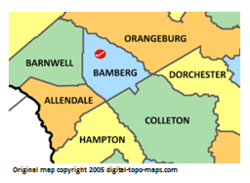
Formed in 1897 from the southeastern section of Barnwell County, Bamberg County sits in the inner coastal plain with 393.4 square miles of land and a 2020 population of 13,311, rising to a 2025 estimate of 13,906. Its paper trail is thick enough to follow a family, a farm, and a school district through the same set of records. For Black families, longtime residents, and descendants trying to reconnect with land, school, church, or Civil War-era history, that combination makes the county archive unusually useful.
Why Bamberg County is a strong place to start
Bamberg County was named for Francis Marion Bamberg, and its earliest history reaches back to the Edisto tribe of the Muskhogean Indians, followed by German, Swiss, Scots-Irish, English, and Huguenot settlement in the mid-18th century. That layered history shows up in the records because the county developed around rail stops, town growth, and postwar institutions rather than around one single center. Bamberg began around 1832 as a railroad water-tower site, Denmark began as Graham’s Turnout in 1837, was incorporated as Grahams in 1870, and was renamed Denmark in 1891.
Bamberg town became the county seat in 1897. Today, census geography still breaks the county into Bamberg, Denmark, and Ehrhardt subdivisions, which helps explain why names, churches, schools, and land tracts often cluster in more than one place.
Start with the county records that answer the hardest questions
At the South Carolina Department of Archives and History, Bamberg County record groups span land, taxes, courts, schools, and county government. The agency’s online records site includes 330,000 images, 375,000 names, 13,000 places, and 17,000 topics. For local researchers who want a human point of contact, the research desk can be reached at 803-896-6104 or through a research request.
If the goal is property ownership, Bamberg County records include Register of Mesne Conveyances books from 1897 to 1919, master’s conveyance books from 1905 to 1927, plat book indexes from about 1897 to 1981, and real estate conveyance books from 1898 to 1974. Those records can show when land changed hands, who appears in a deed chain, and how family property was divided or sold over time.
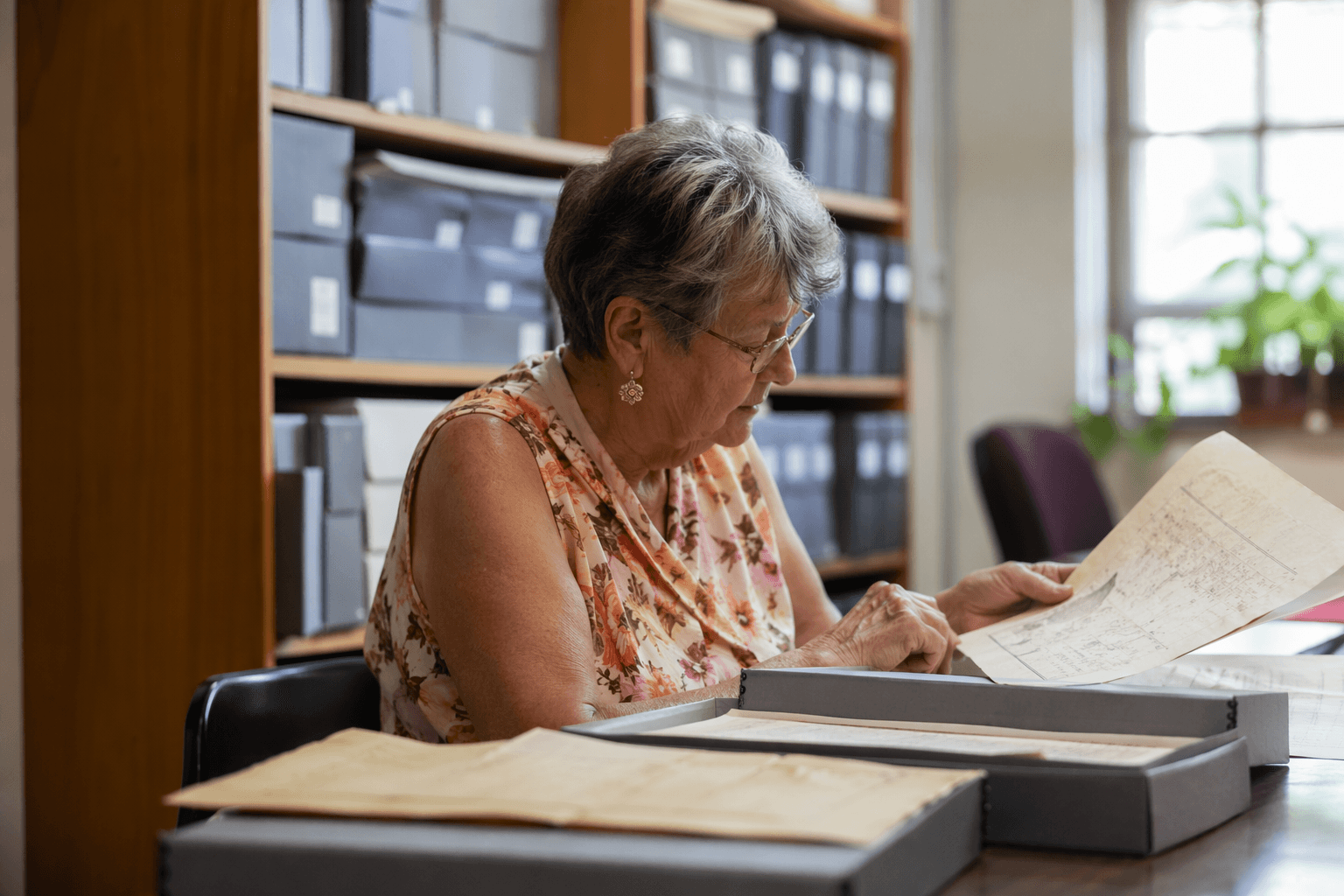
Tax and sale records can fill in the missing steps between deeds. Bamberg County records also include auditor tax duplicate books from 1898 to 1969, treasurer tax execution books from 1898 to 1900, and sheriff sale books from 1898 to 1980. They can fill gaps when a family remembers a tract but cannot recall how it left the family, or when a residence appears in one record and disappears from another. Sheriff sale books can also reveal forced sales, liens, and land transitions that shaped Black landholding after Reconstruction and into the 20th century.
School, civic, and local-government records tie families to institutions
For school history, Bamberg County records include school funds cashbooks from 1898 to 1972, Board of Education general cashbooks from 1902 to 1912, and annual school tax settlements from 1924 to 1932. Those books can answer practical questions: where a school operated, how it was funded, which families paid school-related taxes, and how long a school line remained active in a community. They can also anchor a surname that keeps showing up in oral history.
Bamberg County records also include county council minutes from 1972 to 2015 and Clerk of Court Democratic club rolls from 1912 to 1920. Those records help connect families to local civic life, officeholders, and community organization. If a relative served on a committee, took part in county government, or simply lived through a period of changing local control, those records can place the name in a dated civic setting.
Digital collections add faces, names, and family links
The South Carolina Digital Library deepens the county story with materials that move beyond deed books and minutes. Its Bamberg County collection includes Voorhees College bulletins from 1920 to 1981 and academic records from 1910 to 1921, giving dates and names tied to education, student life, and the growth of one of Bamberg County’s most important institutions.
One of the most useful items is *Many Years After, a few Bamberg County Families and their Recollections*. The collection includes maps, photographs, text about the antebellum, Civil War, and Reconstruction eras, and genealogical charts documenting the Copeland and other Bamberg County families through the 1930s.
The digital library also preserves family Bible records for South Carolina families, spanning from the late 1700s to the late 1900s and recording births, marriages, deaths, and other milestones. For descendants working backward from a known ancestor, those entries can be the first firm dates that line up family stories with courthouse records, cemetery markers, and school or church histories.
How to use the records in a practical search
A good Bamberg County search usually starts with the question, not the surname. If the issue is land, begin with conveyance books and plat indexes. If the issue is a disappearance from the tax rolls, move to auditor duplicates, tax executions, and sheriff sales. If the question is schooling, look at Board of Education records and school funds books, then check Voorhees material for names that may recur in a nearby community.
For Black families in particular, the county’s paper trail reaches into the years when land ownership, schooling, and local institutions were being rebuilt after slavery and the Civil War. The records show how people held onto property, moved for work or school, and built civic life in Bamberg, Denmark, Ehrhardt, and Olar.
Voorhees keeps the county’s story in the present tense
Voorhees University was founded in 1897 by Elizabeth Evelyn Wright-Menafee, the same year Bamberg County was formed. Its campus in Denmark is a 365-acre historic district, and Bamberg County Council member Evert Comer Jr. called Voorhees a “mainstay” in recognizing the school’s 125th anniversary.
This article was produced by Prism’s automated news system from verified source data, official records, and press releases, then run through automated quality and moderation checks before publishing. The system is built and supervised by the people who set the standards it runs under. Read our full AI policy.
Did this article answer your question?