Bamberg County faces scrutiny over taxes, downtown decay, finances
Bamberg County's nonprofit finance arm has helped carry millions in debt while residents face a shrinking tax base, a damaged downtown and tight county finances.

Bamberg County’s finances now sit at the center of a familiar local complaint: residents pay taxes into a county that says it is “financially stable and fiscally-responsible,” yet a nonprofit tied to county debt has raised fresh questions about how much of the county’s money moves outside ordinary public view.
The Bamberg Facilities Corporation was formed in June 2013 and the county’s 2021 annual financial report says it qualifies as a blended component unit of the county. That matters because county audit documents show the debt is carried through the county’s financial statements even though the corporation is a nonprofit. In November 2021, S&P Global Ratings said the county-backed corporation had issued about $9.085 million in Series 2021A bonds and about $7.89 million in Series 2021B bonds, both rated A- with a stable outlook. For a county of Bamberg’s size, that structure has become part of the debate over transparency, oversight and where accountability begins and ends.

The pressure comes as the county’s own budget numbers show a narrow financial margin. For fiscal 2024, general-fund revenues totaled $9,751,696 against expenditures of $9,881,088, leaving spending ahead of revenue. In the fiscal 2025 month-end report from January 2025, the county showed $11,505,955 in budgeted general-fund revenue, with $9,997,174 collected and $5,966,139 in expenditures reported so far. Those figures underscore why county taxes, debt service and day-to-day operations remain sensitive in a place where the tax base is limited.

Bamberg County itself is small and still shrinking. Founded in 1897, with its county seat in Bamberg, the county counted 13,311 people in the 2020 Census and an estimated 12,796 as of July 1, 2025. Other municipalities include Denmark, Ehrhardt, Govan and Olar. In a county this size, every bond issue, budget line and development promise lands harder on the public conversation.
Downtown Bamberg adds another layer of urgency. The city’s historic core grew around the old Southern passenger station, but the January 2023 EF-2 tornado severely damaged Main Street and left local leaders looking for disaster-area status and FEMA help. In February 2026, county officials announced a $1.5 million Downtown Renaissance Community Project funded through community-project appropriations associated with Rep. Jim Clyburn, with plans for a commercial kitchen, farmers market and community and discovery center.
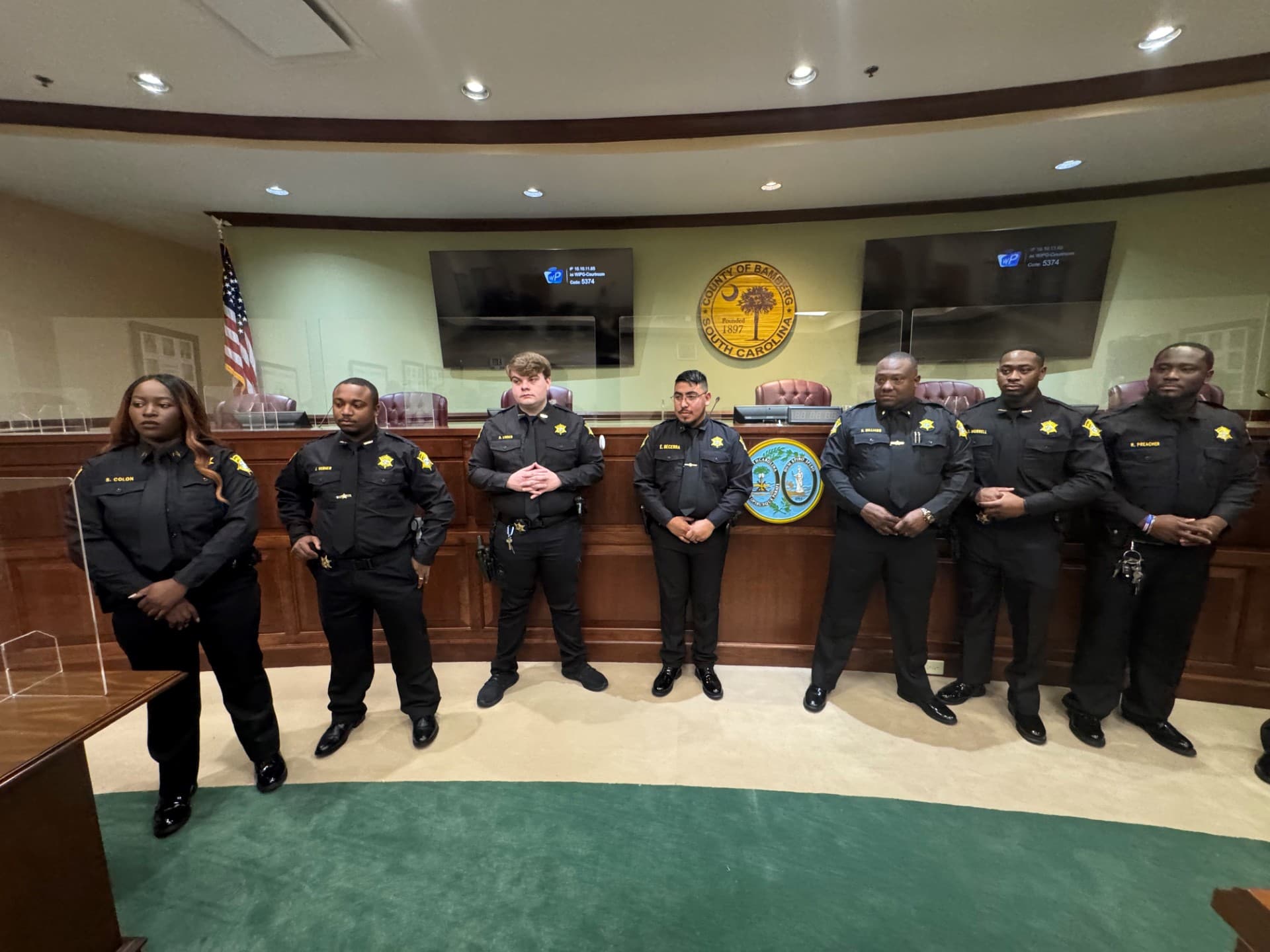
The county council, meeting at the Courthouse Annex at 1234 North Street in Bamberg, has also seen turnover. Kenneth Ahlin and Michelle Martin were sworn in in January 2025, adding new faces to a governing body now expected to answer a straightforward question: how much money is flowing through county-linked entities, and how clearly is that being explained to the public that pays the bill?
This article was produced by Prism’s automated news system from verified source data, official records, and press releases, then run through automated quality and moderation checks before publishing. The system is built and supervised by the people who set the standards it runs under. Read our full AI policy.
Did this article answer your question?