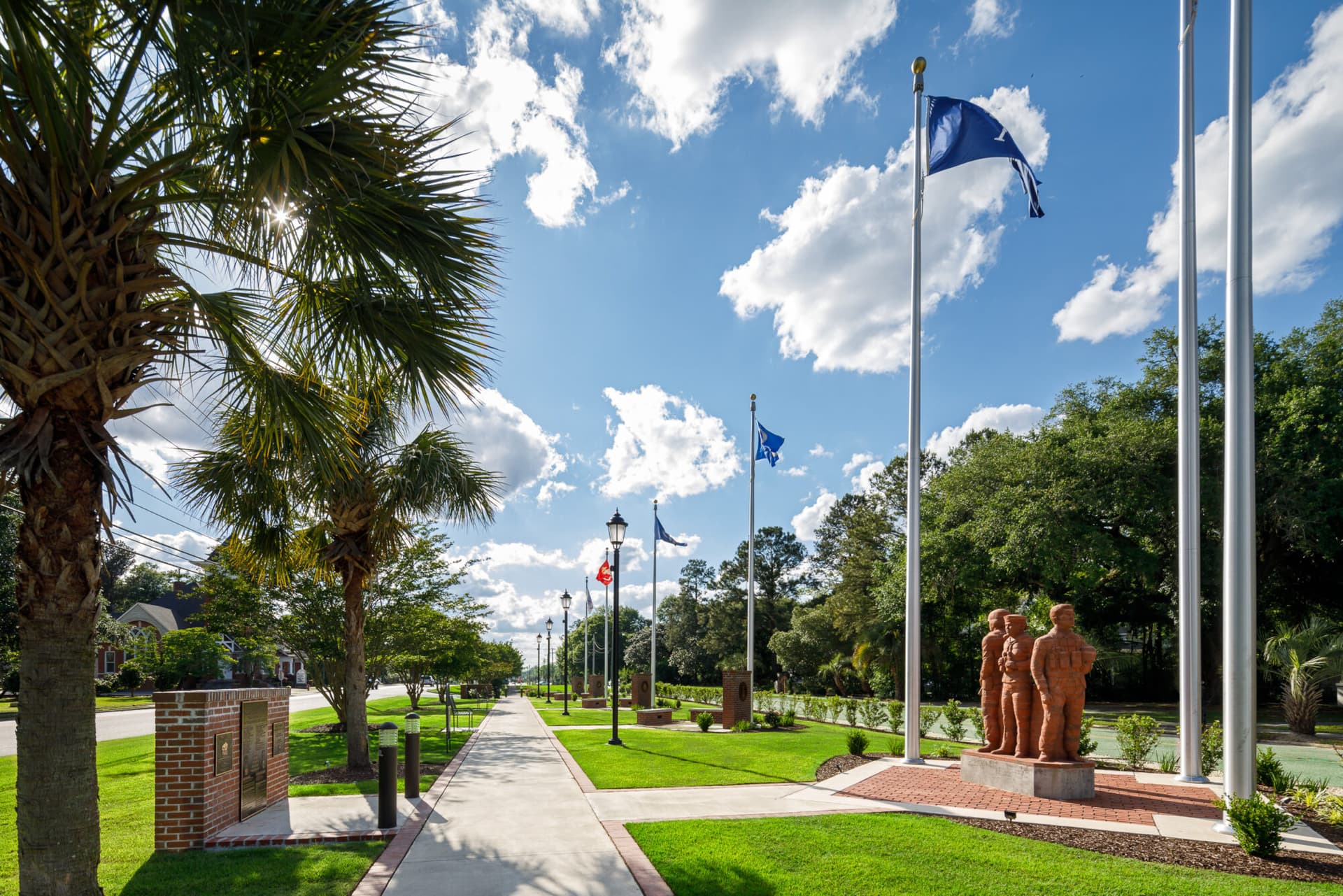
Cathedral Bay preserve showcases Bamberg County's Carolina Bay wetlands
Two Bamberg County preserves show why Carolina Bays matter: they store seasonal rain, shelter rare species, and shape land use far beyond the woods.
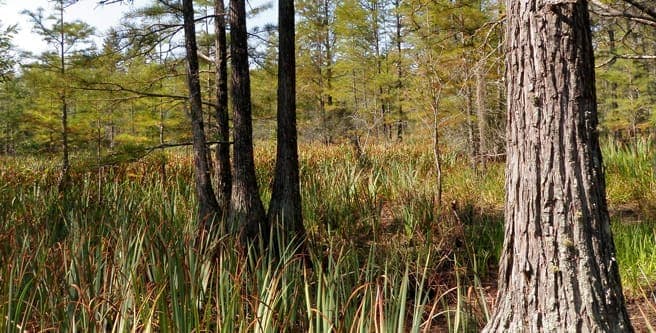
Cathedral Bay near Olar and Lisa Matthews Memorial Bay are two Carolina Bays in Bamberg County, part of one of the Southeast’s most unusual wetland landscapes. These Carolina Bays are seasonal depressions that collect rain, dry back down, and support plant and animal communities that depend on that rhythm. In a county where drainage, development, conservation, and outdoor access all compete for attention, they are part of the land-use conversation.
What a Carolina Bay really is
Carolina Bays are shallow, elliptical depressions spread across the Atlantic Coastal Plain from Florida to New Jersey. The South Carolina Department of Natural Resources has mapped about 5,000 geologically in South Carolina alone. Their oval shape and northwest-to-southeast orientation are part of what makes them recognizable, but their seasonal water cycle is what gives them ecological value. They fill with rainwater, then dry down, creating shifting habitat for rare plants, amphibians, reptiles, wading birds, and mammals.
A landscape that stores water, releases it slowly, and changes from wet to dry does not behave like ordinary upland forest or a permanent pond. It affects how land drains, how habitats connect, and how much of the county’s natural water system still remains intact when nearby land is cleared or built on.
Cathedral Bay shows the public side of the story
Cathedral Bay Heritage Preserve near Olar is the county’s clearest place to see the Carolina Bay form up close. Also known as Chitty Bay or Chitty Pond, the 58-acre preserve sits near the junction of SC Highway 64 and US Highway 301. It is an excellent example of the Carolina Bay phenomenon and a striking pond-cypress pond.
The preserve is managed by the South Carolina Department of Natural Resources through the Heritage Trust Program, and the land was purchased in 1986 from The Nature Conservancy using Heritage Land Trust Fund money. Heritage Trust preserves are open for public educational and recreational use during daylight hours, and Cathedral Bay is a place where schools, families, and anyone curious about Bamberg County’s landscape can see the wetland form that textbooks often flatten into a definition.
Access is part of the lesson there, too:
- Visitors enter by wading or canoe
- Motorboats are not allowed
- Hunting is not allowed
- The preserve is open from one hour before sunrise to one hour after sunset
Lisa Matthews Memorial Bay adds a recovery story
If Cathedral Bay shows the shape of a Carolina Bay, Lisa Matthews Memorial Bay shows what long-term stewardship can do for a rare species. The 52-acre Bamberg County preserve combines Carolina Bay habitat with longleaf pine uplands, and the South Carolina Native Plant Society acquired it in 2003. Its main management focus is Canby’s Dropwort, a federally endangered plant that has become one of the clearest examples of why these wetland pockets matter.
The federal government listed Canby’s Dropwort as endangered in 1986. The Federal Register recorded one site in Maryland, one in North Carolina, five in South Carolina, and three in Georgia. At Lisa Matthews Memorial Bay, the first count found 217 plants. A 2015 count estimated tens of thousands of stems, and by 2021 the population had expanded into new parts of the bay wetlands. After a prescribed burn, a 2022 survey found more than 12,000 individuals.
The preserve’s management plan, developed and implemented in 2005, depends on active work rather than passive preservation. Prescribed burning, brush cutting, and restoration of the uplands are part of the routine, and water-level fluctuations are tied directly to the plant’s health. Water levels have been tracked there since March 2004, which gives the site a long record of how hydrology shapes recovery.
Why this matters beyond botany
A U.S. Fish and Wildlife Service 5-year review identified Lisa Matthews Memorial Bay, along with Oakland Plantation and Longleaf Heritage Preserve, as one of three stable, managed, protected populations meeting recovery objectives.
Their wet-dry cycles support the kind of habitat rare species need, and their presence in Bamberg County gives planners, educators, and conservation groups something concrete to point to when talking about land use.
What Bamberg County stands to keep
Cathedral Bay lets residents see a rare wetland type without leaving the county, and Lisa Matthews Memorial Bay shows that these places can be managed for species recovery over decades.
A 2024 peer-reviewed study analyzed morphometric data from more than 20,000 Carolina Bays across the Atlantic Coastal Plain.
This article was produced by Prism’s automated news system from verified source data, official records, and press releases, then run through automated quality and moderation checks before publishing. The system is built and supervised by the people who set the standards it runs under. Read our full AI policy.
Did this article answer your question?