Edisto Farms dairy legacy shaped Bamberg County’s milk history
Edisto Farms began in rural Denmark and sent Golden Guernsey milk to Columbia, turning one family dairy into a Bamberg County landmark.
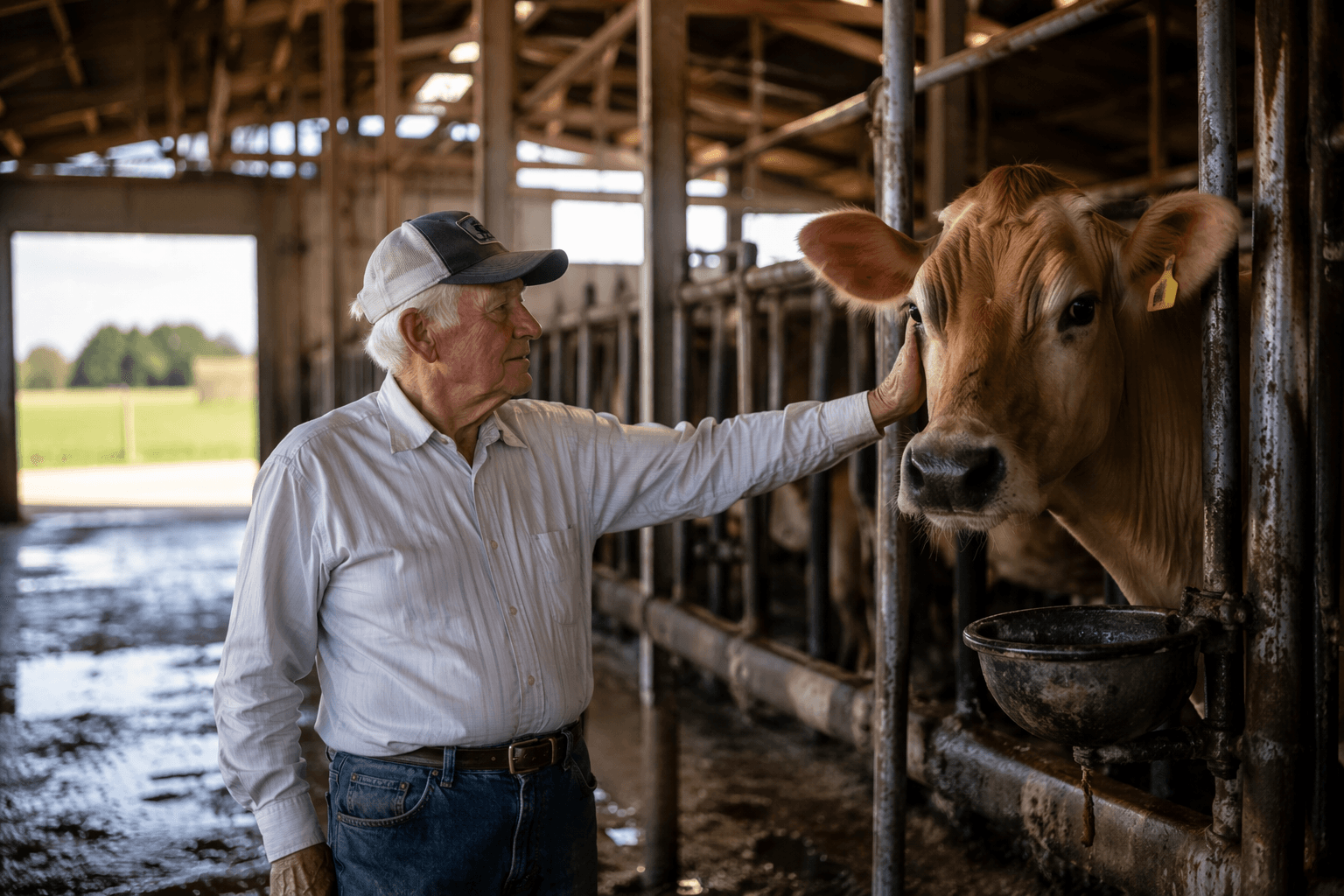
Edisto Farms was more than a roadside name on the edge of Denmark. For three generations, the Guess family turned a rural Bamberg County dairy into a business that reached beyond the county line, with Golden Guernsey milk moving through a Columbia distribution center by the 1930s.
That reach matters because it places Bamberg County inside South Carolina’s milk network, not outside it. The farm’s silos, cattle, and family records still point to a time when local agriculture shaped daily life in Denmark and helped define what people drank, bought, and saw on the road into town.
A Denmark dairy with regional reach
Edisto Farms, also known as Guess Farms, was founded by James Barre Guess Jr. in the early twentieth century near the Edisto River in rural Denmark. The farm raised Guernsey cattle and built a reputation around its Golden Guernsey milk, a brand that made the family business recognizable well beyond Bamberg County.
By the 1930s, the dairy was operating a distribution center in Columbia, which shows how quickly a local farm could become part of a broader urban supply chain. That Columbia connection is the clearest sign that Edisto Farms was not just producing milk for nearby households; it was supplying a city market that depended on rural production across the state.
The Guess family built the business across generations
Archive records describe the Guess family’s papers and photographs as documentation of a cattle and dairy farm in Bamberg County from 1908 to 1974. Those records tie the farm to three generations of family operation and give the Edisto Farms story a long paper trail rather than a single remembered anecdote.
James Barre Guess Jr. was born June 21, 1885, and died January 2, 1969. His father, James Barre Guess Sr., was born November 7, 1859, and died February 20, 1936. Together, those dates show a multigenerational farm family rooted deeply enough in Denmark that the family name still carries local recognition today.
The family line also appears in later records, including a 2024 obituary for James Barr Guess IV that places the family near the South Edisto River. That continuity matters in a county where family names often serve as geographic markers as much as genealogical ones.
Why the dairy carried weight in Bamberg County
A historical marker account says James B. Guess had around 400 head of dairy cattle and was known for producing champion Guernsey cattle. That scale helps explain why Edisto Farms stood out in Denmark. A herd that size meant labor, transport, feed, and regular buyers, all of which fed money through the local economy.
The farm’s standing was reinforced by formal recognition. James Barre Guess received the South Carolina Master Farmer Award in 1953, and in 1958 the American Guernsey Cattle Club recognized him as one of the country’s outstanding dairymen. Those honors show that the farm’s reputation was built not just on family memory, but on statewide and national acknowledgment of quality and production.
That recognition also helps answer a question that still matters in Bamberg County: who bought local milk, and why did it matter? In the decades when Edisto Farms was active, the answer included Columbia consumers and distributors, along with the local households and businesses that depended on a nearby dairy economy.
What Bamberg County looked like around the farm
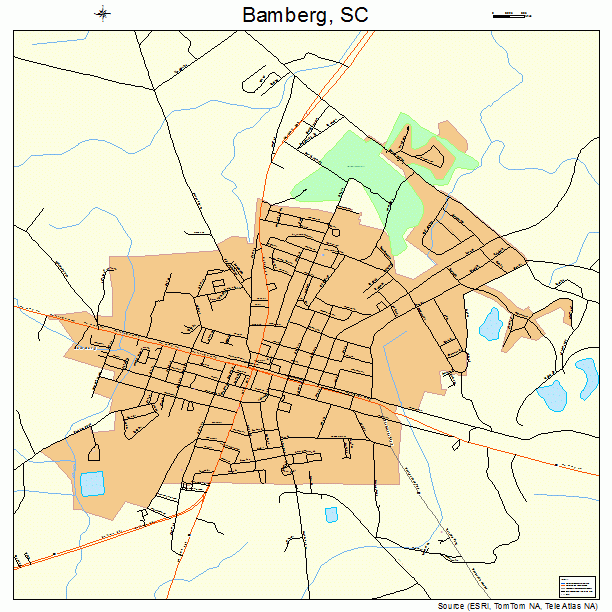
Denmark’s rise helps explain why a dairy like Edisto Farms could thrive there. The town was incorporated as Grahams in 1870 and renamed Denmark in 1891, and after the Civil War it became a mercantile center for the surrounding agricultural area. That made it a natural place for farm goods to be collected, marketed, and shipped.
Bamberg County itself covers 393 square miles and had a 2020 population of 13,906, while Denmark had 3,160 residents. Those figures underline how local the story is and how broad its effect could still be. In a small county and a small town, a successful dairy was not a minor business. It was part of the county’s economic identity.
The South Carolina Encyclopedia notes that Bamberg County remained a significant producer of crops such as corn, soybeans, wheat, cotton, and sorghum well into the twenty-first century. That wider farm economy is important context: Edisto Farms was one piece of a county built around agriculture, even if milk production itself no longer dominates the local landscape.
What still remains visible
The farm’s imprint survives in more than memory. The name Edisto Farms still appears in archival collections, family records, and local historical references, and the farm’s physical setting near the Edisto River continues to anchor the story in place. For people driving into Denmark, the old dairy legacy is part of the visual language of the town, especially where farm structures once signaled an active production site.
A surviving Columbia milk bottle marked with the Edisto Farms name, Golden Guernsey trademark, and Columbia address is a reminder that the dairy once had a branded identity strong enough to circulate in everyday life. That kind of object tells a simple but useful story: milk from rural Bamberg County was not only produced, it was packaged, distributed, and sold under a name that reached city markets.
For Bamberg County, that is the key contrast. The county’s farm economy still exists, but Edisto Farms shows a moment when local agriculture included a recognizable dairy brand, a distribution network, and a family business large enough to send milk into Columbia. The Guess family left behind a record of a county that once fed itself and part of the state, one bottle and one truck route at a time.
This article was produced by Prism’s automated news system from verified source data, official records, and press releases, then run through automated quality and moderation checks before publishing. The system is built and supervised by the people who set the standards it runs under. Read our full AI policy.
Did this article answer your question?