Beltrami County courthouse began in a store, now historic landmark
Beltrami County’s first courthouse was a store at Fourth and Beltrami Avenue. The 1903 Beaux Arts courthouse that followed still shows how Bemidji’s civic center grew around county power.
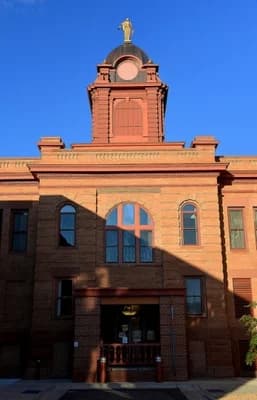
Beltrami County’s courthouse story begins in a storefront, not a monument. When the county was formally organized in 1897, a store at Fourth and Beltrami Avenue in Bemidji doubled as the courthouse and the jail, a practical arrangement that shows how early county government operated before it had a permanent home.
From storefront government to a permanent courthouse
That temporary setup did not last long. By 1902-03, Beltrami County had built a real courthouse, and the old store was sold and later became a drug store. The change was more than a construction project: it marked the point when county government, law enforcement, and public spending became physically rooted in downtown Bemidji instead of squeezed into a commercial building.
The current courthouse at 619 Beltrami Avenue replaced that improvised arrangement with a building meant to last. In a county that had only recently been organized, the decision to move from a store to a dedicated civic building showed ambition, permanence, and confidence that Bemidji would remain the center of county life.
A landmark built to look like power
The courthouse that stands today is a three-story red brick and sandstone structure in the Beaux Arts style. MNopedia describes it as Beltrami County’s most imposing example of public architecture, and that description fits the building’s role in downtown Bemidji: it is not just where court business happens, but one of the clearest visual statements the county ever made about itself.
The building was designed by the Kinney-Detweiler architectural firm from the Twin Cities, with F.W. Kinney and M.S. Detweiler shaping its classic features. Schmidt Brothers contractors built it, and the courthouse was erected in 1903 at a cost of $39,975. Those details matter because they show how seriously county leaders treated the project. This was not a makeshift office upgraded in place; it was a purpose-built public landmark, financed and executed as a statement of county maturity.
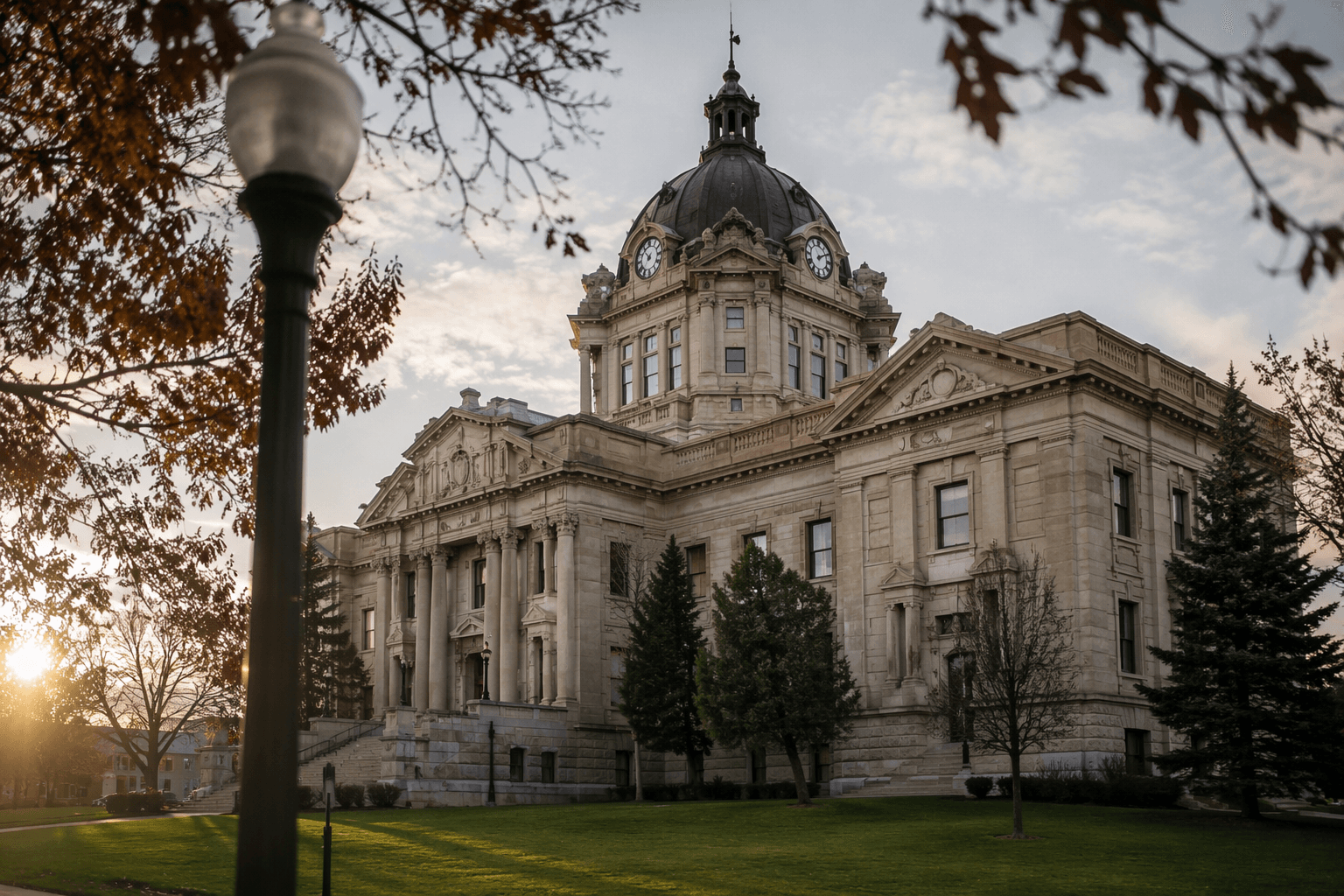
The National Register of Historic Places nomination form places the historic courthouse at Beltrami Avenue and Sixth Street in Bemidji. That location, together with the 619 Beltrami Avenue address used today, puts the building squarely in the downtown grid that grew around it. The courthouse helped define the block, and the block helped define the courthouse’s place in civic life.
How the building changed with the county
The courthouse did not freeze in time after it opened. In 1973, it was expanded for $550,000, a reminder that historic county buildings often have to adapt as caseloads grow and public services become more complex. Even with that expansion, the original building remained the core of the site’s identity.
The courthouse was listed on the National Register of Historic Places in 1988, which gave formal federal recognition to what Bemidji residents had long seen in the building’s massing, materials, and location. Preservation status matters here because it protects more than brick and sandstone. It protects a record of how county government moved from improvisation to institution.
What the courthouse still does
The historic courthouse is part of a larger justice system, not a museum piece. Beltrami County District Court has original jurisdiction in civil, family, probate, juvenile, criminal, and traffic matters, which means the county’s legal life still touches everyday disputes, family cases, criminal proceedings, and traffic issues through the local court system.
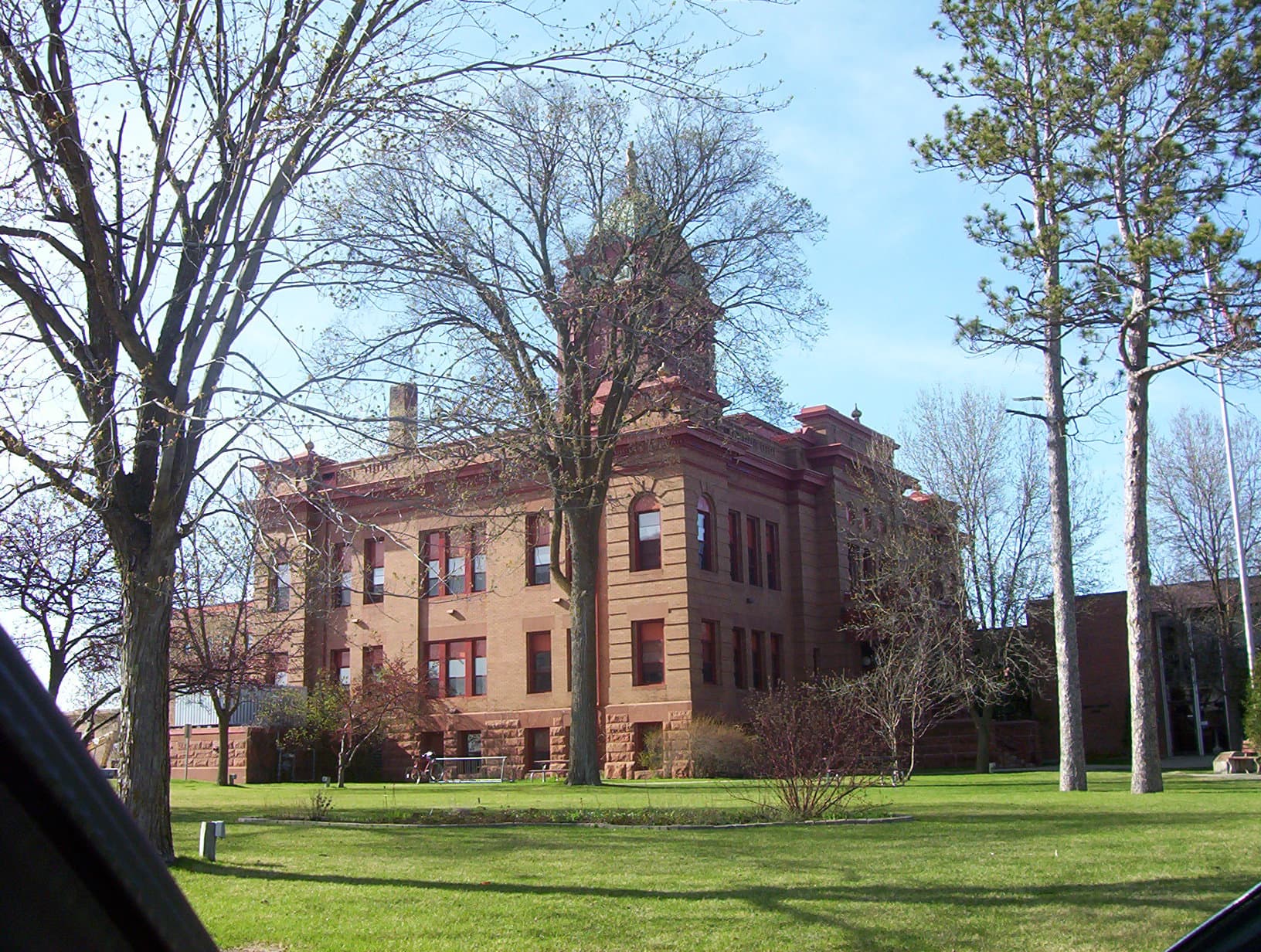
Today, the county’s modern justice functions are served at the Beltrami County Judicial Center in Bemidji, while the historic courthouse remains the county’s architectural anchor. That split tells a familiar local-government story: older buildings hold the public meaning, while newer facilities absorb the operational load.
For residents, the courthouse still represents where county authority became visible. Its early storefront predecessor sat at Fourth and Beltrami Avenue, but the permanent building at 619 Beltrami Avenue shifted that authority into stone, brick, and sandstone. The result is a downtown landmark that still ties together law, local history, and the shape of Bemidji itself.
Why this building still matters in downtown Bemidji
The courthouse remains important because it helps explain how Bemidji took shape as a county seat. The first courthouse occupied borrowed commercial space, then county leaders invested in a dedicated structure that could project stability and order. That move influenced where public money went, where people came to do government business, and how downtown developed around the center of county authority.
The building’s Beaux Arts design and prominent scale still tell that story plainly. It stands as evidence of the moment when Beltrami County moved beyond frontier improvisation and into formal civic life, and it continues to mark the place where that transition became visible to everyone entering downtown Bemidji.
This article was produced by Prism’s automated news system from verified source data, official records, and press releases, then run through automated quality and moderation checks before publishing. The system is built and supervised by the people who set the standards it runs under. Read our full AI policy.
Did this article answer your question?